

Hamas political leaders nix rocket fire on Israel
Group’s military wing planned to hit back after recent IDF strikes on Gaza

 Add ToI as a Preferred Source on Google
Avi Issacharoff, The Times of Israel's Middle East analyst, fills the same role for Walla, the leading portal in Israel. He is also a guest commentator on many different radio shows and current affairs programs on television. Until 2012, he was a reporter and commentator on Arab affairs for the Haaretz newspaper. He also lectures on modern Palestinian history at Tel Aviv University, and is currently writing a script for an action-drama series for the Israeli satellite Television "YES." Born in Jerusalem, he graduated cum laude from Ben Gurion University with a B.A. in Middle Eastern studies and then earned his M.A. from Tel Aviv University on the same subject, also cum laude. A fluent Arabic speaker, Avi was the Middle East Affairs correspondent for Israeli Public Radio covering the Israeli-Palestinian conflict, the war in Iraq and the Arab countries between the years 2003-2006. Avi directed and edited short documentary films on Israeli television programs dealing with the Middle East. In 2002 he won the "best reporter" award for the "Israel Radio” for his coverage of the second intifada. In 2004, together with Amos Harel, he wrote "The Seventh War - How we won and why we lost the war with the Palestinians." A year later the book won an award from the Institute for Strategic Studies for containing the best research on security affairs in Israel. In 2008, Issacharoff and Harel published their second book, entitled "34 Days - The Story of the Second Lebanon War," which won the same prize.
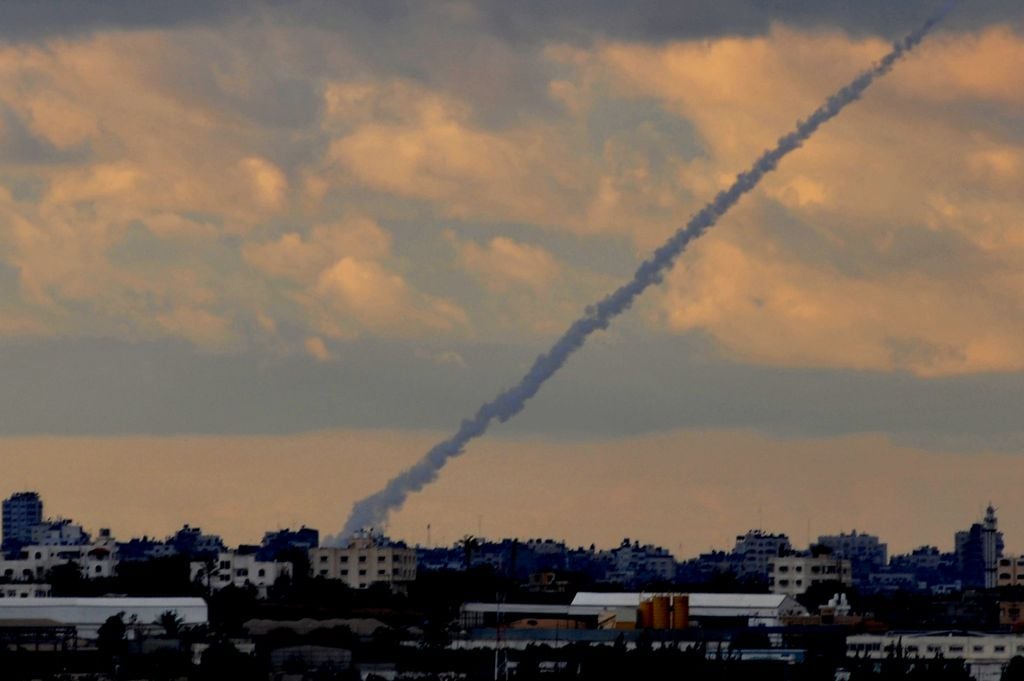
Hamas’s military wing, Izz ad-Din al-Qassam, moved to restart rocket attacks against Israel over the weekend, but a dispute with the political leadership of the organization prevented the plan from being carried out, the London-based Asharq Al-Awsat reported on Tuesday.
After last Friday’s Israeli airstrikes on Hamas compounds in the Gaza Strip, the military wing came to the conclusion that it needed to retaliate, according to the newspaper, but the political echelon demanded that it stand down.
Last Saturday, The Times of Israel reported that Hamas’s military wing withdrew its forces from the border area where they were engaged in restraining other terror groups from firing missiles at Israel. The move was seen by many in Israel as Hamas giving the green light for smaller organizations in Gaza to fire at Israeli targets.
However, Asharq Al-Awsat cited sources in the IDF’s Southern Command who claimed the Hamas decision to withdraw its prevention units came after the military wing had already decided to begin rocket fire itself.
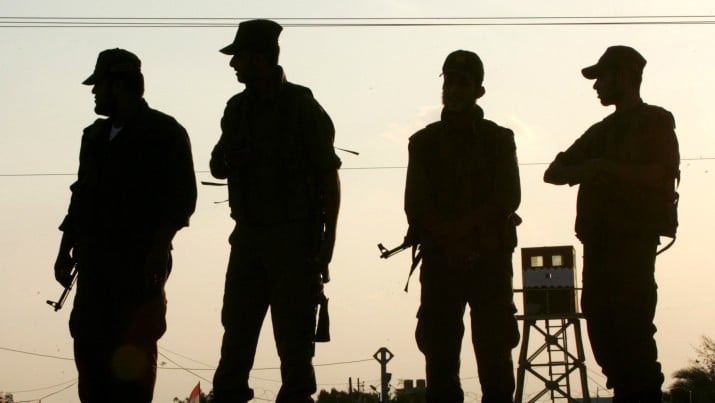
Without the anti-rocket force in place, it was up to the political leadership to put the brakes on the plan.
In January, government figures show, Gaza-based terror groups fired three times as many rockets at Israel as during an average month in 2013. These included 20 mortar and rocket attacks on Israel’s southern communities, two improvised explosive devices (IEDs) set off on the Gaza-Israel border and two incidents where the IDF stopped militants attempting to launch rockets.
Most of the attacks were carried out by fringe groups operating in Gaza who sought to undermine the Hamas regime, the security establishment determined, according to Israeli daily Maariv.
The anti-rocket force was established last July. It numbered 600 men at first, operating round the clock, but was more recently bolstered to 900, underlining Hamas’s desire to avoid an escalation of violence with Israel.
The Times of Israel staff contributed to this report.








The Times of Israel Community.