

Hamas removes its rocket-prevention squads from Israel-Gaza border
Withdrawal may signal ‘green light’ for upsurge in rocket fire; Israeli minister warns IDF may invade Gaza if attacks don’t stop

 Add ToI as a Preferred Source on Google
Avi Issacharoff, The Times of Israel's Middle East analyst, fills the same role for Walla, the leading portal in Israel. He is also a guest commentator on many different radio shows and current affairs programs on television. Until 2012, he was a reporter and commentator on Arab affairs for the Haaretz newspaper. He also lectures on modern Palestinian history at Tel Aviv University, and is currently writing a script for an action-drama series for the Israeli satellite Television "YES." Born in Jerusalem, he graduated cum laude from Ben Gurion University with a B.A. in Middle Eastern studies and then earned his M.A. from Tel Aviv University on the same subject, also cum laude. A fluent Arabic speaker, Avi was the Middle East Affairs correspondent for Israeli Public Radio covering the Israeli-Palestinian conflict, the war in Iraq and the Arab countries between the years 2003-2006. Avi directed and edited short documentary films on Israeli television programs dealing with the Middle East. In 2002 he won the "best reporter" award for the "Israel Radio” for his coverage of the second intifada. In 2004, together with Amos Harel, he wrote "The Seventh War - How we won and why we lost the war with the Palestinians." A year later the book won an award from the Institute for Strategic Studies for containing the best research on security affairs in Israel. In 2008, Issacharoff and Harel published their second book, entitled "34 Days - The Story of the Second Lebanon War," which won the same prize.
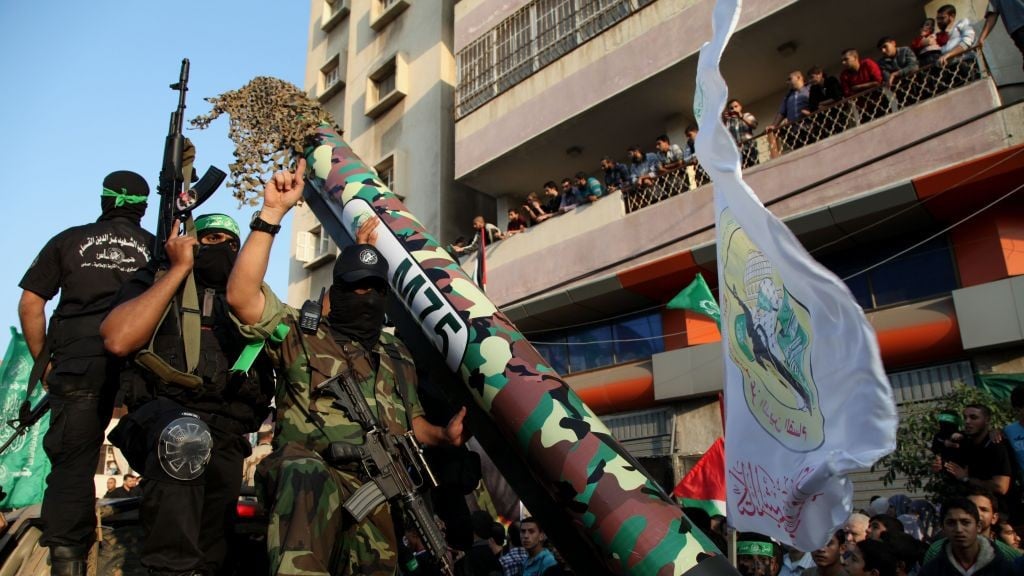
Hamas has removed from the Gaza-Israel border most members of the 900-strong force it employs to prevent rocket fire into Israel, The Times of Israel has learned.
Sources in Gaza said the decision of Hamas’s military wing to withdraw most members of the rocket-prevention force, which was first deployed last July, was taken in the wake of Israel’s airstrikes on targets in Gaza overnight Thursday. Those strikes were ordered in response to a rocket attack on the southern city of Netivot on Thursday.
In the aftermath of the Hamas decision, most members of the rocket-prevention force, formally deployed to “safeguard public order,” have indeed disappeared from the Gaza-Israel border area.
Hamas’s move is likely to be interpreted as a green light to fire on Israel by the various terror groups in Gaza.
As of Saturday night, there had been no drastic escalation in rocket fire, however.
It is possible that Hamas is signaling its anger with Israel over the Israeli retaliatory airstrikes while simultaneously sending messages to the Gaza terror groups not to escalate hostilities for now, The Times of Israel was told.
Last week, in the wake of several incidents of rocket fire into Israel, Defense Minister Moshe Ya’alon warned Hamas that it would “pay a heavy price” for such attacks. “If [Hamas] doesn’t know how to impose its authority on terrorist organizations operating from its territory we will continue to act to make it, and those who are active in terror and fire at Israel, pay a heavy price,” he said.
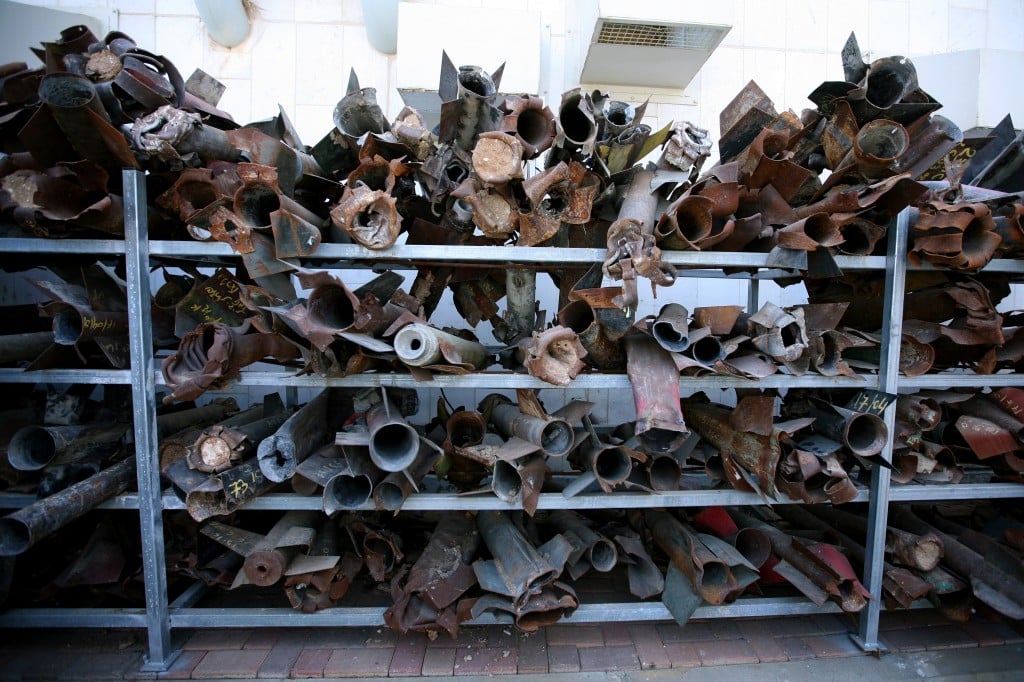
Intelligence Minister Yuval Steinitz said Saturday that the Israeli military could invade the Gaza Strip and topple its Hamas government if the rocket fire continued. “If the drip of rockets from Gaza continues, we will have no choice but to go inside [Gaza] in order to eliminate Hamas, and allow the Palestinian Authority to regain control of the Gaza Strip,” Steinitz said.
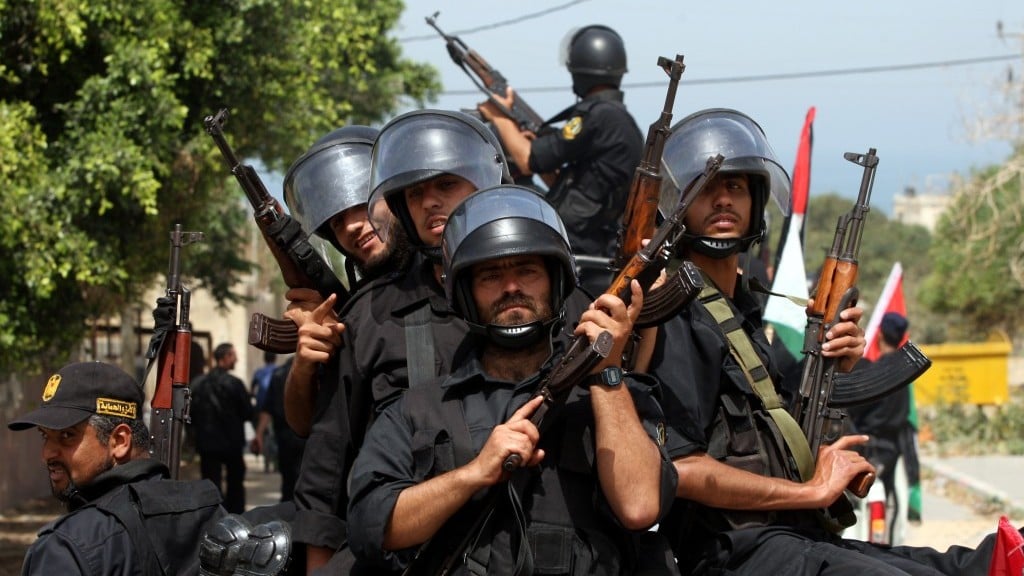
The anti-rocket force was established last July. It numbered 600 men at first, operating round the clock, but was more recently bolstered to 900, underlining Hamas’s desire to avoid an escalation of violence with Israel. The order withdrawing most members of the force thus appears to represent a shift in Hamas tactics.
Hamas has stayed away from firing rockets into Israel since November 2012’s Operation Pillar of Defense. But other groups have continued to launch occasional attacks.
On Friday, two Grad rockets were fired from the Sinai Peninsula at the southern city of Eilat. The Iron Dome missile defense system shot down at least one of them. An al-Qaeda-linked terrorist group that operates in the Sinai and Gaza, Ansar Bayt al-Maqdis, claimed responsibility. The group said in a statement that the rocket attack was prompted by “the cooperation between Egypt and Israel and the bombing of Gaza residents.”
Adiv Sterman contributed to this report.










The Times of Israel Community.