

iSpy with my little iPhone
The Hebrew-language media debates privacy in the digital age, from being tracked by intelligence agencies to hacking kids’ phones for their own safety
 Add ToI as a Preferred Source on Google
Adiv Sterman is a breaking news editor at The Times of Israel.
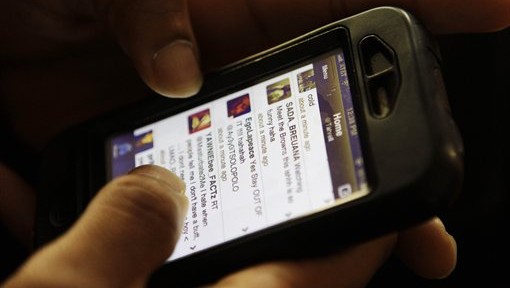
The annual Education Conference organized by Yedioth Ahronoth and its website Ynet provides the Hebrew-language newspaper with a myriad of juicy quotes about the current political state in the country, and even on the proper way for parents to raise their children.
“The leaders are heating up the debate in order to gain political power,” reads the daily’s front page, quoting President Reuven Rivlin, the conference’s keynote speaker. “The debate exists by definition within the Israeli public, with all of its elements,” the president told the crowd, which included high school student representatives from religious-Zionist, secular, ultra-Orthodox, and Arab Israeli backgrounds. “We know these debates, and within these debates we need to build. Not to fan [the flames] but to come and find common ground.”
Speaking at the same venue, Education Minister Naftali Bennett tells parents they should insist on getting their kids’ phone passwords in order to assure that the youngsters are not the target of any shady activity or exposed to gruesome and disturbing content. “Watching a video of an Islamic State beheading at a young age is something that makes you a less sensitive person and deeply harms your soul,” said Bennett. “I see the issue of pornography, violence, shaming, as a clear and immediate threat to the children in Israel.” Based on the minister’s words, two of the paper’s contributors debate whether digitally spying on one’s own kids is the most effective way of protecting them from the potential hazards of the internet.
Staying on the topic of spying with the use of digital devices, Israel Hayom dedicates nearly all of its front page to the latest WikiLeaks publication, which included thousands of documents described as secret files about CIA hacking tools the government employs to break into users’ computers, mobile phones and even smart TVs from companies like Apple, Google, Microsoft and Samsung.
“The CIA is listening, even through the TV,” reads the paper’s headline, which is plastered over an incredibly corny, matrix-style, green and black background of binary code. The WikiLeaks documents describe clandestine methods for bypassing or defeating encryption, antivirus tools and other protective security features intended to keep the private information of citizens and corporations safe from prying eyes.
US government employees, including President Donald Trump, use many of the same products and internet services purportedly compromised by the tools, and perhaps that is why Israel Hayom, which has all but explicitly thrown its support behind the current White House administration, is so concerned about the breach. The paper makes sure to stress three times that officials have characterized the breach of the US intelligence community at the hands of WikiLeaks and its allies as “a leak much more significant than the Snowden [leaks].”
In Haaretz, the focus is on ongoing investigations into Prime Minister Benjamin Netanyahu for alleged cases of corruption. Investigators from the police anti-corruption unit, Lahav 433, arrived at the prime minister’s official residence in Jerusalem to question him on suspicions he and his family accepted expensive gifts from wealthy businessmen in exchange for favors, known as Case 1000, and on a separate investigation, dubbed Case 2000, which involves Netanyahu’s alleged negotiations with the publisher of Yedioth Aharonoth, Arnon Mozes, to advance legislation to hobble the paper’s rival — the Sheldon Adelson-controlled Israel Hayom — in exchange for more favorable coverage from Yedioth.
According to Haaretz writer Gidi Weitz, investigators have discovered that Hollywood tycoon Arnon Milchan asked Australian businessman James Packer to “help share in financing the lifestyle of Prime Minister Benjamin Netanyahu’s family.” Weitz adds that according to an anonymous source who “knows Milchan,” the Australian businessman paid for “about 25 percent of the supplies for the Netanyahu family.” Milchan allegedly provided Netanyahu and his wife Sara with expensive cigars and champagne valued at hundreds of thousands of shekels, while Packer is said to have paid for expensive meals and accommodation for the Netanyahus’ son Yair.
Yedioth pokes fun at Netanyahu for explaining during his questioning that he could not have possibly smoked as many cigars as he is accused of receiving from Milchan, since the Israeli leader suffers from a sinus problem. According to Yedioth’s report, which seems to deliberately highlight the slightly comical nature of Netanyahu’s claim, the prime minister said he does not smoke cigars for several months each year due to this problem, and even urged police investigators to call in his personal doctor for questions on the matter.
According to unnamed sources quoted recently by Channel 2, Netanyahu told police that he did not know anything about bottles of champagne supposedly given to his wife, and said that he bought most of the cigars in cash from a “relative.” However, Milchan and his personal assistant, as well as other associates of the Hollywood producer, have told police investigators the items were bought at the request of the Netanyahus, according to reports.
While the country’s three major Hebrew-language papers rarely see eye to eye on almost any issue, all of them nevertheless are unapologetic over their criticism of Rabbi Yigal Levinstein, who runs a pre-army religious academy in the West Bank settlement of Eli, and recently told several hundred graduates of another academy, in the settlement of Bnei Atzmon, that IDF service has “driven our girls crazy.” All three dailies note that the rabbi’s comments were met with “rage” and wide condemnation from politicians across the board. Levinstein drew censure last year after a speech he gave calling homosexuals “deviants.” He wrote a letter to the Defense Ministry, explaining his comments, but has had many of his activities with the military cut short in light of his controversial remarks.







The Times of Israel Community.