

Port workers to call labor dispute, strike impending
Talks between Netanyahu and Histadrut head Ofer Eini over reforms reach dead end
 Add ToI as a Preferred Source on Google
Lazar Berman is The Times of Israel's diplomatic reporter
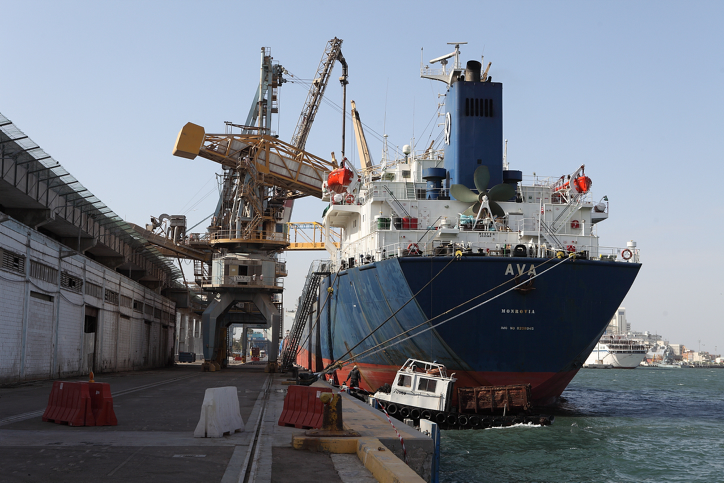
The Histadrut labor federation will meet Monday afternoon to declare a labor dispute at Israel’s ports, following failed efforts to come to an agreement over planned reforms aimed at opening up competition. The move follows a failed effort between Prime Minister Benjamin Netanyahu and Histadrut head Ofer Eini to reach an agreement over port reforms the government is planning to implement.
The Histadrut’s Coordination and Implementation Committee will meet Monday to officially call the labor dispute. The declaration means that in the event no agreement is reached within two weeks, Israel’s seaport workers will go on a general strike, potentially costing the Israeli economy billions of shekels.
The Netanyahu government has said it is determined to reform the country’s ports, aware that it would be waging a battle with strong unions who have wielded control over the ports for years. The controversial initiative aims to build two new private ports, one in Haifa and the other in Ashdod, in an attempt to circumvent the powerful stevedores at the two existing ports in those cities.
Inefficiencies at Israel’s state-owned ports costs the economy much as NIS 5 billion annually according to a 2009 government report, cited by the Haaretz daily. Some 90% of the country’s imports and exports pass through the Haifa and Ashdod ports, Businessweek reported.
The average annual salary of port workers is about NIS 450,000 ($123,000), more than four times Israel’s average salary, and the highest average for all state-owned enterprises, a government report released in May reported. According to Businessweek, when 45 openings for port hands were announced earlier this year, 3,000 Israelis applied.
“We are not prepared to countenance the unacceptable state of wasteful, exploitative and inefficient monopolies at the ports that exact a high and unnecessary price from Israel’s citizens for goods and products… The monopoly at the sea ports hurts the competitiveness of the Israeli economy and causes a higher cost of living here. We are determined to change this situation and we will change it,” Prime Minister Benjamin Netanyahu said in a June cabinet meeting.
Histadrut head Ofer Eini reportedly intended to call a press conference to announce the dispute last Sunday, but held off after receiving a phone call from Netanyahu inviting him to a meeting that night.
The long-planned port reform process began on July 3, as the government released a tender for companies to build and operate new, privately owned docks. Netanyahu, who presented the tender, asserted that the reforms would lower the cost of living and hobble the powerful dock workers’ labor union, preventing its 2,000-odd members from bringing Israel’s economy to a standstill with strikes.
Israeli media in May reported that the transportation and finance ministries were preparing ways to combat any potential strike by dock workers in response to the plan. Among the options under consideration, the reports said, was the deployment of either IDF soldiers or foreign workers to step into the breach.
“I won’t accept this monopoly. I want to tell my friends in the Histadrut — it’s over,” Netanyahu said at the press conference presenting the tenders. “Two thousand people won’t cripple the country.”
“We won’t stop here. I promise nothing will deter us,” he added, alluding to the government’s willingness to quash strikes.
Netanyahu said the government was working on further reforms to lower costs and improve the economy. “We started with Open Skies,” he said, referring to a recently signed deal with the EU to reduce the costs of flights to and from the country, “and now we’re moving toward open waters.”
“The decision to build two ports creates a situation in which real competition can develop in Haifa and Ashdod,” Transportation Minister Yisrael Katz said, noting that while the new plan circumvented the existing, state-held ports, steps were also being taken to make those ports more efficient.
“This government is here to get the work done,” Finance Minister Yair Lapid told reporters at the briefing. “Today we’re bringing seaport reform to the Israeli public, which has been waiting for it for 65 years.”
Lapid said that besides lowering prices and fighting the climbing cost of living, the seaport reform would create thousands of new jobs outside Israel’s bustling central region. The move, he said, “could change people’s fate.”
In response to the announcement, the Histadrut said it would make sure its workers’ rights were safeguarded as the reform took place. Representatives of the Haifa port union told Israel Radio that they were prepared to face the competition.
Times of Israel staff contributed to this report.









The Times of Israel Community.