

7,000 undercover vice cops patroling Tehran
Vast network of undercover informants report on lax veiling and anti-social behavior, local police chief says
 Add ToI as a Preferred Source on Google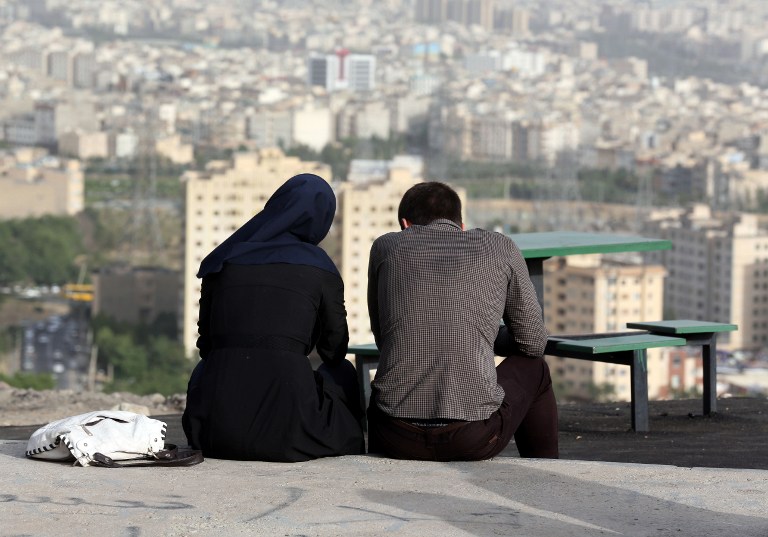
Police in Iran’s capital have a network of 7,000 undercover agents whose job is to inform police of alleged moral transgressors in the Islamic Republic, a top official said Monday.
Lax veiling — covering the head is mandatory for women in Iran — and anti-social behavior are among the crimes the force has been tasked with tackling.
The men and women’s “undercover patrols will confront implicit transgressions in the city,” according to General Hossein Sajedinia, Tehran’s police chief.
“Confronting bad hijab and removal of veils inside cars, driving recklessly, parading in the streets, harassing women and stopping noise pollution are the priorities” for the agents, he said
Sajedinia’s remarks were published by Mizan Online, the official news service for Iran’s judiciary, along with pictures of himself and a large formation of plain-clothed agents in Tehran.
When in public, all women in the Islamic republic, including foreigners, are required to wear at least a loose scarf, known as hijab, which covers the hair and neck.
Since the mid-1990s, however, there has been a gradual change in the dress code with some women, particularly in more affluent northern neighborhoods, wearing colorful tight-fitting coats and loose scarves.
If the agents observe such violations they report the alleged offender to police who will then be contacted and later summoned, Sajedinia said.
The agents, bearing judicial orders, are not allowed to engage people directly and will only report to the police.







The Times of Israel Community.