

A prism for the emotions: Holon museum spotlights visual communication duo
A retrospective of the work of NYC’s Sagmeister and Walsh ranges from a deconstructed pair of Levi’s 501s to bananas and bamboo used in the pursuit of happiness
 Add ToI as a Preferred Source on Google
Jessica Steinberg, The Times of Israel's culture and lifestyles editor, covers the Sabra scene from south to north and back to the center
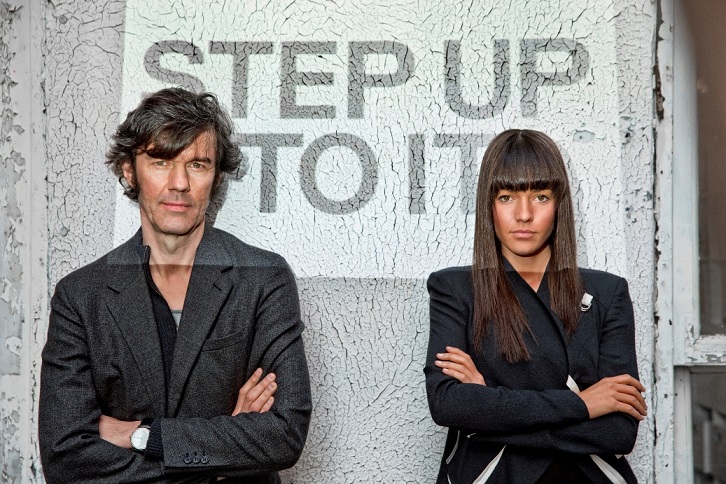
Emotions are tricky things, a notion explored to wondrous results in “Sagmeister & Walsh: A Retrospective,” an exhibit that recently opened at the Holon Design Museum featuring the complex, experimental visual works of designers Stefan Sagmeister and Jessica Walsh.
Exploring visual communication — the filters and lenses through which people see and understand the world around them — for the first time, the museum offers viewers an opportunity to examine their perceptions of others through the prism of these design works.
Sagmeister and Walsh — he’s originally Austrian, she’s American and their firm is in New York — are known as a trend-setting pair in the visual communication arena. They use various media, tools and techniques, and tap their own emotional responses, to explore images and messages in the world around them.
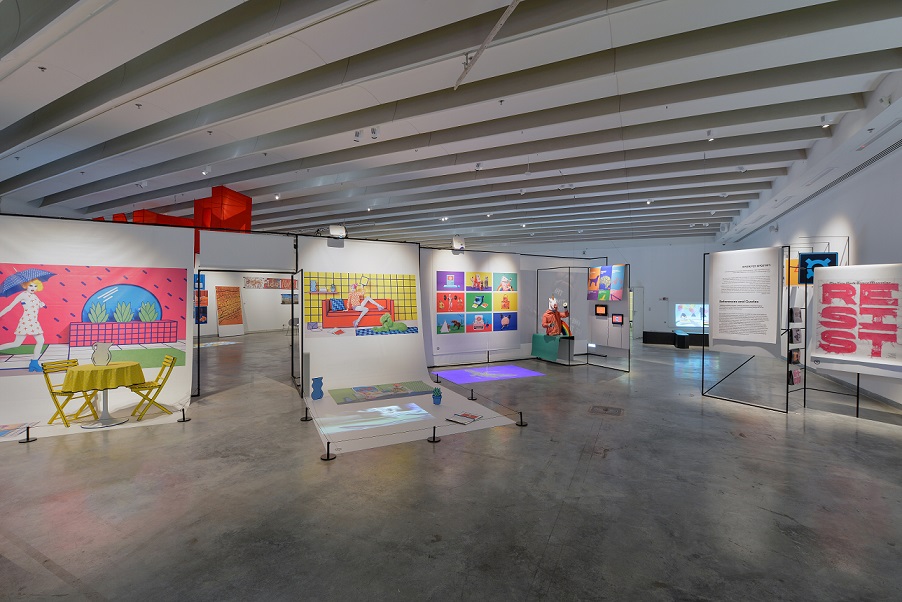
The two-floor retrospective takes visitors through a variety of the duo’s works, many created for major companies but all strikingly personal in nature.
Viewers can consider a video for Adobe 24 Hours, when the studio was asked to interpret the company’s logo in a 24-hour marathon. They pair used a few basic tools, including 8,000 sharpened pencils painted purple and glued to a structure, to form giant, three-dimensional letters that spelled out the word MAX. You wouldn’t know it’s made of pencils.
The studio also deconstructed a pair of Levi’s 501 jeans that was then photographed for a poster, and helped The Jewish Museum in Manhattan rebrand using a new visual language with the Star of David in a geometric grid pattern.
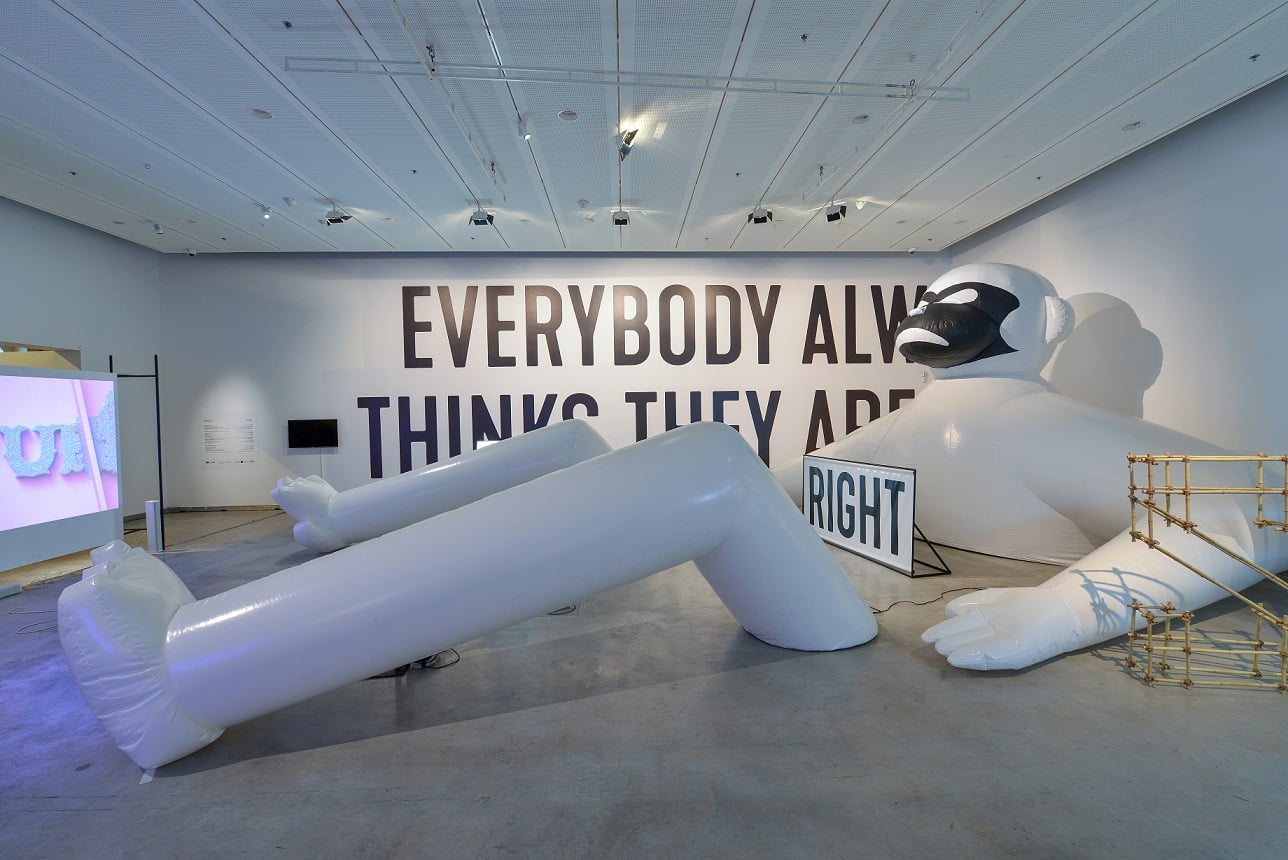
A video for “12 Kinds of Kindness” depicts a 12-step program for those recovering from indifference and self-centeredness over the course of a year by performing acts of empathy and loving kindness, such as offering money to strangers, reconnecting with estranged loved ones and smiling at people.
Along the same lines, the Happy Film documentary focuses on bananas as a way of considering personal satisfaction, and a three-month film project in Bangkok sees the letters of the word “happy” constructed from bamboo and carried by locals in a video made by Sagmeister.
A photograph of the banana wall showcases 10,000 pieces of the fruit, with unripe, green bananas spelling out “Self-Confidence Produces Fine Results,” while brown bananas form the background.
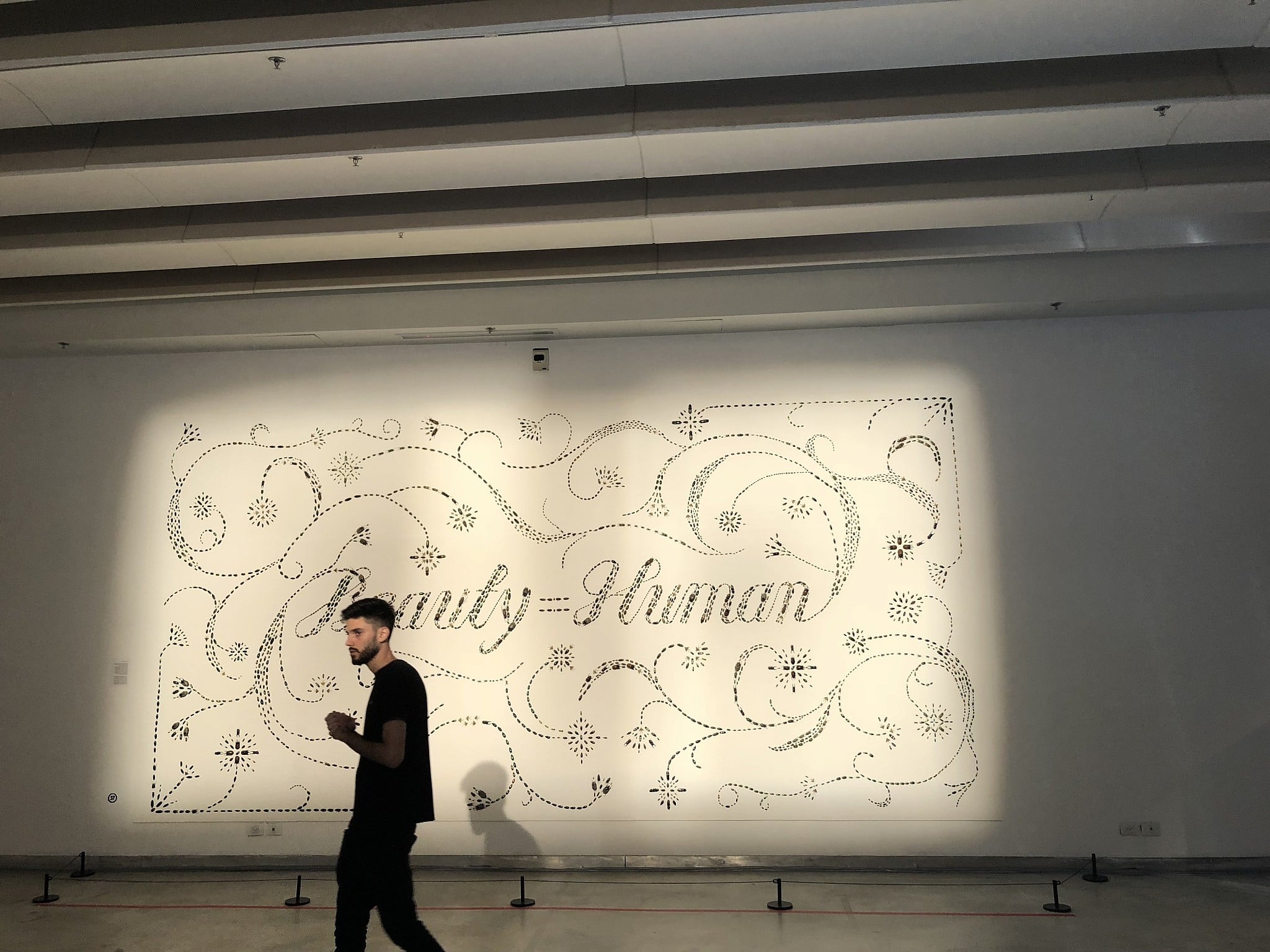
One of the pieces commissioned specifically for the Holon Design Museum is “Beauty = Human,” written in script using thousands of beetles glued to the canvas, their iridescent shells creating an entirely unexpected perception of the insect.
The album cover for H.P. Zinker’s “Mountains of Madness” is based on the lyrics of a song about interactions on the streets of New York, Sagmeister’s adopted hometown. The song reminded him of an experience when he stared at stranger on the street who reminded him of his grandfather, but when the stranger noticed his stare he turned from calm to furious — a moment frozen on the album cover with a photographed face that is animated when viewed through the filter of a red box placed over it.

At the very end of the exhibit is another commissioned work, “Step Up To It,” assembled from 60,000 sugar cubes placed by museum staffers. The cubes spell out the word “Smile,” and viewers need to place their head in a frame and smile in order to activate the artwork’s animation feature. In other words, one needs to be happy in order to make it work.
It’s the lesson that S&W want us to learn: We’ve got to smile in order to make it all work.
Holon Design Museum, “Sagmeister & Walsh: A Retrospective,” through October 18.










The Times of Israel Community.