

A rabbi and an Arab walk into a bar — and come out best friends
They say laughter is the best medicine, but is it also the long-sought solution to the Palestinian-Israeli conflict?
 Add ToI as a Preferred Source on Google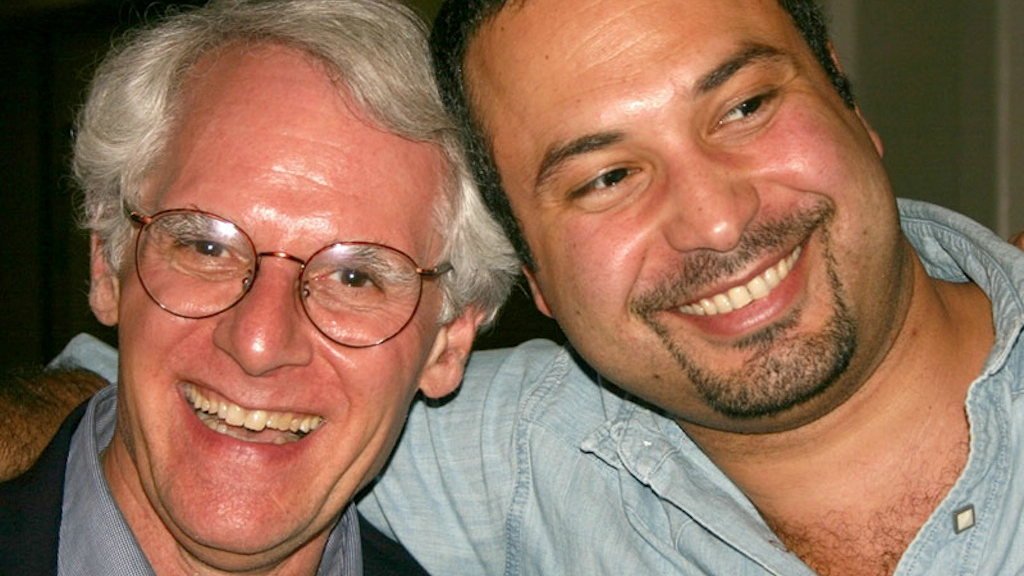
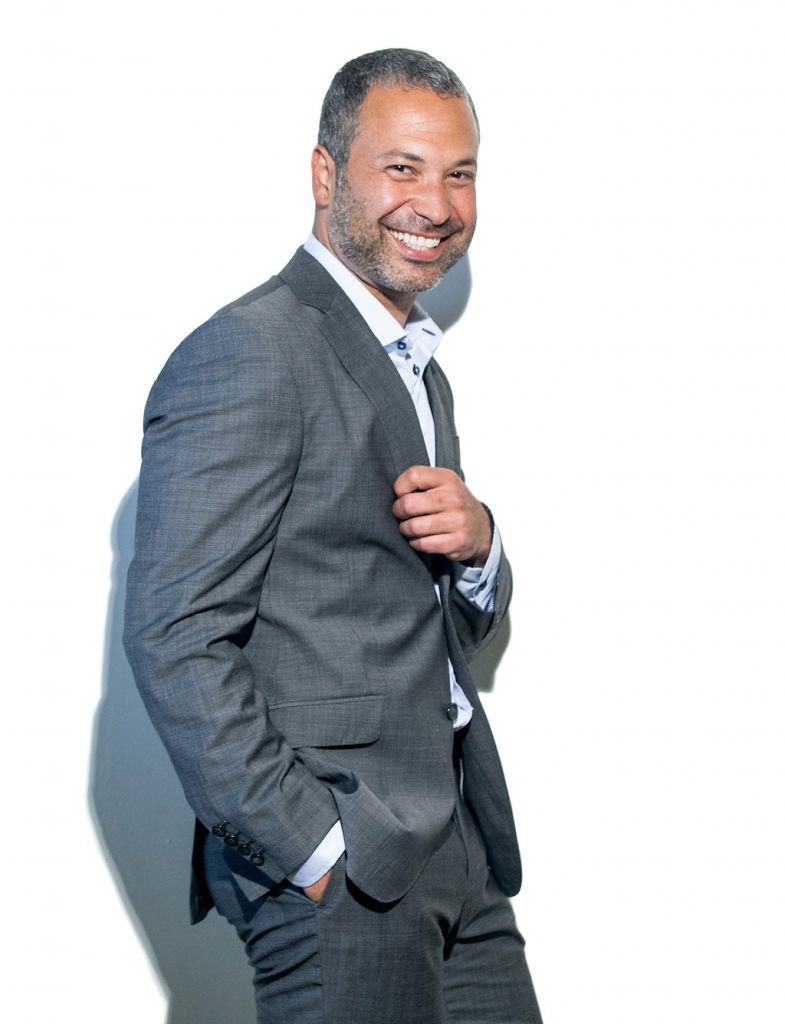
It sounds like the beginning of a bad joke: A rabbi and an Arab walk onto the stage in a comedy club… But Ahmed Ahmed and Rabbi Bob Alper are professional stand-up comedians who have worked together for 14 years to break barriers between Jews and Arabs around the world – and now, in Israel – through humor.
Ahmed is an Egyptian-born, California-raised comedian and actor. He appeared in “You Don’t Mess with the Zohan” (2008) with Adam Sandler and the three seasons of the TBS show “Sullivan & Son” (2012-2014), produced in part by Vince Vaughn.
Alper is a mostly retired Reform rabbi who left the pulpit to pursue a career in comedy in 1986 after working for 14 years as a rabbi and counselor. In 1986, after completing a doctorate from Princeton Theological Seminary, he placed third in the Jewish Comic of the Year competition.
The unlikely duo paired up in 2001 when Alper’s publicist proposed the idea for Laugh in Peace – the interfaith comedy show in which Jewish Alper and Muslim Ahmed perform separate stand-up routines, and then join one another on stage for a funny and, hopefully, meaningful finale. Since then, they have performed together in about 150 shows on college campuses, and at synagogues, mosques, and comedy clubs across America and internationally.
Starting Saturday night, the two will put on Laugh in Peace for the first time in Israel – something Alper said they’ve “always wanted to do” – in English shows at venues in Jerusalem, Tel Aviv, and Haifa.
Before starting Laugh in Peace, Ahmed had never done any sort of interfaith work. When he’d worked as a rabbi, Alper had riffed a bit with Christian clergymen, but, he said in a phone conversation from his Vermont home last week, he never intended to be involved in interfaith work as a comedian.
“This was simply a professional comedy thing to raise our visibility,” he said. “But as soon as we got into it, we realized there’s a lot more to it. The show provided people with hope.”
Alper approached Ahmed, who was also struggling to find comedy and acting roles.
“It was a fresh, post 9/11 world and there wasn’t a lot of opportunity for Arab-American comedians,” Ahmed explained over the phone this week from his hotel in Ramallah. “Being Arab with a Muslim name hasn’t helped me much. There aren’t a lot of roles out there for a guy like me.”
Their separate routines in Laugh in Peace are usually “squeaky-clean,” according to Ahmed, and have little to do with religion or conflict. Ahmed talks about dating in his forties, travelling, and airport security. Alper talks about his kids, his dog, and about the small Jewish population in his Vermont neighborhood.
“We’re purposely nonpolitical,” Alper explained, “but we have a very important implicit message. When we’re on stage together at the end of the show, talking with the audience and telling stories about visiting each other’s houses, we want people to know that we don’t just show up to an event, be funny, get a check, and go our separate ways. We like hanging out. That’s the message – the friendship.”

Sometimes, when Ahmed is busy, Alper performs Laugh in Peace with other Muslim comedians (including Mo Amer and Azhar Usman), as well as Christian comedians (like Reverend Susan Sparks) – all of whom, Alper said, are close friends of his.
And Ahmed and Alper insist that they’ve received only positive feedback from their audiences – even at American college campuses, which are often considered hubs of tension between groups with conflicting views about the Middle East.
“Most of the colleges we’ve performed at in the past were cosponsored by Jewish and Muslim student organizations,” Ahmed said. “When the groups come together and produce a show collectively, they’re always really successful.”
Alper noted that there has been a decline in the number of their performances on campuses, though.
“There’s a lot of tension on college campuses,” he said. “My hope is it’s just not as sexy an idea as before… or it might be budgetary.”
‘There’s a holiness in making people laugh’
But Alper hopes to continue performing for college students, because he finds them among the most inspiring audiences.
For Alper – who is also the author of three inspirational books – there is a spiritual element to humor. He cited a story from the Talmud (Taanit 22a) about Elijah the prophet, who said that jesters – who make a profession out of cheering people up with laughter – have a share in the world to come.
“There’s a holiness in making people laugh when it’s clean and un-hurtful,” said Alper, who added that his “rabbinate is about making people laugh, too.” Needless to say, his family and friends were not surprised when he announced almost 30 years ago that he wanted to be a full-time comedian.
Ahmed and Alper believe strongly in the universal appeal of humor, and are excited to perform in Israel, where they hope their routine might be especially healing.
“Comedy kind of translates internationally these days because of the Internet,” Ahmed explained. “So I’m expecting same response across the board [here]. Funny is funny, whether you’re Palestinian or Israeli.”
Both comedians talked about the power of humor to bring people together and to heal.
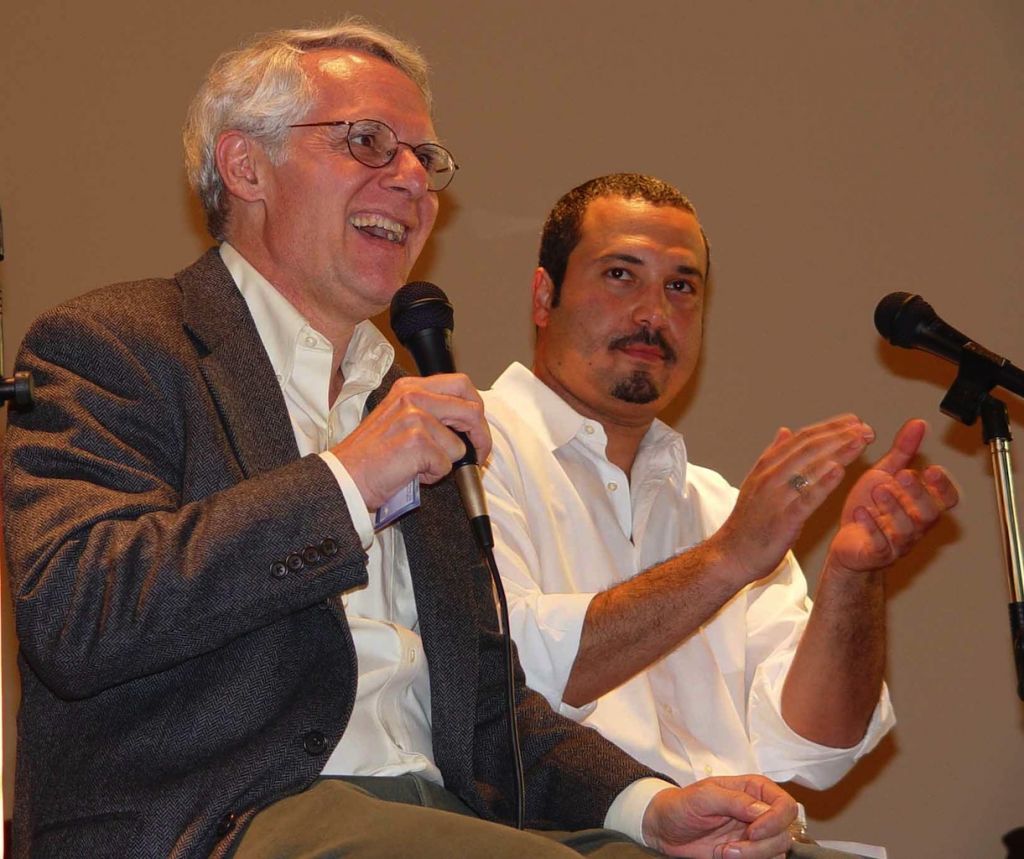
“I think what we can do helps,” said Alper. “Making people laugh reduces tension. It’s spiritually and physically healing. I love doing it, in particular for people who have heavy burdens.”
This week, Ahmed and Alper also participated in 1001 Laughs Ramallah Comedy Festival, which hosts 10 Arab-American comedians (Alper made unannounced appearances in some of them) in six shows between August 10-13.
Before leaving the States last week, Alper said, “What’s going to happen, I hope, is that the Arabs are going to see an affable Jew who makes them laugh, and the Jews are going to see an affable Arab who makes them laugh. Maybe, in a small way, we’ll help change perceptions of the ‘other.’”
‘Maybe, in a small way, we’ll help change perceptions of the “other”‘
According to Ahmed, Alper’s hopes were realized during his surprise performance in a show in Bethlehem this week.
“The response was fantastic,” Ahmed said. “Bob’s such a likable guy – and his likability really exudes wonderfully with the Palestinian crowd.”
“Our feeling is,” both Ahmed and Alper said, “when people laugh together, they can’t hate each other.”
Laugh in Peace will be showing at the following locations and times:
August 15: Jerusalem’s Yellow Submarine, 9:30pm (For tickets: 02-679-4040)
August 16: Tel Aviv’s Tzavta in Tel Aviv, 10:00pm (For tickets: 03-695-0156)
August 17: The Haifa English Theatre at Beit Hagefen Arab-Jewish Cultural Center (For tickets: 052-365-6161)









The Times of Israel Community.