

Despite accord, scant hope Israel finally warming to climate change fight
Environmentalists charge Jerusalem’s plan to battle global warming falls short of what other countries have vowed to do, and might not be implemented at all
 Add ToI as a Preferred Source on Google
Ben Sales is a news editor at The Times of Israel
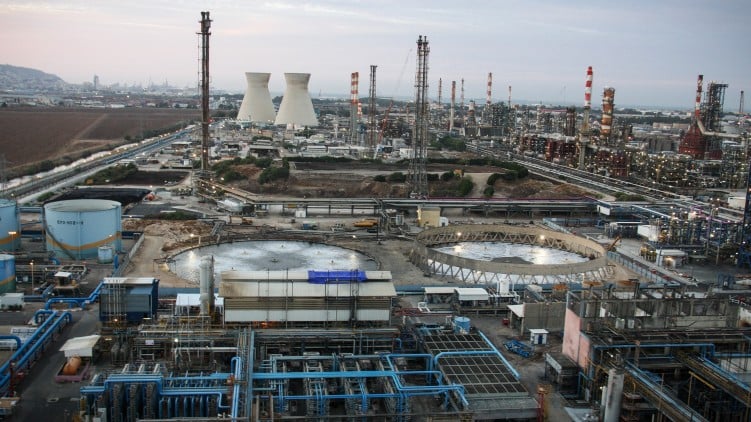
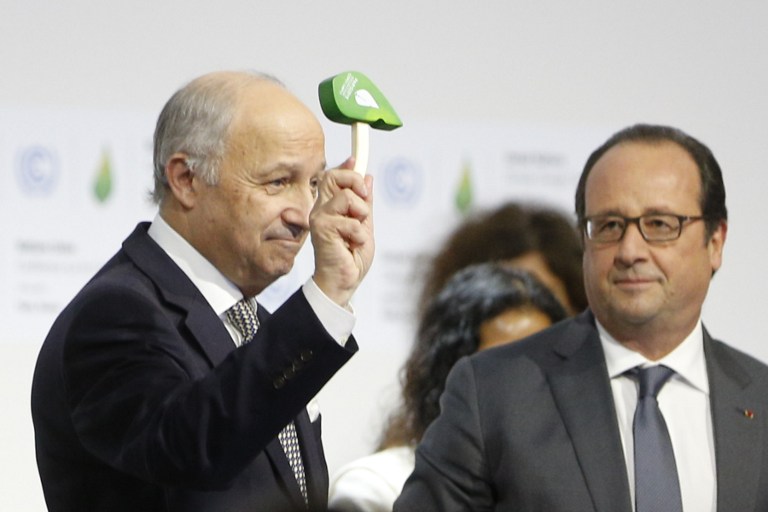
JTA — During last week’s climate summit outside Paris, the 195 delegate countries — including Israel — committed to implementing plans to reduce greenhouse gas emissions and improving their goals every five years.
The aim: Keep Earth from warming more than 3.6 degrees Fahrenheit by the end of the 21st century.
“This demands international discipline, which is not easy, but for the good of humanity, I hope that it will be found,” Israeli Prime Minister Benjamin Netanyahu, who attended the climate talks, told his cabinet on Sunday. “It will certainly be found in the State of Israel.”
But the historic deal leaves much to be desired, a range of Israeli climate activists, experts and government officials say. They point out that Israel’s plan to help reduce global warming falls short of what other countries have vowed to do. And some Israelis have expressed doubt that the plan will be implemented at all — Israel won’t face concrete repercussions if it fails to meet its goals beyond being excluded from the accord moving forward.
Still, Israeli environmentalists say Israel’s commitments under the deal are a welcome first step. They hope Israel’s proposal will encourage the government to make clean energy a priority. And they expect that the accord will create a global market push to expand environmentally friendly businesses and products.
“Environmentalists should celebrate because the government made its most ambitious statement to date,” said Alon Tal, founder of the Israel Union for Environmental Defense. “Now we hold its feet to the fire.”
Israel, with about 0.1 percent of the world’s population, contributes about 0.2 percent of global greenhouse gas emissions. Israel’s plan pledges, by 2030, to keep greenhouse gas emissions at about their current levels.
Without implementing the plan it committed to in France, Israel would emit an estimated 105.5 metric tons of greenhouse gases in 2030. The plan would lower that number to some 82 metric tons, which is around what Israel has emitted this year. Taking population growth into account, the plan amounts to a per-capita greenhouse gas emissions reduction of approximately 26 percent.
The United States, by contrast, has pledged to reduce emissions from a total of about 5.5 billion metric tons of carbon in 2015 to under 5 billion by 2025. The U.S. plans to reduce its absolute number of emissions 26 percent below 2005 levels — not relative to population growth. The European Union has pledged to lower its emissions to 40 percent below 1990 levels. China, meanwhile, has pledged to draw 20 percent of its energy from renewable sources by 2030.
Yosef Abramowitz, an Israeli solar energy entrepreneur and delegate at the Paris conference, called Israel’s plan “scandalous.”
“For a start-up nation to have one of the lowest solar goals on the planet betrays our values and our potential,” said Abramowitz, who called the Israeli goals “so minimalist that it made it difficult for us in Paris” when defending it to other delegates.
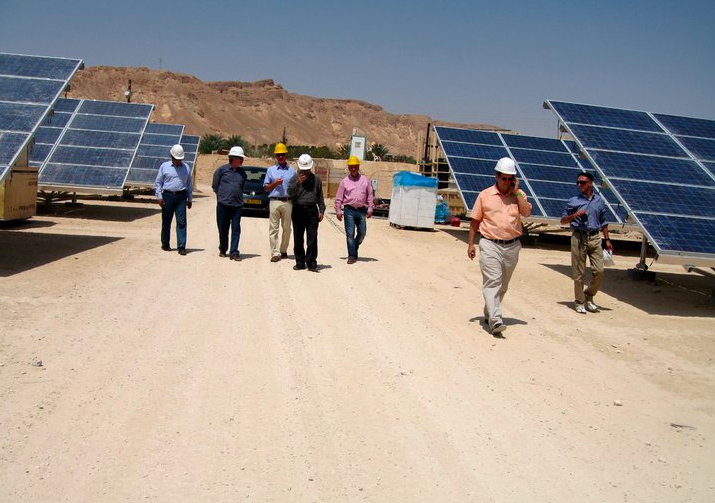
Israel’s initiative involves an eightfold increase in renewable energy sources, like solar and wind power. Implementing greener building codes to promote energy efficiency, moving from coal power plants to burning Israel’s abundant natural gas and investing in public transportation are also part of the plan.
Israel’s proposal calls for the government to vote on an implementation plan for the proposal in 45 days, though ministries are still debating whether to enact a carbon tax, which taxes CO2 emissions, or a cap-and-trade program, which limits the amount of greenhouse gases that companies can emit and provides incentives for companies that come in under the threshold. Israel’s government has had a poor track record on these projects.
The Israeli government had aimed for 5 percent of the country’s energy to come from renewable sources by 2014 and 10 percent by 2020. Now it’s at less than 2 percent and is slated to miss the 2020 target by 2 or 3 percent. A high-speed train to Jerusalem from Tel Aviv that began construction in 2001 won’t provide service until at least 2017, while light rail projects in Jerusalem and Tel Aviv have both experienced delays.
“We claim there is a huge potential, but without stable regulation and planning the investors aren’t going in,” said Gil Proaktor, the Ministry of Environmental Protection’s senior coordinator on climate change. “We have a government decision on plans, but not on implementation.”
While the France deal sets a target of avoiding a rise of 3.6 degrees Fahrenheit, analyses show that taken together, all the countries’ plans would lead to a temperature increase of about 4.8 degrees. And Israel’s tiny size means that no matter what it does, it will have a minuscule effect on global emissions.
“It’s not just the Israeli government,” said Moti Shechter, director of Haifa University’s Natural Resource and Environmental Research Center. “Politicians make promises only when they don’t have a choice, when there’s catastrophe. When the danger isn’t at the door, they can push it off.”
Israeli environmentalists, however, believe the government has missed an opportunity to commit itself to a greener future. Israel’s climate plan aims for solar power to provide 17 percent of Israel’s energy by 2030. Eli Brif, head of the climate protection department at Green Course, an Israeli environmentalist group, says a country that’s mostly sunbathed desert can go further.
No new solar fields have been approved for three years, which officials and experts attributed to bureaucratic delays and a powerful fossil fuel lobby.
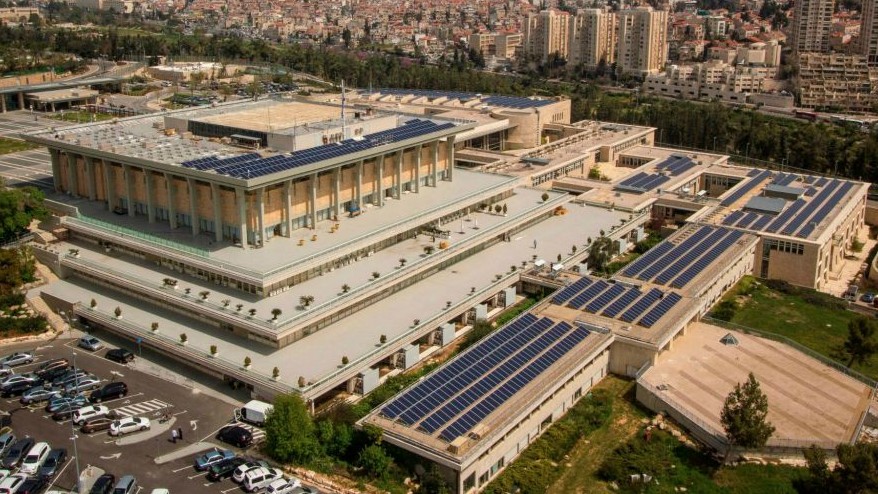
“We have the potential and ability to use solar power on buildings, public institutions, barns, chicken coops and in solar fields,” Brif said. “It’s going in the right direction, but we need serious strides, not baby steps.”
Several activists, however, see in the Paris accord a glimmer of hope. The climate issue is now on the national agenda — even if Israel’s commitments, as they see them, are falling short.
“It’s all a question of political will and pressure,” said Yael Cohen-Paran, Israel’s sole lawmaker from the Green Movement who serves as part of the opposition Zionist Union. “I hope and assume there will be global pressure. Israel’s lagging a little and it doesn’t bother anyone. We need to scream a bit louder.”










The Times of Israel Community.