

After delays, state gives go ahead for test of Leviathan gas rig
Environment Ministry says impact of pipe-flushing procedure, which raises concerns of dangerous pollution along the coast, will be minimal
 Add ToI as a Preferred Source on Google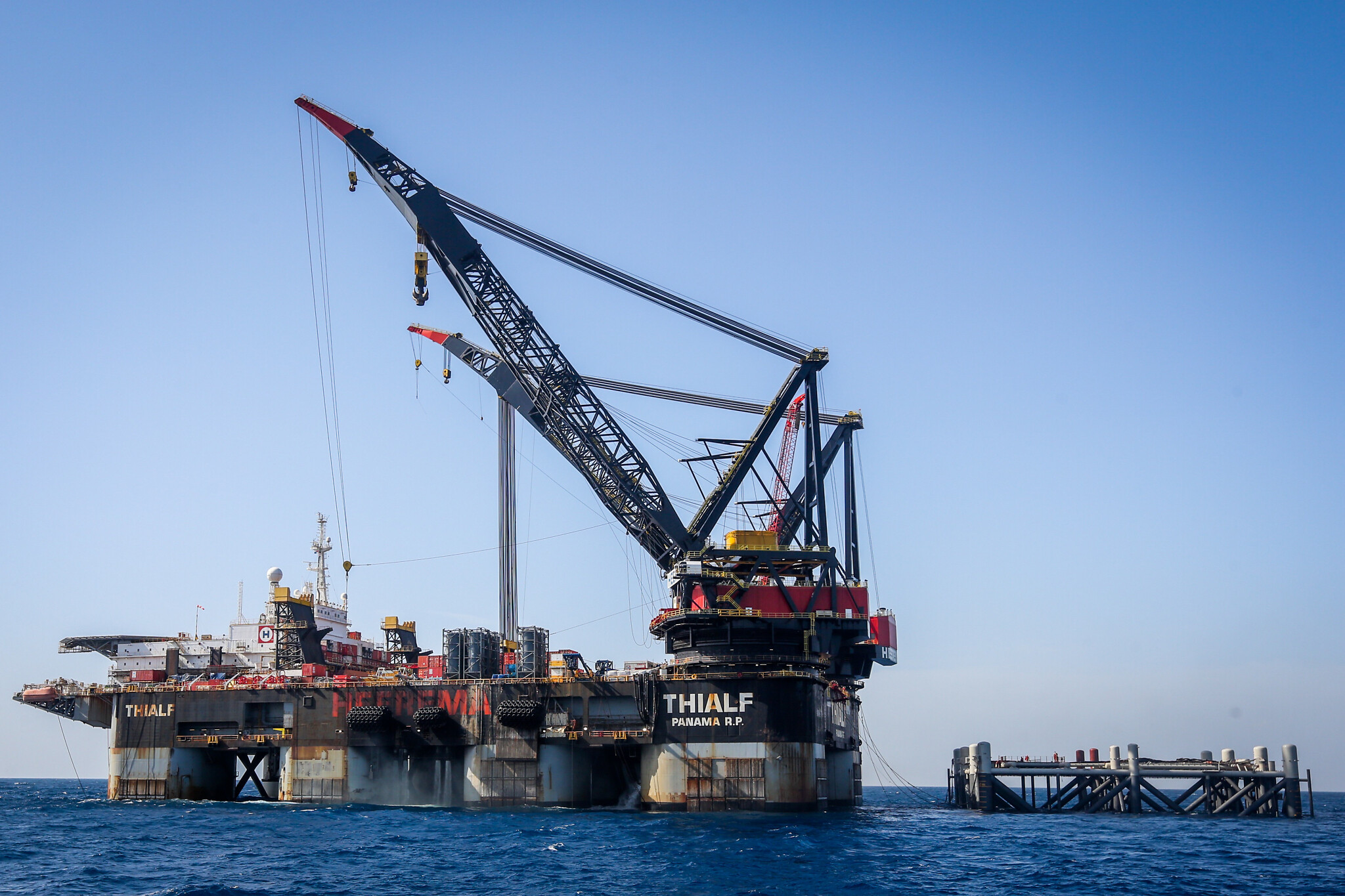
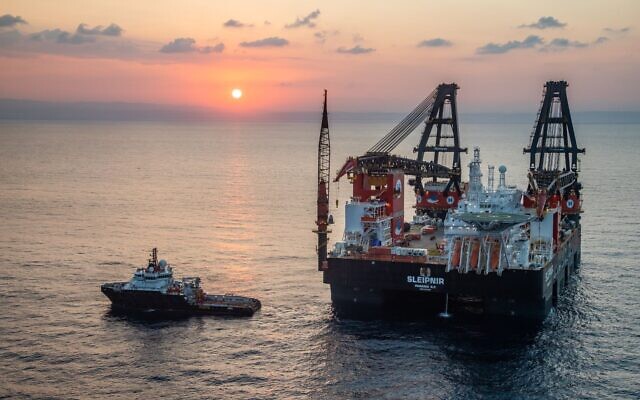
The Environmental Protection Ministry on Friday gave the Noble Energy firm the go ahead to perform a test of the Leviathan gas rig off Israel’s northern coast, days after halting it amid pollution concerns.
The Leviathan extraction platform had been set to perform an initial test of its systems early on Tuesday morning. In the test, workers would flush out the nitrogen currently filling the rig’s pipes. Though the company maintained that the chemicals involved were safe, environmental groups argue that they could have carcinogenic effects and many residents along the coast have expressed concerns over the release of potential pollutants.
The ministry blocked that test saying that the company had not met the criteria and conditions needed to carry out the test, without specifying what those requirements were.
On Friday, however, the ministry said the test could now go ahead, most likely next Tuesday.
“The ministry will not compromise the conditions of the pipe-flushing as was common in the past,” it said in a statement, and again sought to allay fears among the public.
“There are no special instructions for the public, or for an evacuation of residents. According to the opinions of all the experts there is not expected to be any danger to the public during the pipe-flushing,” it said.
Delek Drilling, which is leading the project with Texas-based Noble Energy, said in a statement that it had received approval from the ministry and will begin gas production on December 31, Reuters reported.
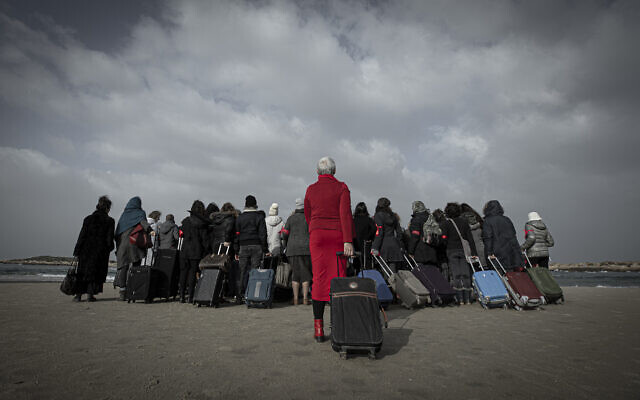
Despite the assurances there have been multiple reports of residents of coastal communities leaving their homes ahead of the planned test due to health fears.
Ishay Ataar, a 46-year-old father of four, lives in Kibbutz Nahsholim. He took vacation from work and spent NIS 1,700 ($490) on accommodation for his family in Tel Aviv to avoid the feared pollution.
The frustrated Ataar said the family was already in Tel Aviv by the time the test was canceled.
“We evacuated our house and rented an Airbnb in Tel Aviv for our family with four children. It takes pretty much a whole day to pack for a family with four kids, and it was all for nothing,” Ataar said. “I manage a startup company and this is really harming our operation, but I felt I needed to do it to keep my kids safe.”
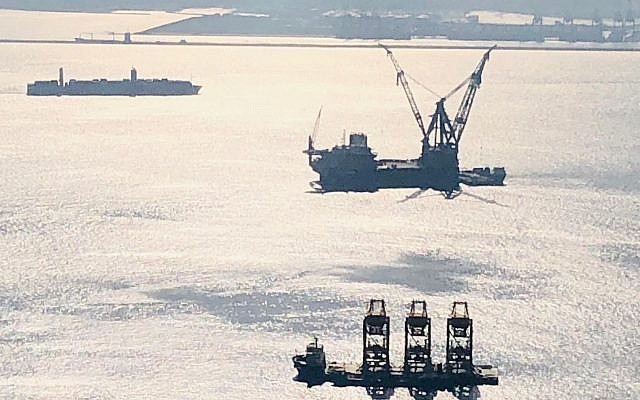
Last week, Jerusalem’s District Court ruled that the test of the Leviathan gas rig — located across from the town of Zichron Ya’akov, south of Haifa — could go ahead as planned.
After temporarily halting the test to review petitions by the six local governments, Judge Eli Abarbanel ruled that the petitioners had failed to provide professional testimonies to refute the opinions of state professionals who deemed the test safe.
Under those circumstances, concerns raised by the petitioners did not justify the harm to the natural gas pumping project off the country’s coast.
In a statement, the consortium behind Leviathan said it welcomed the court’s decision, and said the project “has been subject to rigorous oversight by the ministries of energy and environmental protection and various other regulatory bodies.
“The natural gas from Leviathan will improve Israel’s air quality by displacing coal, improve Israel’s environment, provide security of supply and create unprecedented commercial ties in the region,” the statement read.
The test is a key step before the new rig, 10 kilometers (six miles) offshore, can begin pumping natural gas out of the Leviathan field in the Mediterranean, which is expected to transform Israel into an energy powerhouse.
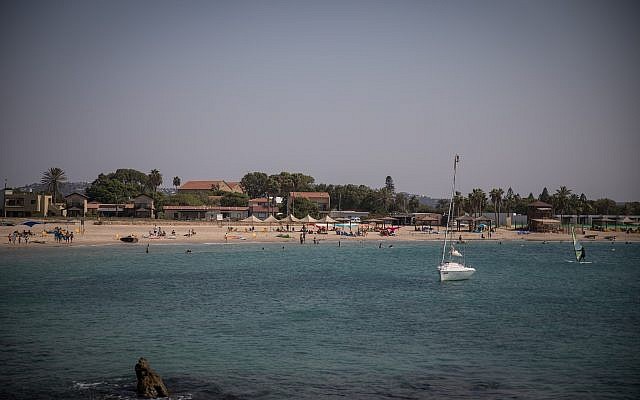
Activists have threatened to organize an immediate mass evacuation of residents from affected municipalities south of Haifa, who would then march toward Tel Aviv in protest.
Energy companies and the government say the planned test is safe and that they have expert opinions to support this, but in Hof Hacarmel and five other municipalities, mayors argue it will spread dangerous amounts of cancer-causing pollutants.
The petition claimed that during a single eight-hour test, more pollutants would be released than in a year or two of regular drilling operations.
Energy Minister Yuval Steinitz said this week that gas could start flowing before the new year, signing off on a permit to allow exports to Egypt.
The discovery of Leviathan and other large offshore gas fields has spurred excitement by some in resource-poor Israel, which is expected to see billions of dollars in revenue from the energy extraction. However, activists have warned of environmental damage, especially along coastal areas opposite the rigs.
In October, a prestigious scientific journal published an academic study that found that environmental impact assessments carried out by Noble Energy for the Leviathan platform “grossly” underestimated the quantity of polluting emissions, contained “a series of flaws,” relied on “overly simplistic” models and should be redone more professionally.
The findings were rejected by Noble Energy, which said that it was installing technology on the platform that would keep emissions close to zero.
Located in the Mediterranean Sea 125 kilometers (77 miles) west of Haifa, the Leviathan field is estimated to hold 22 trillion cubic feet of recoverable natural gas, and a potential half a million barrels of oil, according to estimates provided by the partners in the field.










The Times of Israel Community.