

‘Alarming’ survey: US college students prefer Palestinians as an ally over Israel
Poll by Yale University’s Buckley Institute also finds nearly half of students think it’s okay to shout down speakers, and that Cuba’s economic model is better than the US’s
 Add ToI as a Preferred Source on Google
Zev Stub is the Times of Israel's Diaspora Affairs correspondent.
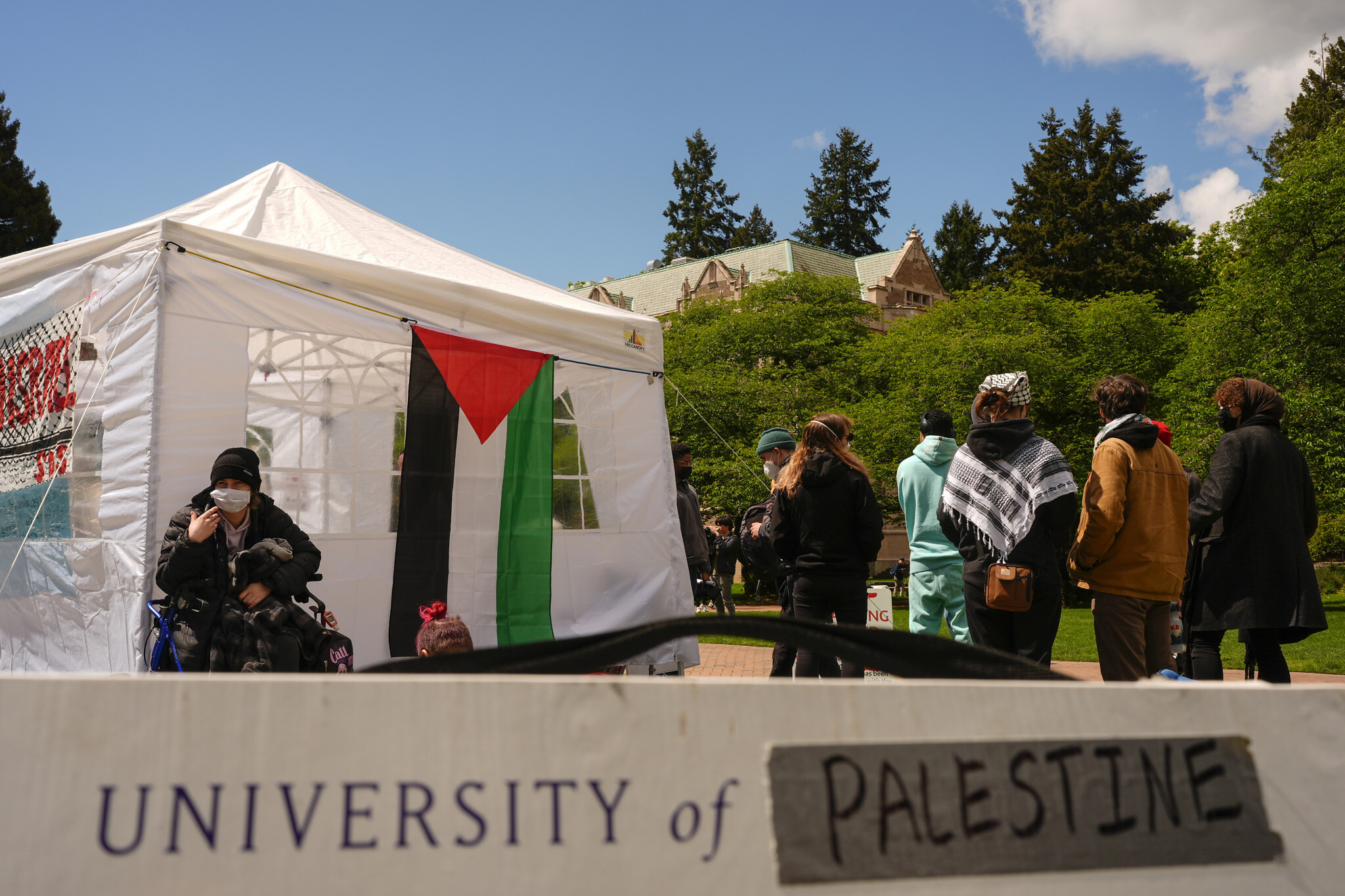
One-third of American college students believe the Palestinians are a better ally for the United States than Israel, according to a poll published last week by Yale University’s Buckley Institute.
The survey of 820 undergraduates across the US, conducted in early September, found that 33 percent of respondents said Palestine was a better ally for the United States, while only 29% said Israel was the better option of the two. The remaining 38% said they were unsure, leaving 71% wary of a relationship that US President Donald Trump has referred to as “an unbreakable bond.”
Among self-identified liberals, the Palestine option was preferred 46%-25%. Among conservatives, Israel was ahead 43%-16%. Those who identified as moderates preferred Israel moderately, by a margin of 30%-26%.
It was not clear whether students believed that Palestine referred to the Palestinian Authority widely seen as teetering on the brink of collapse, the Hamas terrorist group that currently rules the Gaza Strip, or another entity.
The study by Buckley, whose mission is to promote intellectual diversity and freedom of speech at Yale, comes at a time when Jews increasingly experience antisemitism on college campuses. A recent survey by the Anti-Defamation League (ADL) and the World Union of Jewish Students (WUJS) found that 78% of Jewish students now conceal their religious identity and 81% hide their Zionist identity on campuses worldwide, while a separate ADL study found that 83% of Jewish American college students have experienced or witnessed antisemitism firsthand.
In a separate question about the feasibility of a two-state solution where Israel and Palestine live peacefully next to each other, 46% said they thought it was possible, 44% said it was not possible, and 10% said they were unsure.
Regarding the US government’s recent conflicts with universities over antisemitism issues, 47% of students said they believe there is an antisemitism issue on campus that merits some government involvement. Another 23% believe campus antisemitism exists but colleges and universities should handle it themselves, and 16% believe there is no antisemitism issue in the first place.
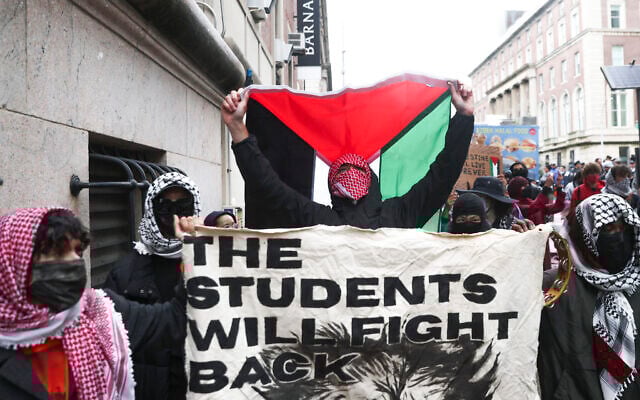
The study, which surveyed students’ attitudes about a number of contemporary issues, found that record levels of undergraduates believe in the importance of the US Constitution and freedom of speech. A record 60% acknowledged that “hate speech, no matter how racist or bigoted it is, is still technically protected under the First Amendment,” while 72% of undergraduates said it is more important for their college or university to encourage free speech than to prevent offensive dialogue.
At the same time, 48% of students said they believe it is sometimes acceptable to shout down or disrupt speakers, while almost four in ten believe physical violence can be justified to stop hate speech.
Some 38% think political comments they don’t like can be harmful to their mental health, and one in three believes offensive speech should be subject to criminal prosecution, the survey found.
Additionally, while capitalism outpolled socialism by a narrow 40% to 36%, the survey found that 46% of undergraduates believe that “socialist countries like Cuba and the Soviet Union… offer a better economic model than capitalist countries like the United States,” versus 39% who disagree.
“It is clear that despite support for free speech in theory, America’s undergraduates don’t support it in practice,” said Buckley Institute founder and Executive Director Lauren Noble. “America’s college students support shout-downs and violence to stop offensive speech at an alarming rate, particularly worrying in the wake of Charlie Kirk’s assassination. And they have a concerning predilection for the Cuban and Soviet economies. American higher education is in trouble.”










The Times of Israel Community.