

Austria seeks to regroup after far-right surge sparks shakeup
Center left ruling party considers joining forces with anti-migrant far-right after watching support erode at polls
 Add ToI as a Preferred Source on Google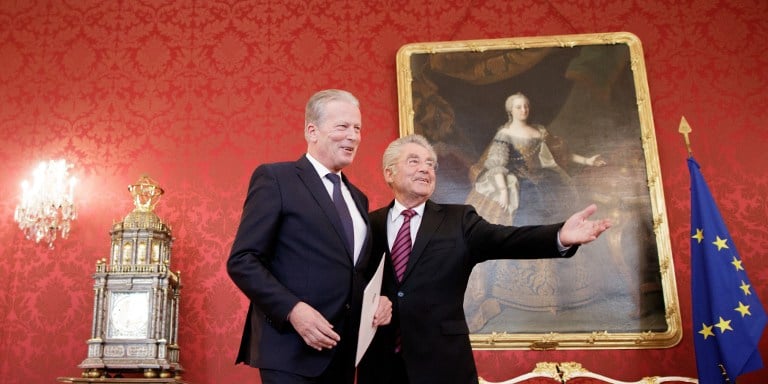
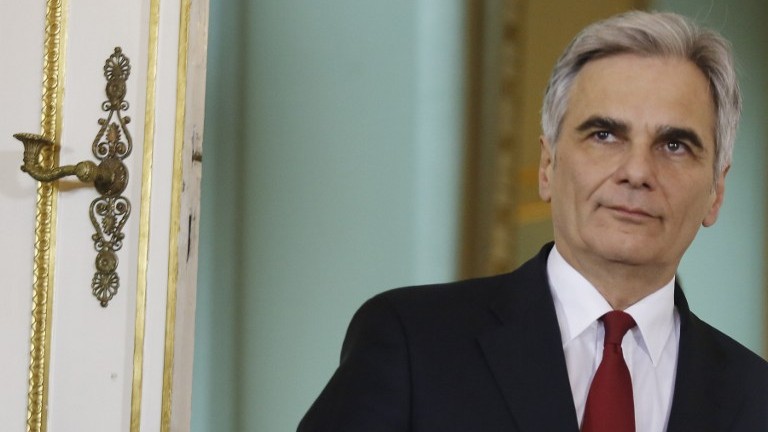
VIENNA, Austria — Austria’s center-left on Tuesday begins the search for a new leader and new direction after a sharp drop in support, at the hand of the populist far-right, forced Chancellor Werner Faymann to quit.
Analysts said this new departure might even see Faymann’s Social Democrats (SPOe) taking the radical and dangerous gamble of dropping its historic opposition to a tie-up with the far-right.
The SPOe and their center-right “grand coalition” partners the People’s Party (OeVP) have dominated Austrian politics since World War II but their support has been sliding for years.
During the last general election in 2013, they only just scratched together a majority, and polls suggest they will fail to do so again at the next ballot in 2018.
Mirroring similar trends across Europe, the center-left has been bleeding support to fringe groups, which in Austria’s case means the anti-immigration Freedom Party (FPOe) of Heinz-Christian Strache.
Speaking Monday, Strache said Faymann’s resignation “does not solve the SPOe’s basic problem, which is its utterly wrong policies [decided] over the heads of people and against Austria’s interests.”
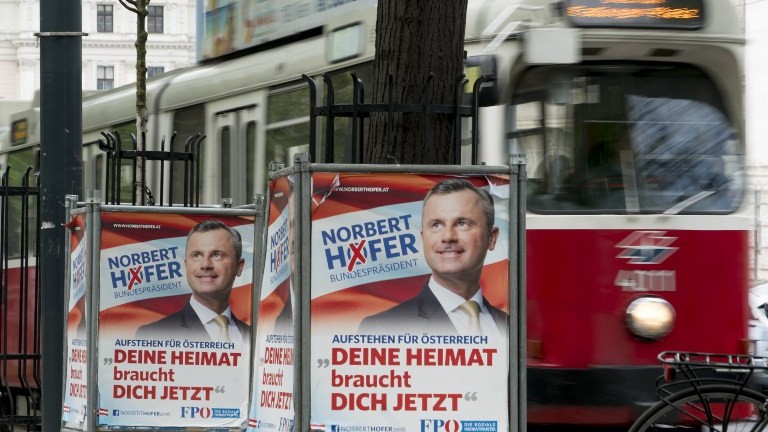
Tapping into unease over Europe’s ongoing migrant crisis, the FPOe is leading opinion polls and on April 24, its candidate won the first round of elections for the largely-ceremonial post of president.
Norbert Hofer, 45, who presents himself as the friendly and reasonable face of the FPOe, will now be up against Alexander van der Bellen, a former head of the Greens who came second, in a May 22 runoff.
The two ruling parties’ candidates were knocked out of the race with just 11 percent of the vote each against 35 percent for Hofer.
This dismal performance, due also to a worsening economic situation and the coalition’s inability to agree reforms, means that for the first time since 1945, the president will not be from one of the two centrist parties.
This could result in a situation in which the new president makes use of some of the head of state’s considerable but hitherto unused powers, such as firing the government or dissolving parliament.
Deputy Chancellor Reinhold Mitterlehner, head of the OeVP, will replace Faymann on an interim basis but it was unclear who would be his permanent successor as chancellor and SPOe boss.
Two possible candidates are Christian Kern, 50, head of the national railways company, and Gerhard Zeiler, 60, former chief of national broadcaster ORF. A decision may be taken at a party meeting on May 17.
“It would be good to have a new face, someone from outside the party,” Karin Cvrtila from the OGM polling institute told AFP.
But, Cvrtila said, they will have a momentous decision to take: whether to stick with the SPOe’s traditional opposition to the FPOe, or to team up with it, as the party has done in the eastern state of Burgenland.
Such a move has been backed by party grandee and former chancellor Franz Vranitzky, among many others. Cvrtila said it would be “smart” not to rule out some sort of cooperation.
But such a move could also tear the SPOe apart. Political analyst Anton Pelinka from Innsbruck University called it “very dangerous,” saying it could potentially drive voters towards the Greens.
“The SPOe is completely stumped and confused,” he said.
History also serves as a warning. When in 2000, the OeVP formed a government with the FPOe under the late Joerg Haider, the result was massive demonstrations and Austria being ostracised in Europe.





The Times of Israel Community.