

Barakback mountain: 6 things to know for June 27
Ehud Barak’s return to politics could provide more than a molehill of trouble for Netanyahu or Gantz, but he just can’t quit Israeli politics
 Add ToI as a Preferred Source on Google
Joshua Davidovich is The Times of Israel's Deputy Editor
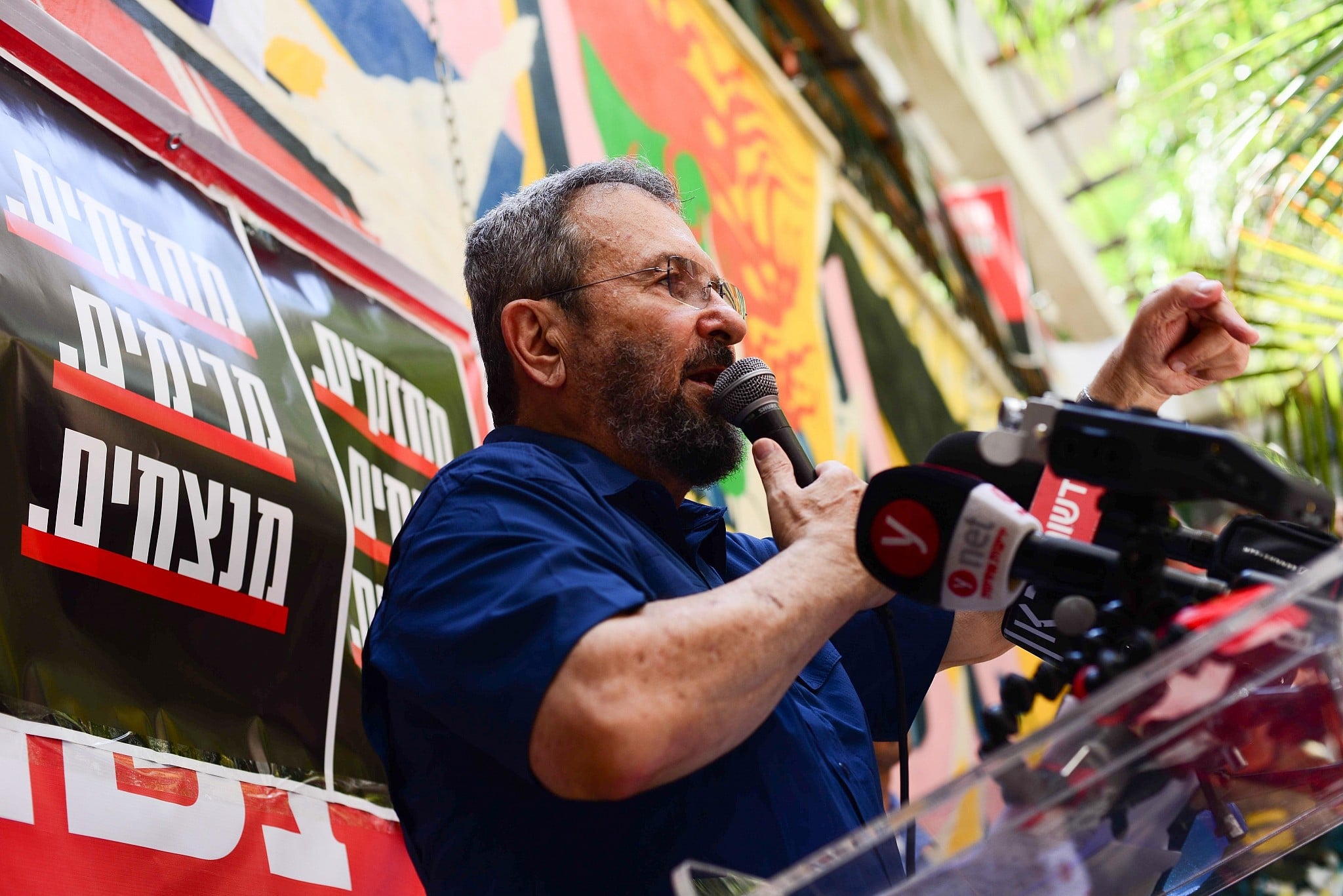
1. I’m baaaaack: The last time Ehud Barak formed a new political party, it was to help Prime Minister Benjamin Netanyahu stay in power in 2010, becoming the pariah of the Labor Party he once led ( and which has never fully recovered).
- At the time, his departure was viewed by some as a chance for the left to regroup and for the right to return to the days of old, when Mapainiks and moderate right-wingers (as Netanyahu was back then) broke bread, smashed heads and at least tried for peace.
- “Barak shall save Bibi, Bibi shall save Barak, Kadima will be forced to shrink, and we’ll see the emergence of the Ben-Gurion coalition here: What used to be Mapai, together with what used to be HaMizrahi, plus the Likud,” Yoram Kaniuk wrote in Yedioth Ahronoth at the time.
- This time around Barak’s move is also cautiously hailed by the peace camp, not because he’ll bring Netanyahu leftward, but because he could push Netanyahu out and save the left.
- Writes Yossi Verter in Haaretz: “Barak is the only person in the country who can say the following to Netanyahu: ‘As your former commander, I’m telling you: Bibi, you can no longer remain at the helm of the government. Your time as a political leader is over.” When Netanyahu hears these words, he turns gray.”
- Yedioth’s Sima Kadmon praises him as having a “killer instinct, something no other candidate to replace Netanyahu has had.”
2. Gantz in trouble: In Maariv, Ben Caspit writes that Barak is the “national dishwasher,” having managed in the past to wash out both Benjamin Netanyahu and Shimon Peres. “Except it turns out he is better at taking things apart than putting them together.”
- But perhaps it is Blue and White leader Benny Gantz who should be more worried. Yedioth’s Nahum Barnea opines that Barak could push him out if Gantz doesn’t figure how to show that he’s “more hungry.”
- Tal Shalev in Walla notes that Barak’s entrance puts Gantz in a fatal triangle. “If Barak’s master plan works out, and he manages to rally behind him a bunch of left-wing parties — he could cause a significant exodus of Blue and White’s left-wing base. Meanwhile, with Avigdor Liberman’s aggressive campaign for the secular vote, Gantz could find himself in a fight over the bloc.”
3. Bibi’s bestie? While most papers play up Barak’s big comeback, pro-Likud Israel Hayom buries the story on the bottom of its front page (though still devotes several pages to it).
- Columnist Amnon Lord writes that Netanyahu really has nothing to worry about, with Barak and running mate Yair Golan, a former IDF deputy chief, only good at crossing red lines and making fools of themselves, which may end up helping Netanyahu.
- And he writes the use of military terms by the two “gave the whole event the feel of a military coup.”
- Haaretz’s Anshel Pfeffer, meanwhile, surmises that perhaps Barak will even pull a repeat and join team Netanyahu. “At 77 and now on his second political comeback, there is no point in even wondering whether Barak has changed. In fact, perhaps he may find himself serving under his old soldier Netanyahu again.”
4. Bahrain bestie: Far away from the political squabbles of Israel, in the placid waters of the Persian Gulf, the foreign minister of tiny Bahrain tells ToI’s Raphael Ahren about his hopes for peace with Israel, in comments that would have been unthinkable just a few years ago.
- “I want the Israeli public to trust that there are more than one or two or three voices in the Arab world that are aiming for peace. That they are not surrounded by enemies. But they are surrounded by people who will want to achieve a just peace that would make everybody comfortable,” Shaikh Khalid Al-Khalifa says.
- Asked about Bahrain recognizing Israel, he is unequivocal about its existence and geography.
- “Israel is a country. Israel is a country in the region, in the Middle East, the State of Israel,” he says. “And it’s there to stay, of course. Who did we offer peace to? The [Arab] Peace Initiative? We offered it to a country named the State of Israel, in the region.”
- Rather than run off to distance himself from the interview, Al-Khalifa goes as far as to tweet portions from it he’s most happy with.
Quotes from the interview of the Minister of Foreign Affairs, Shaikh Khalid bin Ahmed bin Mohammed Al Khalifa, with @TimesofIsrael pic.twitter.com/beJZyiGkxr
— وزارة الخارجية ???????? (@bahdiplomatic) June 27, 2019
- Middle East Monitor reports that Hamas, at least, was not happy with the comments.
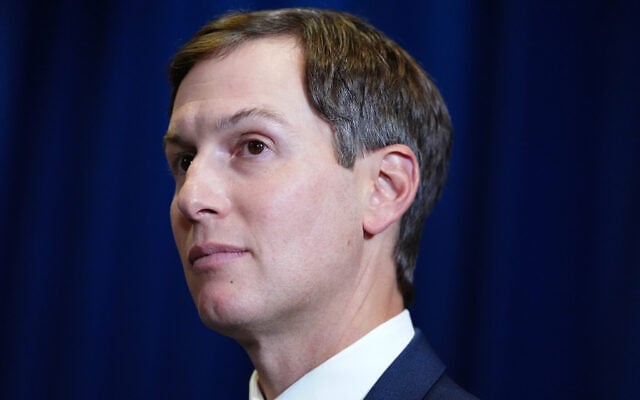
5. Everybody is a critic: In the Guardian, Martin Chulov is more circumspect about whether anything happening in Manama can lead to peace, writing that the deal of the century turned out to be “little more than a failed clearance sale. Jared Kushner arrived in Bahrain touting bedrock principles at untenable discounts. And even then there were no buyers.”
- “No-one wanted to talk politics in Manama. In the place of a formula that had underwritten peace initiatives for decades came the expectation that the Trump Administration should be trusted to deliver a just and equitable peace, if and when a political dimension comes around,” he writes.
- The National’s Jack Moore is even more critical: “Outside the organised panels, which are half-empty when a big name is not speaking, the lobby is where most of the action is, if you can call it that. Chatter about the US plan, business talk and networking opportunities between the people this event has attracted take place over unappetising canapés and dreary piano music. Nobody would dispute that it was as exciting as a Steven Mnuchin economic report. Although, as Palestinian Prime Minister Mohammed Shtayyeh predicted, the coffee is good.”
6. Where’s the money? In the New York Times, David Halbfinger writes that investors were pitched on pumping money into Gaza, but “nobody was buying it,” though that may be because of the Americans and their allies themselves.
- “Speaker after speaker in Manama — including ministers from several Arab countries of the Persian Gulf — made a point to argue that the Palestinians’ natural entrepreneurship, strong literacy and educational attainment levels could all be unleashed but for the poor ‘governance’ and the absence of ‘transparency’ and of the ‘rule of law’ that they said afflict the West Bank and Gaza,” he writes.
- Sam Bahour, a Palestinian-American business consultant who was watching the proceedings online from Ramallah and has become hotly interviewed during the confab, calls the comments a “smear campaign.”
- Noa Landau writes that Europeans, who are actually footing the bill for Palestinian development, also viewed the conference with a jaundiced eye.
- “Many of them feel a bit awkward about the economic part of the American peace plan. As the Americans in Bahrain speak of theoretical investments worth tens of billions of dollars in the Palestinian economy and Palestinian society, European taxpayers are picking up the bulk of the tab for humanitarian projects in the field in the meantime, while the Americans have only been cutting and cutting funding to the Palestinians,” she writes.
- But US envoy Jason Greenblatt tells i24 news that it was a success in that it managed to “change the conversation.”
- “Nobody can create a situation that doesn’t include an economic package. What we heard from the investors is ‘we can make this happen. This is an investable type of project if the political solution is there,” he is quoted saying.




The Times of Israel Community.