

Belgian museum shows travel could be life or death
Composer Irving Berlin, Albert Einstein and Golda Meir among the famous personalities saved by sailing the Red Star Line
 Add ToI as a Preferred Source on Google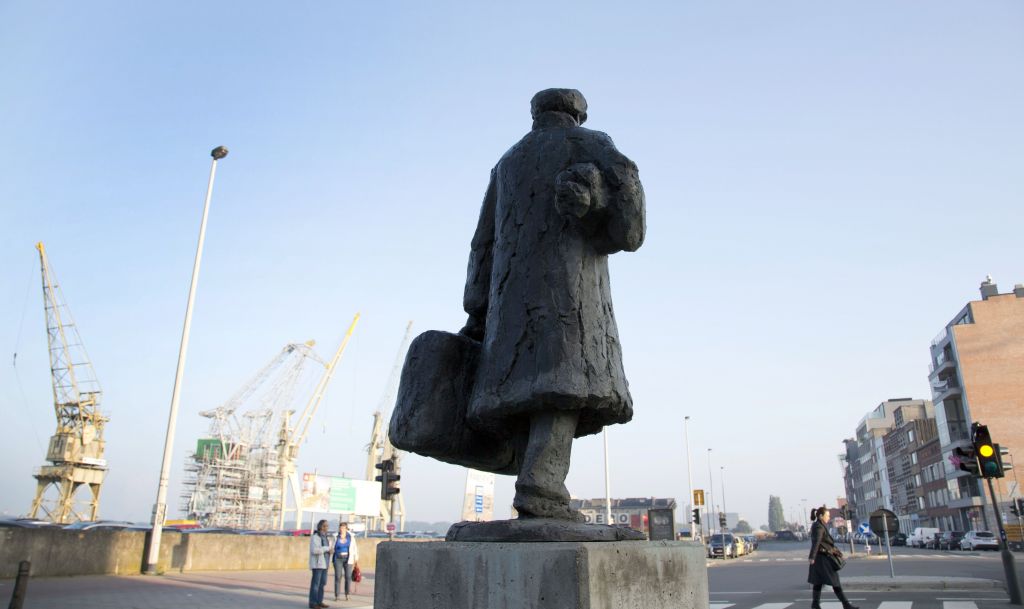
ANTWERP, Belgium (AP) — In today’s world of cruise ship travel, it is easy to forget how life-changing boarding a steamer once was.
When young Sonia Pressman Fuentes stepped aboard the Westernland II ship in Antwerp with her family on April 20, 1934, it was the biggest leap she would ever take.
“It made it possible for me to be alive — very simple answer. Otherwise we would have been killed,” the Jewish feminist leader said, recalling her family’s flight from the Nazis.
“We would have been killed in Germany had we remained there. We would have been killed in Belgium had we remained there. And we would have been killed in Poland if we had been deported there,” she continued. “The Red Star Line saved all our lives.”
Pressman Fuentes was back at the original docks of this huge North Sea port for Friday’s ceremonial opening of the Red Star Line migration museum, which shows how millions of Europeans steamed across the ocean toward the United States and other parts of the Americas over the past two centuries.
It charts the migrations of everyone who traveled on the shipping line, from composer Irving Berlin to scientist Albert Einstein to Israeli politician Golda Meir. It is the story of countless people escaping poverty, seeking adventure, avoiding persecution or dodging certain death.
“What we are trying to achieve with the museum is to bring back all the stories of lives that were changed here,” said museum project coordinator Luc Verheyen.
Over two million passengers sailed from Europe to America between 1873 and 1934 on the Red Star Line. Antwerp was popular because it already was a massive port and it had a well-established Jewish community.
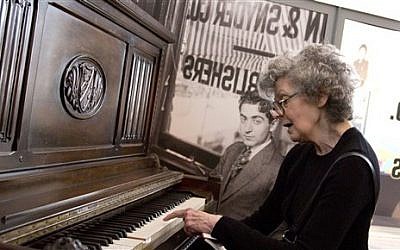
In 1893, a five-year-old Israel Isidore Baline was among the émigrés, part of a family fleeing increasing anti-Semitic violence in Russia. Baline became Irving Berlin after the family entered the United States and settled in New York’s Lower East side. His classics like “God Bless America” and “White Christmas” made him famous in his new country and around the world.
Now, one of Berlin’s pianos stands in the museum, on extended loan from the family. His daughter and two granddaughters were on hand for the opening.
“Coming to this museum is like completing a circle. To think my father left from this building, and here we are in it!” his daughter Linda Emmet said.
“It wasn’t an easy voyage,” she added. “The man in the upper bunk dropped his penknife onto my father’s forehead. It left a scar for the rest of his life.”
No lasting damage was done to Berlin. A few decades later, his fame became such that the Red Star Line’s SS Belgenland was playing a Berlin foxtrot for its first and second class passengers.
Nobel Prize winner Einstein was another famous passenger. When he was on the Belgenland II in 1933, he learned that the Nazis had confiscated his possessions so he decided not return to Berlin. Instead, he used Red Star Line stationery to declare his resignation from the Prussian Academy for the Sciences.
The museum highlights the eternal struggle of migration, a lesson as true today as it was decades ago.
“We tend to forget how hard it is to emigrate,” said Caroline Emmet-Bourgois, Berlin’s granddaughter. “You are leaving behind your identity. You are going into the unknown. You are trying to give a future to your children and you are willing to lose what you already have to start anew.”
The museum opened to the public on Saturday.
___
AP Photo Editor Virginia Mayo and videojournalist Mark Carlson contributed to this story
Copyright 2013 The Associated Press








The Times of Israel Community.