

Big hit: Praised Israel Museum abstract art show unleashes once-hidden huge works
Fields of Abstraction boasts massive post-war pieces; many not previously shown, drawn from Jerusalem institution’s collection
 Add ToI as a Preferred Source on Google
Jessica Steinberg, The Times of Israel's culture and lifestyles editor, covers the Sabra scene from south to north and back to the center
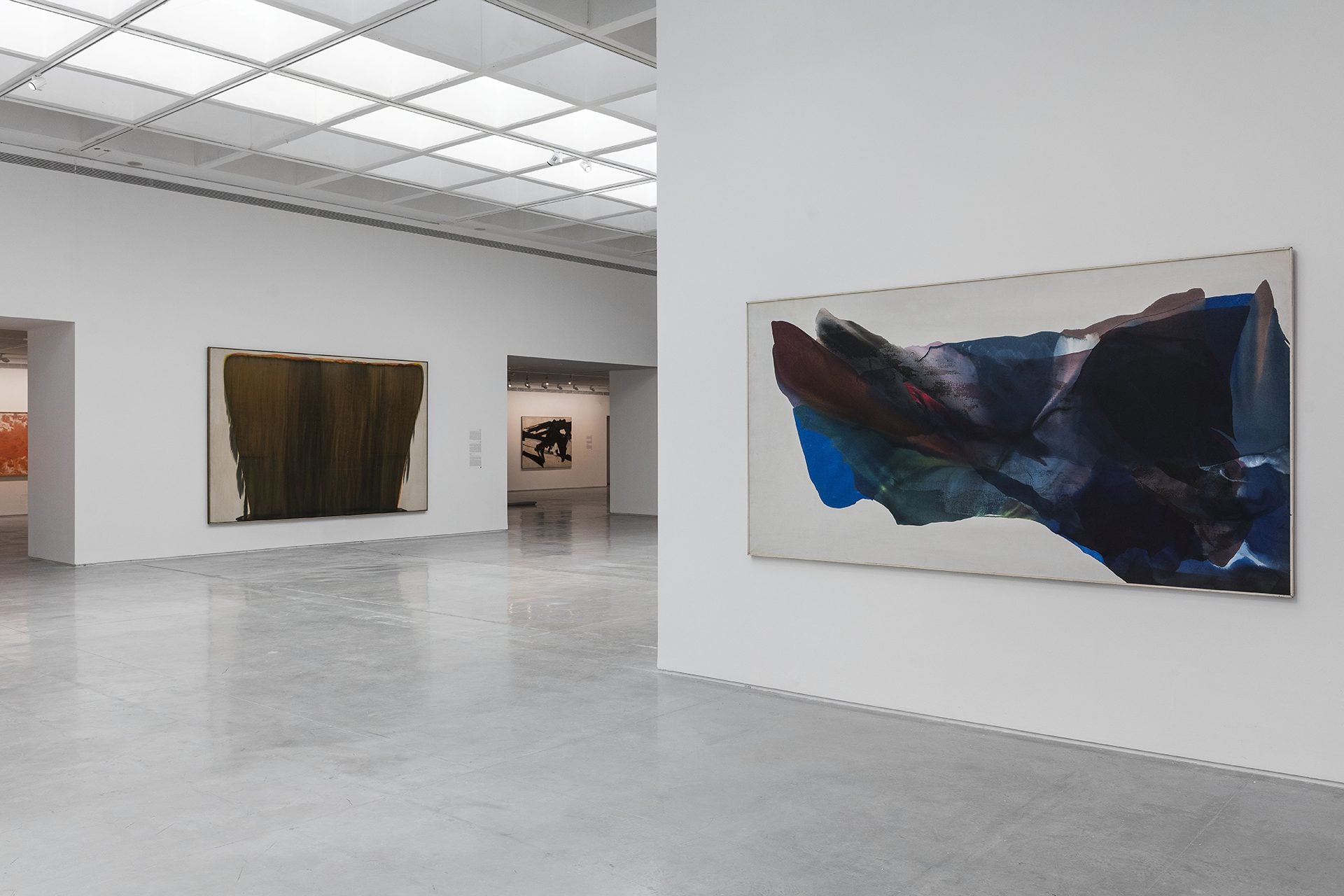
There’s an expansive feeling of color and space in “Fields of Abstraction,” a new exhibit of abstract art at the Israel Museum featuring works from the museum’s collection, some of which have never been shown before.
The exhibit, which opened February 3 and closes October 15, features 43 large-scale, abstract works from seven decades, offering an immersive experience of the second wave of abstraction.
It was named by Christie’s as one of 2022’s best exhibitions in Asia-Pacific, Middle East and South America.
There are some enormous canvases and colors filling the galleries of the exhibit curated by Adina Kamien, who drew from the museum’s collection dating from 1949 through the present.
Kamien said that some sixty percent of the artworks have never been shown because of their massive dimensions.
She was inspired to curate the exhibit after visiting a Jerusalem nature reserve filled with purple lupine flowers during the start of the pandemic, when the open air and space offered a sense of upliftment that she aimed to recreate with the exhibit’s large-scale works.
Working with pieces by well-known postwar North American, European and Israeli artists, Kamien divided the exhibit’s galleries into three areas, titled Contemplative Expanses, Energetic Surfaces and Geometric Balance.
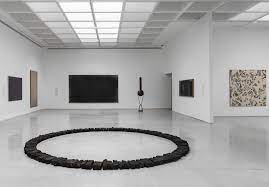
“It’s about the effect the artists wanted to create, and how the spectator reads that,” said Kamien.
Each of the artists exhibited strove to expand the experience of their art through an exploration of materials, gestures, and surfaces, said Kamien, who included works by Helen Frankenthaler, Jackson Pollock, Pierre Soulages and Tsibi Geva, among others.
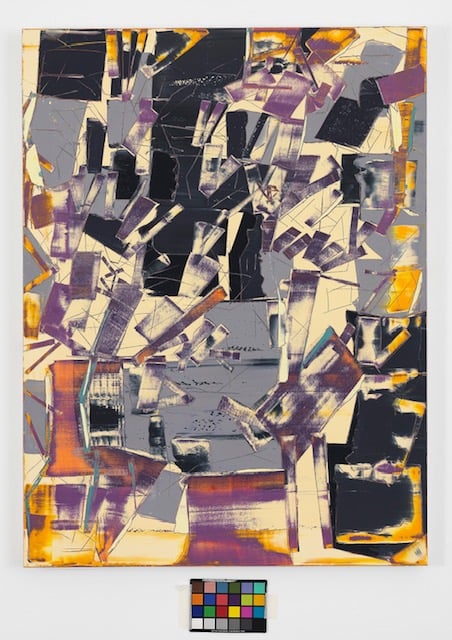
One of the Energetic Surfaces works is “Horizontal Composition,” 1949 by Jackson Pollack, a narrow, horizontal work that may have been cut down from its original size, along with the flat, white-on-whites of Yehiel Krize and exuberant color of Sam Francis’ 1973 work, “Untitled.”
The exhibit includes videos of some of the artists in the act of painting, including Pollack, as he raises his hands to splatter paint on the canvas.
Contemplative Expanses includes the bold, bright, modern colors and stripes of Morris Louis’ “Iota”; the layers and squeegee paint removal in Gerard Rechter’s $20 million “Abstract Painting” from 1994; and Grand Tour,” 1983 by Frankenthaler, the one that “started it all” for Kamien, featuring the artist’s “soak-stain” technique that was inspired by Pollack’s drip-and-pour method.
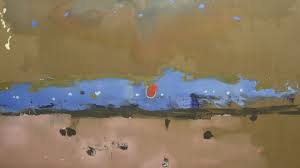
“Grand Tour” offers a natural-looking landscape, as the brown, taupe and blue colors merge with one another, emulating the grand expanse of earth, water and sky that bleed beyond the canvas itself.
The exhibit looks closely at the second generation of abstraction, when the reshuffling of the canon began to make room for some lesser-known names.
Kamien devotes one of the Energetic Surfaces galleries to the use of Japanese calligraphy, utilized by the post World War Two generation as one of their influences, portrayed in works such as “Black and White,” 1959, by Willem de Kooning, whose exhibited lithograph reflects his own 1970s-era exposure to Japanese ink drawing.
The Geometric Balance portion of the exhibit is centered by Richard Long’s “Turf Ring,” 1991, a circle of manmade turf bricks laid out on the floor, drawing on British folklore and his continuing work about land art.
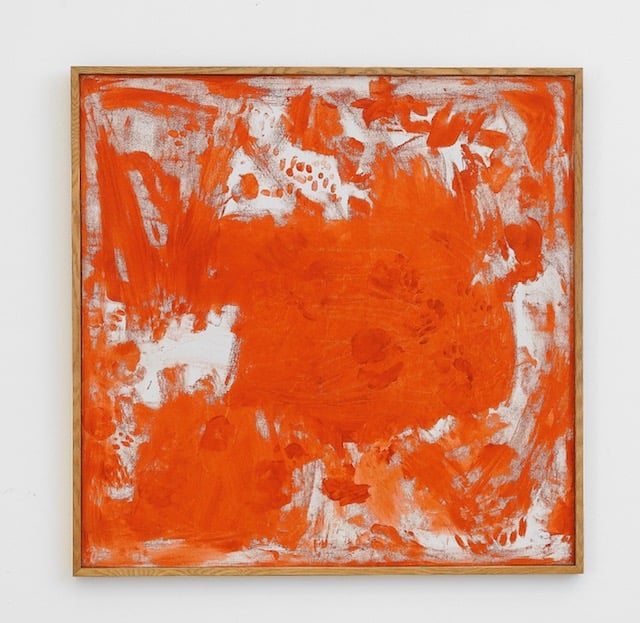
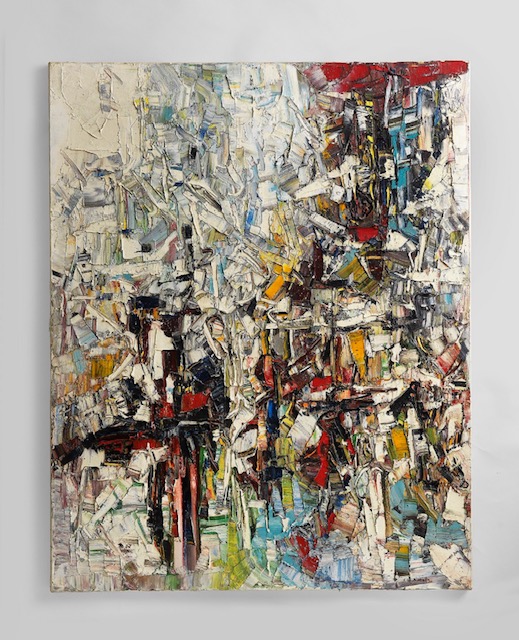
Kamien also included the single-color “Orange Stain” by Lea Nikel, a Ukrainian-born Israeli artist whose works were considered too abstract for her Israeli instructors and “Plowing Under the Snow,” the many-layered painting of Jean Paul Riopelle, known for squeezing paint straight from the tube and applying it liberally with a palette knife to craft his mosaic-like works.
Online visitors can experience the exhibit through the exhibition website, which leads the viewer through the various movements of abstraction, artist by artist. It’s notably easier to scroll forward through the images than to scroll backwards.
When visiting the exhibit in person, visitors can scan QR codes throughout the galleries, accessing the museum website with the images, analyses of artworks and links to written, visual and auditory materials about the world of abstract art.








The Times of Israel Community.