

Campaign heats up against naming 1948 memorial for slain minister
Independence War vets oppose naming inn at Jerusalem foothills for controversial Rehavam Ze‘evi, who was not part of battle for Jerusalem
 Add ToI as a Preferred Source on Google
Sue Surkes is The Times of Israel's environment reporter
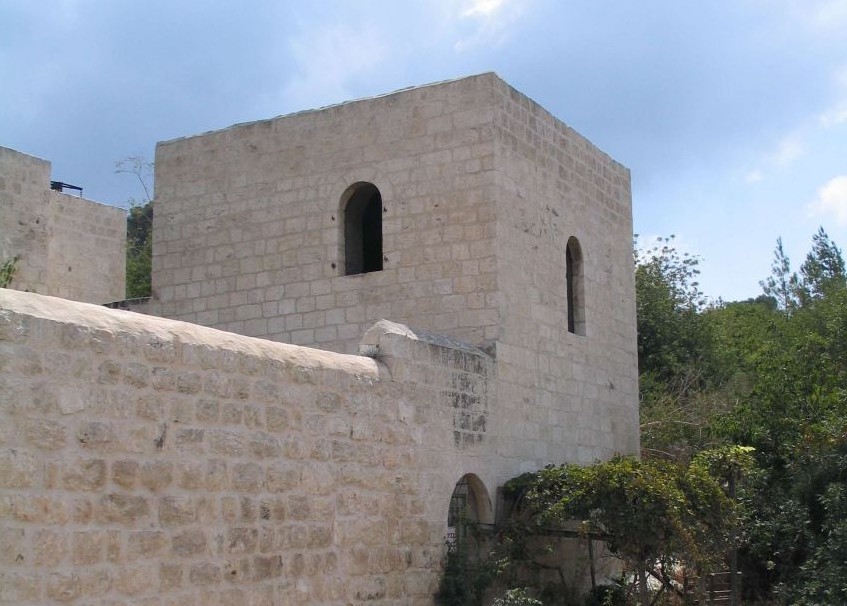
A group of octogenarian veterans who fought to hold open the road to Jerusalem during Israel’s 1948-9 War of Independence resolved Sunday to ratchet up their campaign against a cabinet decision to name a key site along the road for a controversial far-right ex-general and politician who, they complain, had nothing to do with the operation.
“At this stage, we’re not going to use physical force,” said Yeshayahu (Shaike) Gavish, chairman of the Palmach Veterans Association, according to the Haaretz newspaper.
“If we have to, we’ll set the place on fire,” Yitzhak Sarig, son of the late Nahum Sarig, who fought in the battle for Jerusalem, told the Israel Hayom newspaper.
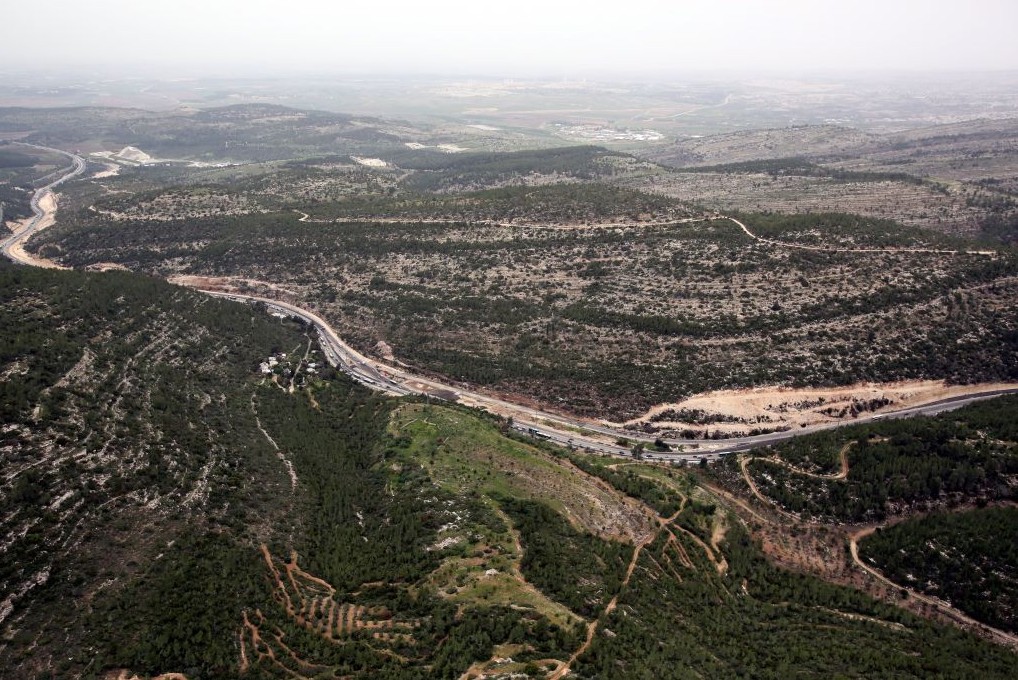
The comments follow a cabinet vote to name the site of an Ottoman-era inn along the Route 1 highway at Sha’ar Hagai, “Gate of the Valley” or “Bab el-Wad” in Arabic, for Rehavam Ze’evi, a former general and later politician from the far-right Moledet party who advocated the voluntary transfer of millions of Palestinians out of the West Bank and Gaza to neighboring Arab states.
The site, located at the ancient opening to the steep mountain road that lead up from the coastal plain toward mountainous Jerusalem, currently commemorates the efforts in 1948-9 of the Palmach’s Harel Brigade, then commanded by Lt. Col. Yitzhak Rabin, who would go on to become Israel’s prime minister.
The building was renovated several years ago and forms part of a park commemorating Rabin, who was assassinated by a Jewish extremist in November 1995 during his second stint as prime minister.
The organization of former fighters in the pre-state militia, which during that war was folded into the nascent Israel Defense Forces, sent an urgent appeal to Prime Minister Benjamin Netanyahu and President Reuven Rivlin on Sunday, and urged families who lost loved ones in the campaign to join their fight to prevent the renaming of the site.
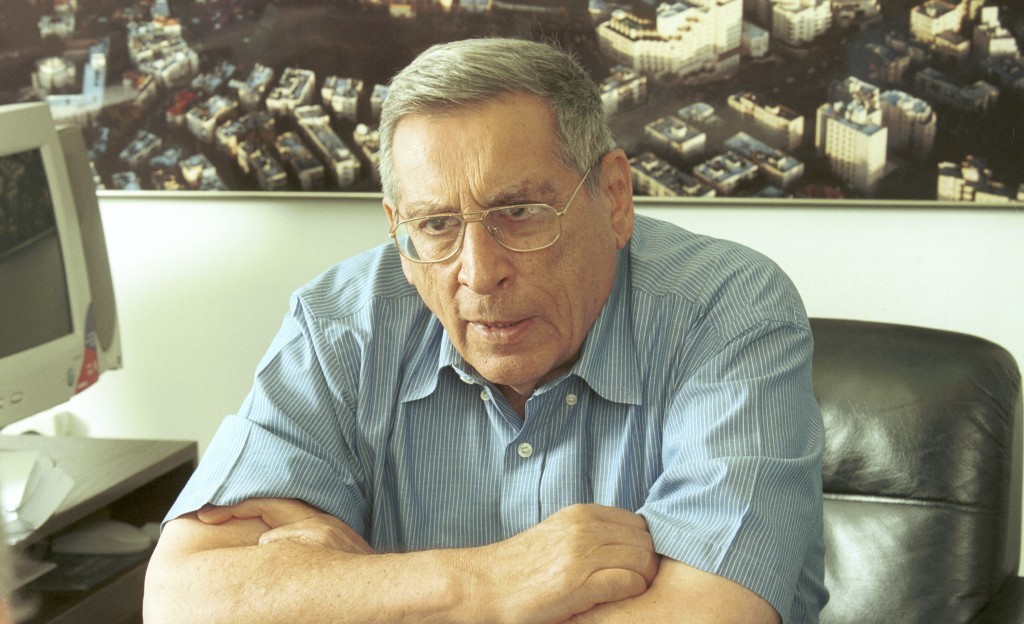
Activists met Sunday at Gavish’s office in the coastal city of Ramat Aviv to discuss how to scuttle the cabinet plan, Israel Hayom reported.
Gavish, a retired IDF major general, was joined by other influential former fighters, including Zvi Zamir, an ex-general and later head of the Mossad, former major general Amos Horev, former Mossad operative and cabinet minister Rafi Eitan, and former brigadier general Mottke Ben Porat.
Ze’evi, known by his nickname “Gandhi,” was shot dead by Palestinian gunmen from the Popular Front for the Liberation of Palestine terror group at Jerusalem’s Hyatt Hotel in 2001. According to Haaretz, he is one of only three non-prime ministers – the other two are pre-state Zionist thinkers Theodor Herzl and Ze’ev Jabotinsky – whose life is commemorated by law.
Ze’evi is already commemorated in a seaside promenade, a highway, a bridge, several city streets throughout the country, a park, a bird observatory and a military base.
The campaign against renaming the Sha’ar Hagai inn began in earnest after the publication of rape and intimidation allegations against Ze’evi by a televised investigative show earlier this year.
The accusations appeared in Channel 2’s investigative television program “Uvda” (“Fact”). It included the testimony of an unnamed female ex-soldier who said she was raped by Ze’evi, and the claim that Ze’evi once conspired with crime boss Tuvia Oshri to set off an explosive device in 1974 outside the home of Sylvie Keshet, an investigative journalist who wrote critically about him. No one was ever charged with the crime.
In April, several Israeli politicians called for the cancellation of state-organized commemorations for Ze’evi following the television report.
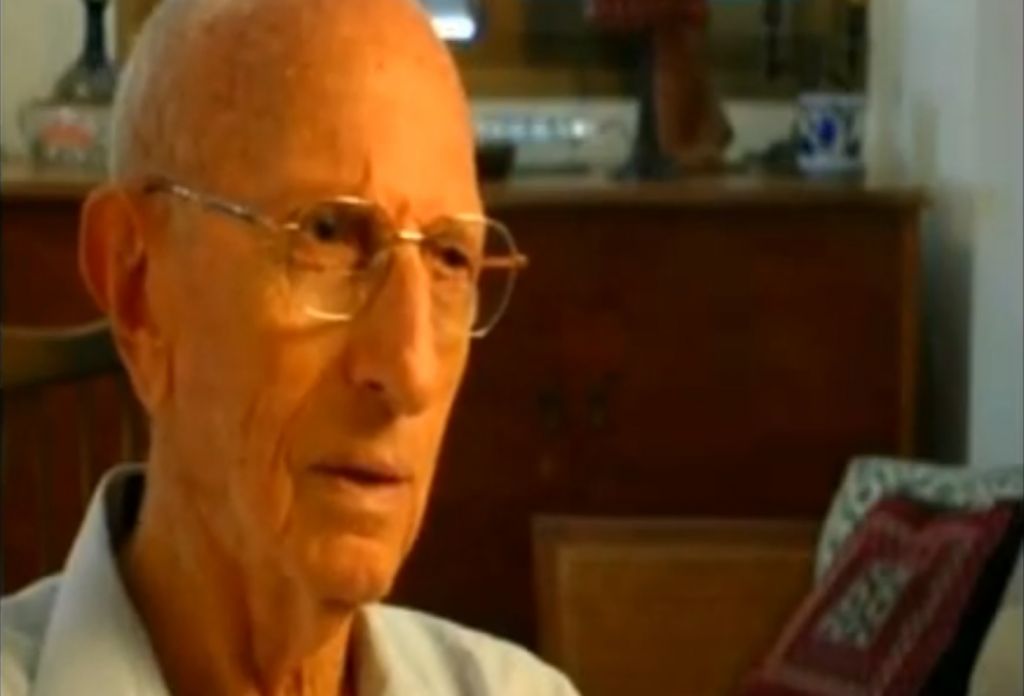
“We want the [Sha’ar Hagai] site to tell about those who were there, not about someone who wasn’t there,” Zvi Zamir said, according to Haaretz. “Whoever made the decision to call it in Gandhi’s name does not sufficiently understand.”
“We fought here, we lost our friends here. We live the Palmach until today and preserve its assets and values. We are hurt and offended by the way we are being overlooked. Why can’t we be involved? Why are they going behind our backs?” he said.
Zamir said he feared the commemoration of Ze’evi would detract from the memorial for Rabin, “the commander involved in what we did here. There was nobody like him.”
“It’s blasphemy to call the site, for political reasons, in the name of someone who didn’t fight there,” said Sarig.








The Times of Israel Community.