

Cracks appearing in Hamas leadership in Gaza
Radical secret wing targets Fatah in the Strip; attempts to reconcile with Iran and Hezbollah rebuffed

 Add ToI as a Preferred Source on Google
Avi Issacharoff, The Times of Israel's Middle East analyst, fills the same role for Walla, the leading portal in Israel. He is also a guest commentator on many different radio shows and current affairs programs on television. Until 2012, he was a reporter and commentator on Arab affairs for the Haaretz newspaper. He also lectures on modern Palestinian history at Tel Aviv University, and is currently writing a script for an action-drama series for the Israeli satellite Television "YES." Born in Jerusalem, he graduated cum laude from Ben Gurion University with a B.A. in Middle Eastern studies and then earned his M.A. from Tel Aviv University on the same subject, also cum laude. A fluent Arabic speaker, Avi was the Middle East Affairs correspondent for Israeli Public Radio covering the Israeli-Palestinian conflict, the war in Iraq and the Arab countries between the years 2003-2006. Avi directed and edited short documentary films on Israeli television programs dealing with the Middle East. In 2002 he won the "best reporter" award for the "Israel Radio” for his coverage of the second intifada. In 2004, together with Amos Harel, he wrote "The Seventh War - How we won and why we lost the war with the Palestinians." A year later the book won an award from the Institute for Strategic Studies for containing the best research on security affairs in Israel. In 2008, Issacharoff and Harel published their second book, entitled "34 Days - The Story of the Second Lebanon War," which won the same prize.
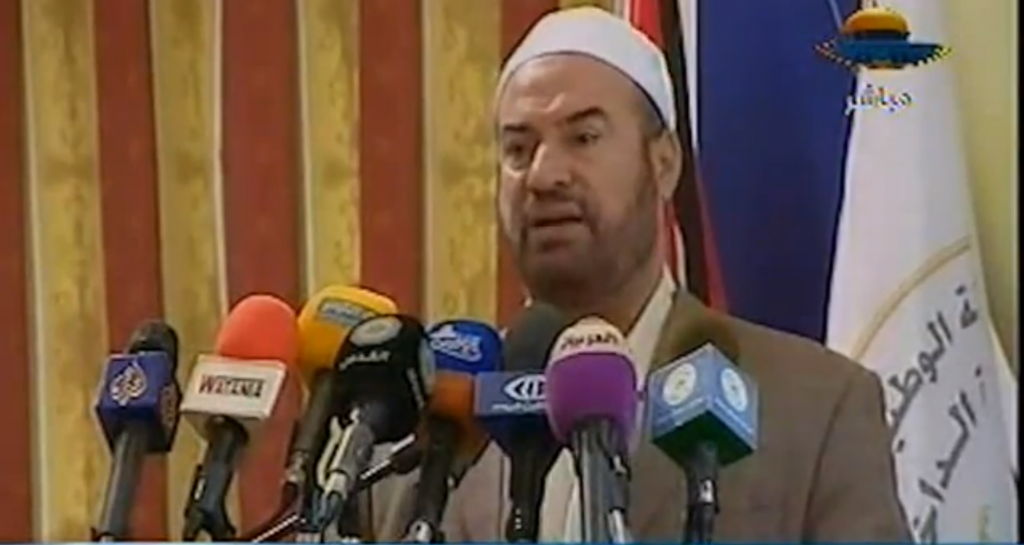
Fathi Hamad, the former Hamas interior minister in Gaza, was his usual blunt self last Wednesday as he pointed fingers at the unity government and Mahmoud Abbas for the situation in Gaza: “The [unity] government and the president are part of the siege on the Gaza Strip, and are part of the stumbling blocks on the way to its rehabilitation.”
These words wouldn’t be especially surprising coming from one the most radical officials in the Hamas leadership today. But in contrast to other senior officials in the organization, more radical and less so, Fathi Hamad has been operating independently in recent months, establishing under the noses of the Hamas leadership a network of armed cells under his command, focused on Fatah targets in Gaza.
The “secret wing” that he established attacked the homes of 13 senior Fatah officials two months ago, a French cultural center in Gaza City a month earlier, and the home of the spokesman of the reconciliation government, Ihab Basiso, last week
Hamad doesn’t hide his extremist positions against reconciliation with Abbas or Fatah, and on Wednesday he participated in a meeting of the Legislative Council in Gaza, which was convened in order to send a symbolic message to the Palestinian Authority: Time has expired for the national reconciliation government. Hamas is still ruling in Gaza.
This is not the position of all the Hamas officials in the Palestinian enclave and abroad. According to Palestinian sources in the West Bank and Gaza, as well as Arab and Israeli sources, Hamas is torn today between two fundamentally different approaches, and the dispute is threatening to tear the movement apart.
Hamad is the most prominent representative of the extremist faction, which seeks to prevent any possibility of giving up control of Gaza or of reconciliation with the Palestinian Authority. There are several more senior officials from Hamas’s armed wing with him, as well as individuals considered close to Iran in the political wing. On December 24, one of them even met with Ali Larijani, the chairman of the Iranian parliament, as part of Hamas’s attempts to reconcile with Iran. The head of the military wing, Marwan Issa, is also considered close to Hamad, but wasn’t aware of the activities of his secret cells.
On the other side stand the Hamas “politicians” who want to examine a new path for the organization, perhaps even abandoning terrorism. In this camp, Arab sources have mentioned Moussa Abu Marzouk, who is currently in the Strip, Khalil al-Hiya, and even former Hamas prime minister Ismail Haniyeh, who joined them recently. The head of Hamas’s political bureau, Khaled Mashaal, also supports the more moderate line.
Where is this all heading? An official split is still a long way off. But this is without a doubt one of the most difficult moments for the organization, especially given the reality developing in the region — a decline in the power of political Islam across the Arab world, and its growing rivalry with Egypt.
The counter-revolution in Egypt, the collapse of the Muslim Brotherhood there, and the organization giving up power in Tunisia, shattered Hamas’s dreams. It found itself alone, surrounded, and even pursued by Egypt. Cairo’s decision under President Abdel-Fatah El-Sissi to destroy the tunnels between Egypt and the Sinai meant the closing of Hamas’s top source of funds. The organization may have expected the unity government to save it and pay the salaries of its employees, but Abbas refused to do so.
Hamas also hoped that an escalation against Israel would pave a way out of the crisis, but in fact the opposite happened. Gaza and Hamas absorbed a painful blow during the summer’s conflict it Israel, which left tens of thousands homeless, with Hamas unable to help them. And now, months after the war, the PA is not hurrying to manage the crossings into Israel and Egypt, and the siege remains in place.
Hence the birth of the “pragmatic” Hamas approach, which strives for a full reconciliation with the PA and gives up its rule over Gaza. But Hamad and his associates dismiss this out of hand. For them, giving up control of Gaza is not up for discussion. Their more radical approach calls for an escalation against Fatah in Gaza in order to torpedo reconciliation. At the moment Hamad is not pushing for a conflict with Israel, but there is no saying he won’t, even in the near future.
The gap between the positions also comes into play in Hamas’s relations with its neighbors. The moderate camp was to convene the Shura Council, the organization’s leadership, in order to change its policies and reconcile with Egypt. Cairo, for its part, gave clear conditions for thawing its relations with Hamas — turning over terrorists wanted in Egypt and living in Gaza, all the Palestinians in Gaza who helped train and fund terror cells in the Sinai, and all the operatives from Hamas and other groups who were in Egyptian prisons but escaped during the first revolution, including Iman Nofel, one of the heads of the military wing, Izz a-Din al-Qassam.
In parallel with the efforts to reconcile with Egypt, Hamas’s leadership abroad also examined the possibility of renewing its contacts with Tehran, primarily in the economic sphere. But Iran passed along especially clear messages to Hamas that if it wanted Iranian funding, it must change its stance toward Bashar Assad. In other words, the path to Tehran goes through Damascus. For now, Assad himself has rejected every attempt by Hamas to reconcile, and passed along a message that he isn’t interested in drawing closer as long as Mashaal runs the organization.
Several Hamas leaders hoped that Hezbollah could help them mend relations with the “Shiite axis.” Osama Hamdan, Hamas’s representative in Lebanon, asked to meet with Hezbollah Secretary General Hassan Nasrallah, but was rebuffed. Instead he met a representative, Wafik Safa. They discussed Hamas’s request to allow Saleh al-Arouri, responsible for managing terror cells in the West Bank from his home in Turkey, to move his base of operations to Dahiya in Beirut, Hezbollah’s stronghold. This came after American pressure on Ankara to stop allowing Hamas military activities to be commanded from its territory. Arouri, it should be remembered, took official responsibility for the kidnapping and murder of the three Israeli youths last June.
Safa turned down the request.
In the meantime, Turkey continues to host Hamas leaders. In addition to Arouri, Imam al-Almi also moved to Turkey in the wake of a serious incident that happened during the summer’s fighting, whose circumstances are not entirely clear. Al-Almi was seriously injured in both legs. Initial reports said an elevator in one of the tunnels malfunctioned and crushed his legs. There were also claims that one of the military commanders shot him during a bitter argument.
Whatever the reason, al-Almi chose not to return to Gaza. He is also mentioned as one of those demanding the expulsion of Hamad from the organization, and the convening of the Shura Council to discuss new policies.
Ankara tried several times in recent weeks to mediate between Abbas and Mashaal, and invited Abbas to come for a visit. He did travel to Turkey at the beginning of the week, but for now rejects the Turkish attempts to renew the PA-Hamas contacts.







The Times of Israel Community.