

Hurt by Houthi blockade, debt-ridden Eilat port seeks aid to help it stay afloat
Unless plea to Economy Ministry is heeded, southern port could shut down as soon as Sunday; activity has dived over 90% amid Iran-backed Yemeni rebels terrorizing Red Sea shipping
 Add ToI as a Preferred Source on Google
Sharon Wrobel is a tech reporter for The Times of Israel
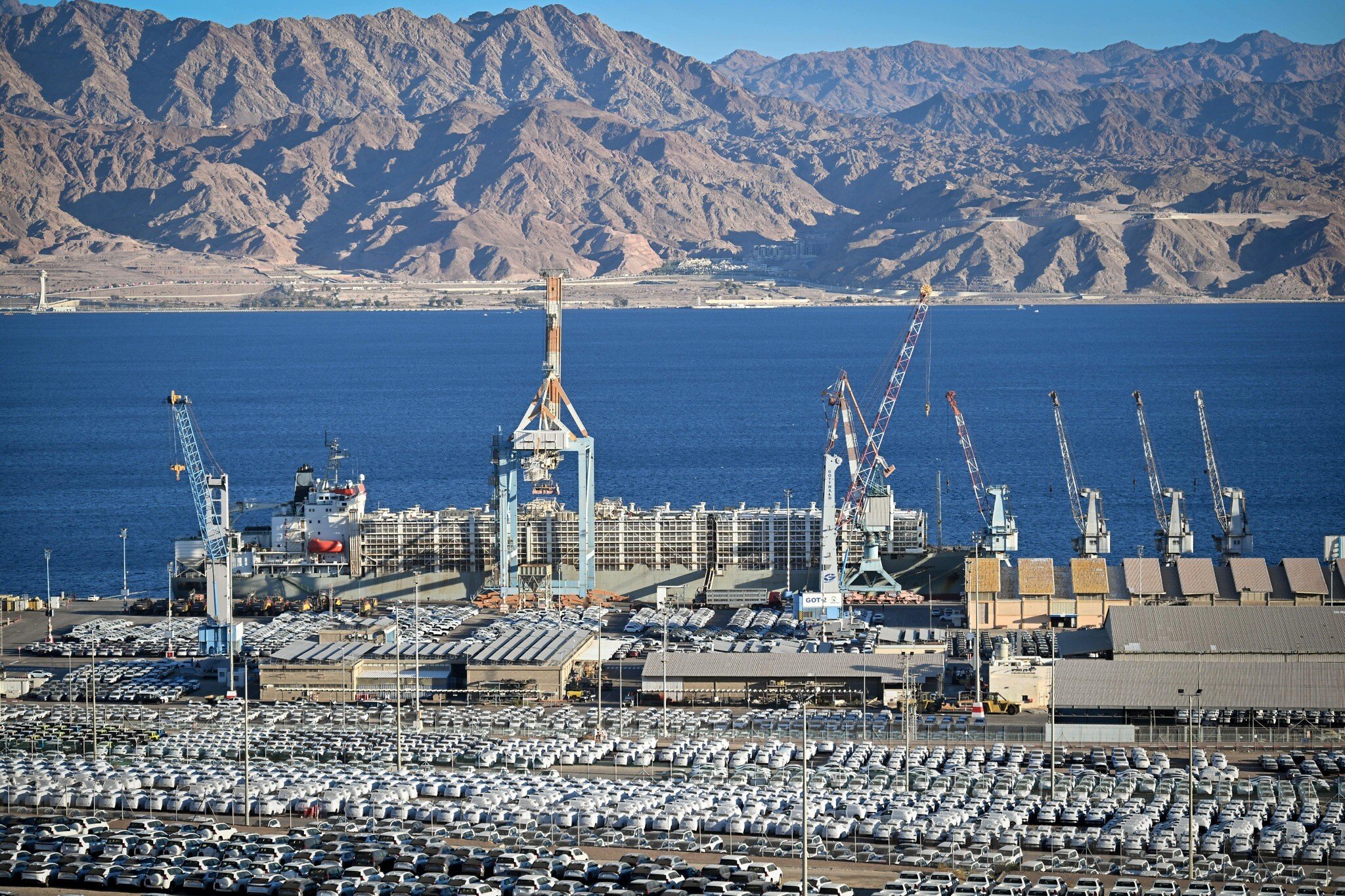
The southern port of Eilat is calling on the government to help avert imminent closure, with the debt-ridden seaport on the verge of financial collapse due to the disruption of maritime trade routes caused by continued attacks by Yemen’s Iran-backed Houthis on ships in the Red Sea.
The Eilat port, Israel’s southern gateway, has been struggling to keep afloat as it lost more than 90 percent of its activities since the Houthis began attacking maritime traffic a month after the outbreak of war with the Hamas terror group in October 2023.
Faced with huge monthly expenses — municipal taxes and salary costs — and debt piling up over the past 20 months, while its main revenue stream has been cut, the port is facing closure as early as Sunday, putting 170 jobs at risk.
“The Eilat port has strategic national importance to Israel as the country’s southern gateway on the Red Sea for maritime trade with the Far East, India, and Australia, and constitutes a significant economic anchor for the city and its residents,” Eilat port CEO Gideon Golber told The Times of Israel. “The closure of a strategic seaport in Israel would be a huge international success for the Houthis that none of our enemies have ever achieved.”
Conversely, “the unloading of ships from the Far East at the port of Eilat would constitute an image of victory over the Houthis,” Golber said.
Golber emphasized that over the past 20 months, the port’s management continued to pay its employees’ salaries, despite the lack of revenue. Port workers earn between NIS 14,000 ($4,165) and NIS 70,000 monthly.

While the bulk of Israel’s maritime trade passes through the ports of Haifa and Ashdod on the Mediterranean, Eilat is a major entry point for some imports from East Asia, including vehicles from China. About 50% of vehicle imports enter via the Eilat port. The port is also a gateway to the Far East for phosphate and potash exports, mainly by Israeli Chemicals Limited (ICL).
For almost two years, ships calling at the Eilat port have been facing the broader threat of being targeted by the Houthi terror group in open waters in the Red Sea. The Houthis have also fired ballistic missiles and drones at the city of Eilat since the beginning of the Hamas war, many of which were intercepted or missed their targets. As a result, vessels have been unloading at the ports in Ashdod and Haifa.
Ships bound for Israel and linking to Europe from the Far East have been diverting to a longer route around the southern tip of Africa and the Cape of Good Hope, increasing the shipping time of goods by two to four weeks and raising the costs per vessel.
“From the moment the Houthis seized the NYK cargo vessel [back in November 2023] and blocked the shipping route around the Bab al-Mandab Strait, a chokepoint at the foot of the commercially vital Red Sea, the activity of the Eilat port was brought to an near-halt,” said Golber. “All actions taken by the US and Israel to resolve the situation have so far failed.”
Golber said that as part of a national effort, the port is currently operating to provide services to the Israeli Navy, but due to large debts, including to the Eilat municipality, it was decided that it will have to shut down next week.
“This is after even the minimal aid of NIS 15 million ($4.5 million) that the government promised the port has not yet been received,” he lamented.

The port’s management turned to Economy Minister Nir Barkat on Thursday with a plea to consider a national proposal for a solution that will allow the port to continue functioning, consisting of agreements between car importers from the Far East, the Eilat management, and the government.
The port management wants Barkat to issue a temporary import order that will require car importers from the Far East to import vehicles through the Eilat seaport, as was the case until 2016.
In addition, according to the proposed plan, ships arriving from the Far East will pass through the Suez Canal, instead of the Bab al-Mandab Strait, to bypass the Houthi blockade. The cost of a ship’s passage through the Suez Canal is about $800,000 and would be shared between importers, the Eilat port, and the government.
“The plan is for about 3-4 ships per month, and the cost of maintaining the functional continuity of the strategic port in the south, and lifting the naval blockade on Israel, will cost the state only about $1.5 million per month,” the port administration said. “This will allow keeping all of the port’s workers and continuing giving service to the Israeli Navy.”
Houthi terrorists in Yemen have been targeting ships in declared solidarity with the Palestinians in Gaza, where Israel has been waging a war against Hamas since the terrorist organization’s unprecedented October 7, 2023, attack, in which some 1,200 people, mostly civilians, were killed and 251 were taken hostage.










The Times of Israel Community.