

Bruised but defiant, UK’s May gets mandate to form new government
Shock election results cast dark clouds over negotiations to leave the EU, just 10 days before they are due to begin, but PM says Brexit will proceed
 Add ToI as a Preferred Source on Google
LONDON — British Prime Minister Theresa May said Friday she would form a new government with backing from the small Northern Irish Democratic Unionist Party (DUP) after losing her Conservative majority in a snap general election.
“I have just been to see Her Majesty the Queen and I will now form a government — a government that can provide certainty and lead Britain forward at this critical time for our country,” she said after returning from Buckingham Palace to her Downing Street office in London.
Spectacularly punished by voters who took away her majority in parliament, a politically wounded May sought to soldier on, resisting pressure to resign after the failure of her high-stakes election gamble made the massive challenge of untangling Britain from the European Union only more complex and uncertain.
Having called an early election in hopes of getting an increased majority that could have strengthened her hand in Britain’s exit talks with the EU, May instead saw her majority evaporate completely — leaving her fortunes hanging by a thread.
Yet, rather than resign, May clung to the hope that her Conservatives might still be able to govern by making deals with another party or group of parties.
The shock result, and the prospect that the EU will now be negotiating with a shaky British government, cast dark clouds over the Brexit negotiations just 10 days before they are due to start.
But on Friday, May said she planned to stick to the timetable for starting the negotiations. “We will fulfill the promise of Brexit,” she said, speaking outside her official residence in Downing Street after receiving permission from Queen Elizabeth II to seek to form a new minority government.
“Over the next five years” she promised to “build a country in which no-one and no community is left behind.”
She said she would work with the DUP, a party she called her “ally,” to provide stable government. The specific nature of that alliance was not immediately clear.
With 649 of 650 seats in the House of Commons declared, May’s bruised Conservatives had 318 seats — short of the 326 they needed for an outright majority and well down from the 330 seats they had before May’s roll of the electoral dice. Labour has 261. The DUP’s 10 seats, if it proves a reliable partner, would give May a parliamentary majority.
The recriminations were immediate and stinging.
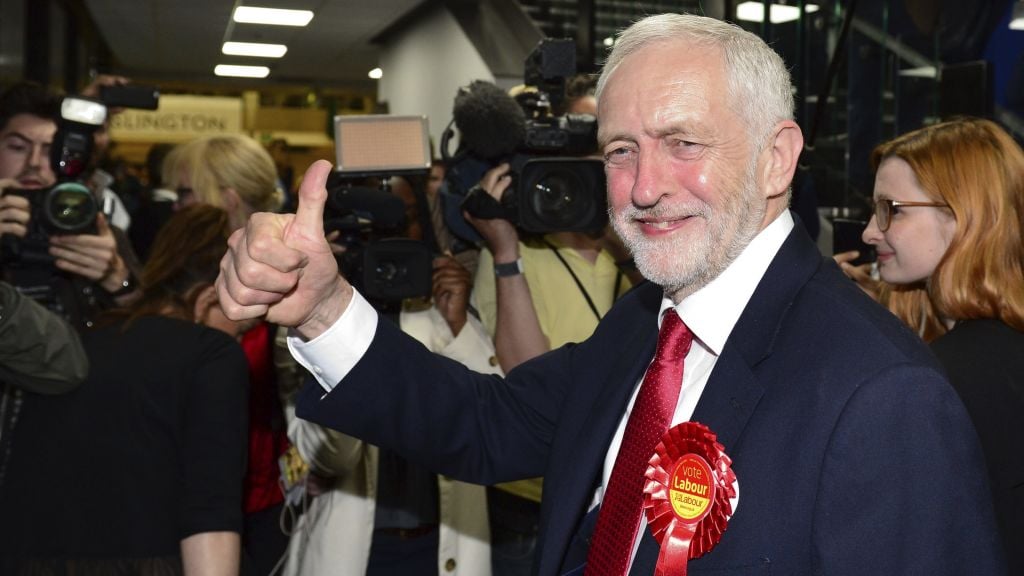
“This is a very bad moment for the Conservative Party, and we need to take stock,” Conservative lawmaker Anna Soubry said. “And our leader needs to take stock as well.”
Left-wing Labour leader Jeremy Corbyn, who was among those calling on May to resign, said Friday morning that people have had enough of austerity politics and cuts in public spending. He ruled out the potential for deals or pacts with other progressive parties in Parliament.
“The arguments the Conservative Party put forward in this election have lost, and we need to change.”
He said Labour was “ready to serve” and said May should quit.
The results confounded those who said Corbyn was electorally toxic. Written off by many pollsters, Labour surged in the final weeks of the campaign. It drew strong support from young people, who appeared to have turned out to vote in bigger-than-expected numbers.
As she was resoundingly re-elected to her Maidenhead seat in southern England, May looked tense and did not spell out what she planned to do.
“The country needs a period of stability, and whatever the results are the Conservative Party will ensure we fulfill our duty in ensuring that stability,” she said.
Many predicted she would soon be gone.
“Clearly if she’s got a worse result than two years ago and is almost unable to form a government, then she, I doubt, will survive in the long term as Conservative Party leader,” former Conservative Treasury chief George Osborne said on ITV.
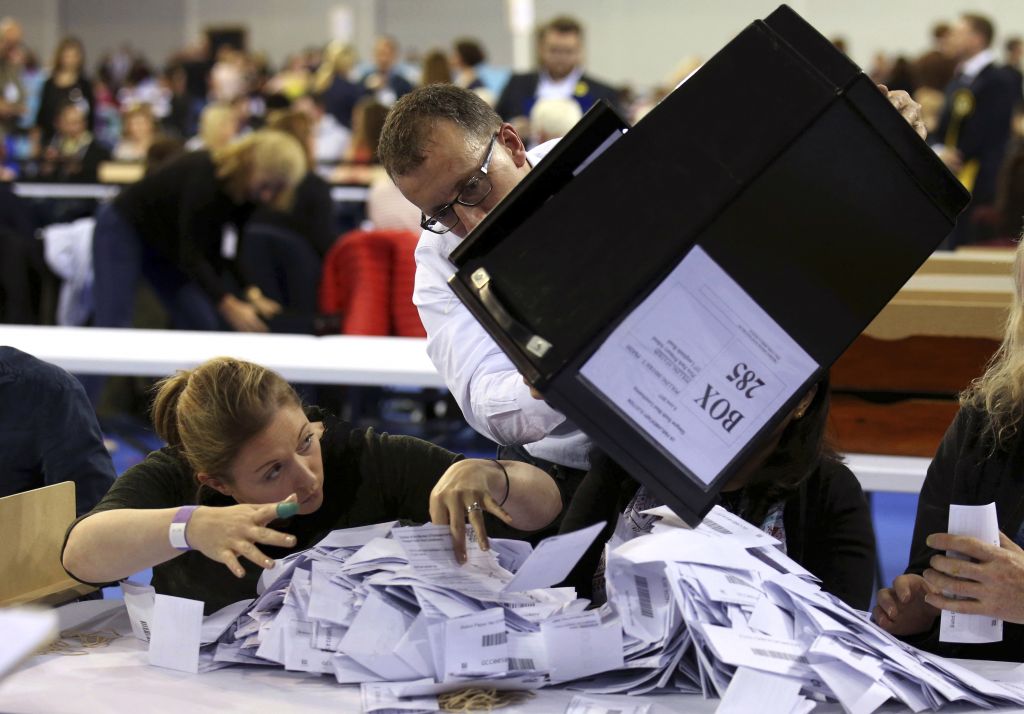
The result was bad news for the Scottish National Party, which lost about 20 of its 54 seats. Among the casualties was Alex Salmond, a former first minister of Scotland and one of the party’s highest-profile lawmakers.
The losses complicate the SNP’s plans to push for a new referendum on Scottish independence as Britain prepares to leave the EU. Scottish Conservative leader Ruth Davidson said the idea of a new independence referendum “is dead. That’s what we have seen tonight.”
May had hoped the election would focus on Brexit, but that never happened, as both the Conservatives and Labour said they would respect voters’ wishes and go through with the divorce.
Despite the surprise election result, French Prime Minister Edouard Philippe said he doesn’t believe voters have changed their minds about leaving.
But speaking Friday on Europe 1 radio, he said “the tone” of negotiations may be affected.
“These are discussions that will be long and that will be complex. So let’s not kid ourselves,” he said. “I’m not sure that we should read, from the results of this vote, that Britons’ sovereign decision on Brexit has been cast into doubt in any way.”
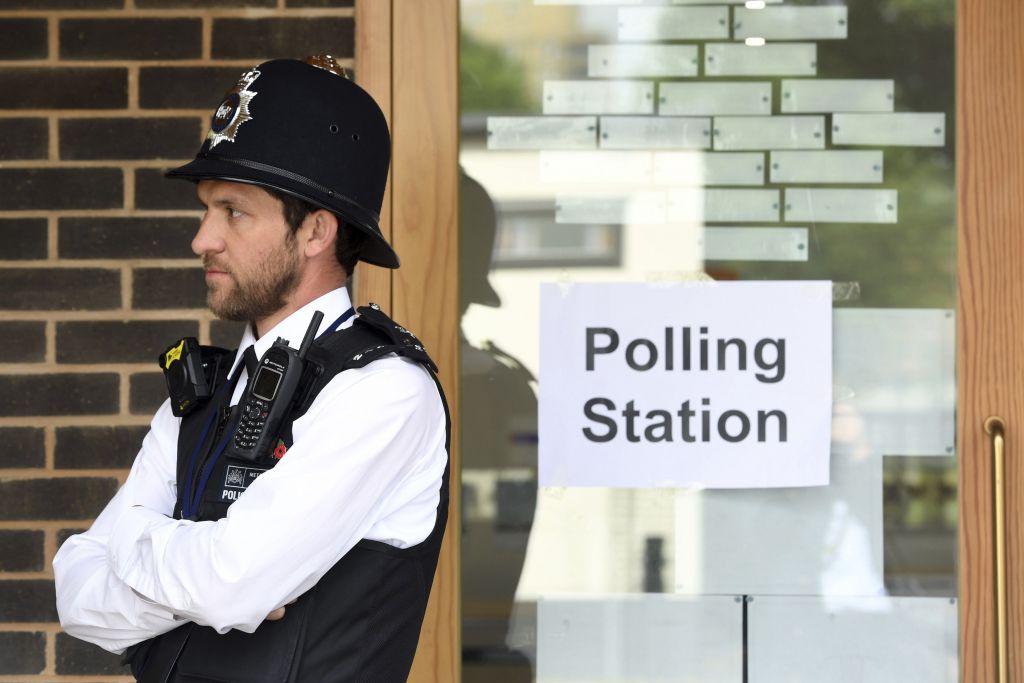
EU budget commissioner Guenther Oettinger said the EU is prepared to stick to the timetable that calls for negotiations to start in mid-June, but said it would take a few hours at least to see how the results of the election play out in forming a government.
“Without a government, there’s no negotiation,” he said Friday morning by phone on Germany’s Deutschlandfunk radio.
May, who went into the election with a reputation for quiet competence, was criticized for a lackluster campaigning style and for a plan to force elderly people to pay more for their care, a proposal her opponents dubbed the “dementia tax.” As the polls suggested a tightening race, pollsters spoke less often of a landslide and raised the possibility that May’s majority would be eroded.
Then, attacks in Manchester and London that killed a total of 30 people brought the campaign to a halt — twice, sent a wave of anxiety through Britain and forced May to defend the government’s record on fighting terrorism. Corbyn accused the Conservatives of undermining Britain’s security by cutting the number of police on the streets.
Eight people were killed near London Bridge on Saturday when three men drove a van into pedestrians and then stabbed revelers in an area filled with bars and restaurants. Two weeks earlier, a suicide bomber killed 22 people as they were leaving an Ariana Grande concert in Manchester.
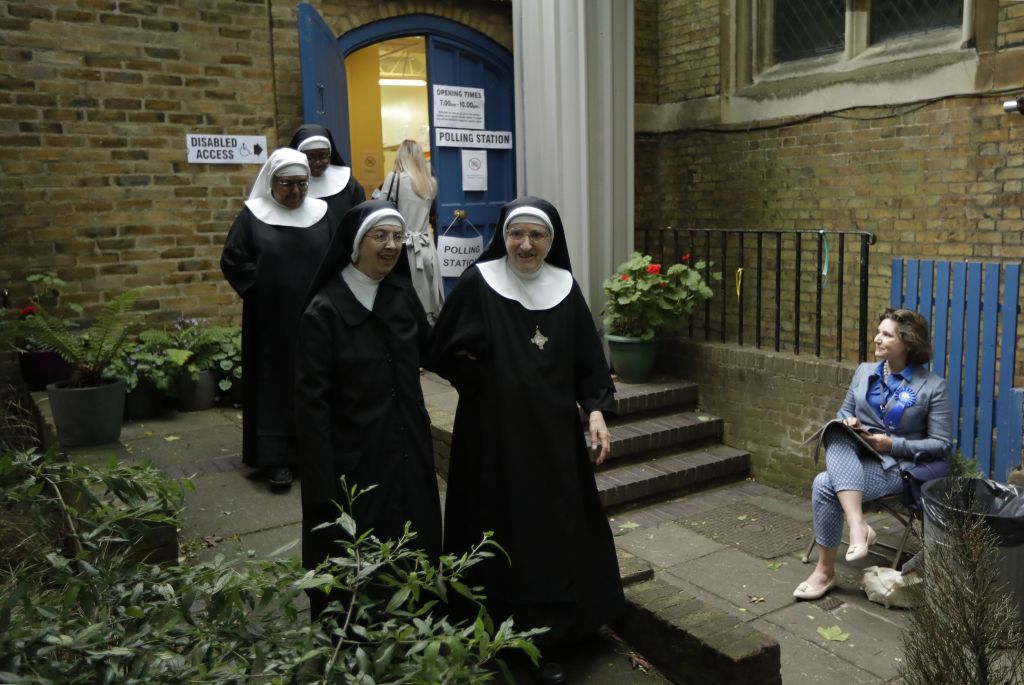
Voters were left flustered Friday by the fast-moving events.
“It’s a bit of a mess,” Peter Morgan, 35, said in London. “I was kind of hoping it would just go the way that the polls suggested it would and we could have a quiet life in Westminster but now it’s going to be a bit of a mess.”
Steven Fielding, a professor of politics at the University of Nottingham, said Britain had seen an election “in which the personal authority of a party leader has disappeared in an unprecedented way.”
“If she had got the majority she wanted, she would have been a supreme political colossus,” he said. “She did not get that and she’s a hugely diminished figure. She’s a zombie prime minister.”







The Times of Israel Community.