

Dust and ashes: Israel’s Burning Man explodes in the Negev
Desert art festival with 7,000 goes forth despite challenges with police permits, two bomb disposals and a fatal heart attack
 Add ToI as a Preferred Source on Google
Melanie Lidman is an AP reporter and former Times of Israel reporter
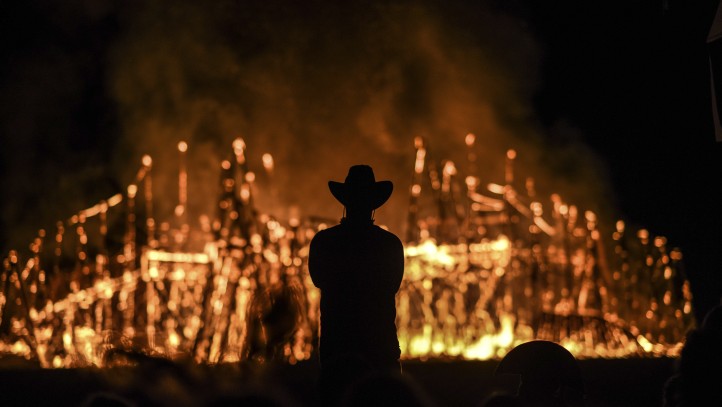
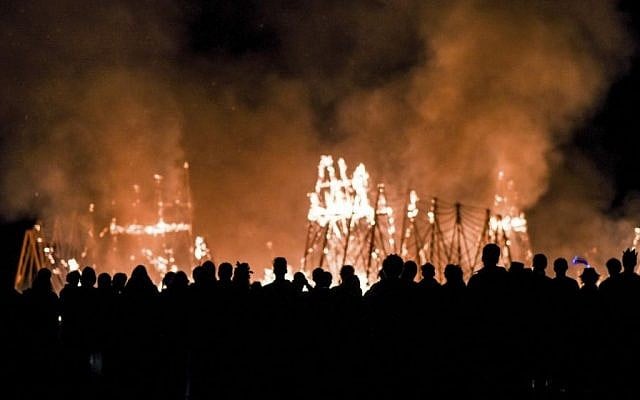
The Man burned. Towering five stories over a temporary city of 7,000 people near Sde Boker for the five-day Midburn festival, the effigy central to the Burning Man Festival lit up in flames as scheduled on Friday night, shooting out swirls of hot air and fire across an ecstatic crowd.
Held from May 20-24, Midburn is a combination of the Hebrew word for desert, “midbar” and “burn.” The festival is modeled after the annual one-week Burning Man event held in Black Rock Desert, Nevada. Participants set up a temporary city celebrating a communal life style, radical self-expression, creativity, art, and self-reliance. After paying for their ticket and bringing all of their supplies, there is no money exchanged, except for ice.
The Man burned, despite a last-minute standoff between police and Midburn organizers that had the entire event’s existence in question, even after an army of volunteers had already started building the temporary city and artists had spent months on their installations. Police issued the final permit for the event just a few hours before the gates opened.
The Man burned, even though organizers had to call in a bomb-disposal unit during the festival to take care of two unexploded ordinances, likely left over from Israeli military training exercises. Part of the camp was evacuated for a few hours while the bomb-disposal unit worked, but no one was injured and the bombs were disposed of safely.
There was also a death for the first time at a Midburn event: An older participant suffered a heart attack just 15 meters from an ambulance stationed at the event.
The man, in his 50s and a veteran of many Burning Man events around the world, collapsed from an apparent heart attack, likely unconnected to the festival or to substance abuse. Paramedics instantly began life-saving measures and stabilized the man before he was taken to the Soroka Medical Center in Beersheba, where he later died.
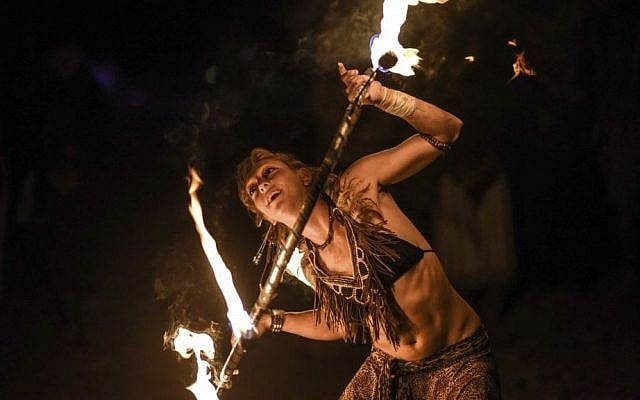
The Man effigy still burned, despite the challenges before and during the event, a kaleidoscope of riotous color and sound as the participants danced and drummed and threw flaming batons in the sky.
Midburn is the second-largest “Regional Burn,” a Burning Man-licensed event that takes place in another country. The largest regional event is the AfrikaBurn, which takes place each April in South Africa, with 10,000 people in attendance.
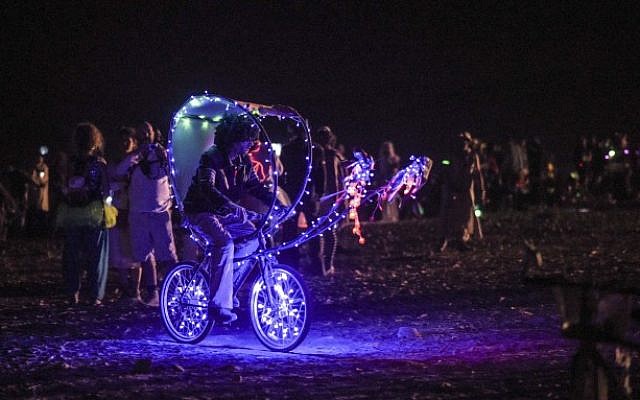
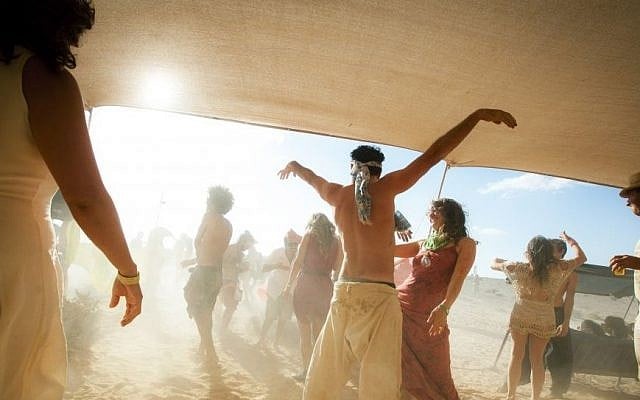
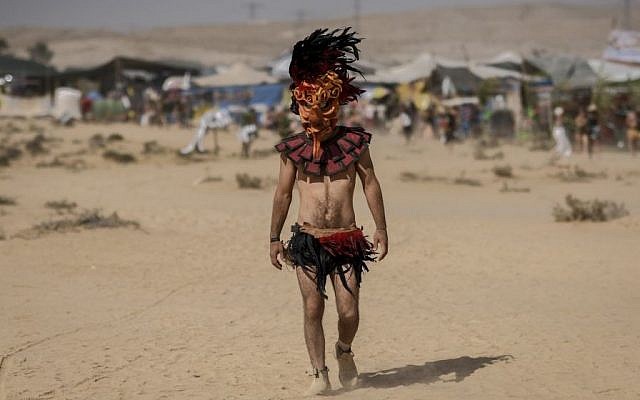
Many participants create theme camps revolving around music, art, meditation, food, or performance. Artists work in teams for months to create giant art installations across the desert floor. Participants dance at all-night raves under the stars, hug rather than shake hands, and try to leave the desert spotless when they leave.
In the end, the police demands prior to the event — regarding public nudity, CCTV cameras, and motorized vehicles — had little effect, other than a marked decrease in nudity from last year’s event.
“This was a big test for our community,” said Dan Peguine, the head of communications for Midburn, referring to the difficulties with the police permits and the events during the festival. “The city that’s run by volunteers functioned really well. Every participant can be really proud of the event.”
Midburn doubled in size from last year, when approximately 3,000 people joined the event. The rapid growth, as well as high demand for tickets even after they were sold out, illustrates the fact that Midburn could easily grow to 10,000 or 15,000 people in the coming years.
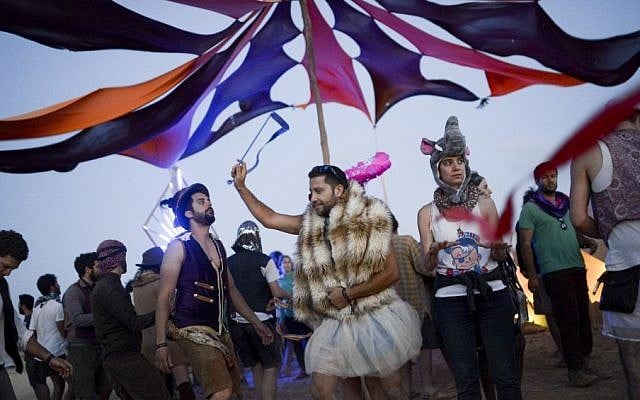
But there’s also a danger in growing so quickly. The festival revolves around people actively participating in the festival, donating to the community through art installations or theme camps that provide services like showers, meals, dance parties, or performance art. Participants are expected to take part in the “gift economy,” by freely giving without expecting anything in return. This could range from setting up a “free hugs” booth to bringing homemade jam and handing out jam and crackers in the morning, to building a massive baobab tree sculpture that sprinkles people with water as they pass. When people come to watch, but not to participate, it takes away from the unique atmosphere of creating a communal city.
“It’s one of the biggest things we’re talking about internally — how should we grow?” said Peguine. “Our goal is to acculturate people to this culture. Because it is a culture, people need to understand that.” Peguine said organizers are trying to find the right balance of the ratio of veterans to new people. “I personally think that we took a risk growing that fast, but the result was pretty amazing,” he claimed. Approximately two-thirds of the participants at this Midburn had never been to a Burning Man event previously.
Organizers are also trying to attract international participants, who are dedicated to the Burning Man principals and bring a new kind of fervor to the city. Approximately 500 people, from 48 different countries, attended Midburn this year.
Organizers are also working to promote the concept of radical inclusion, by reaching out to different minorities in Israel. This year, Arabic translators worked tirelessly to make sure that the signage and brochures had Arabic as well as Hebrew and English. An accessibility committee tried to ensure that handicap-accessible bathrooms were scattered throughout the city, and major art installations had ramps instead of steps to ensure wheelchair access, though the sand made even motorized wheelchairs struggle. The deaf community created a new theme camp this year, wittily called “Talking Hands Job” and offered sign-language lessons and sensitivity training. Their camp was ironically located next to the Sunrise Kingdom, a sound camp that plays trance music until 8 a.m.
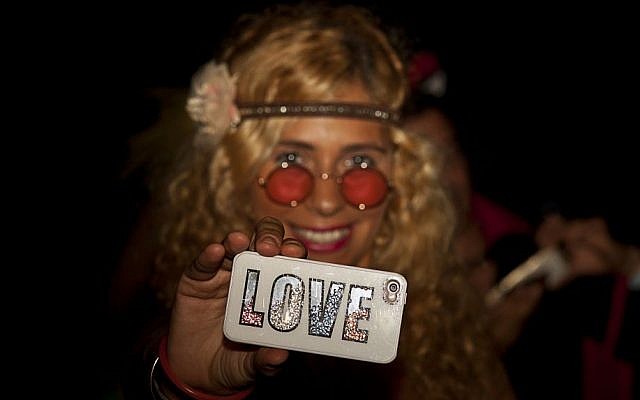
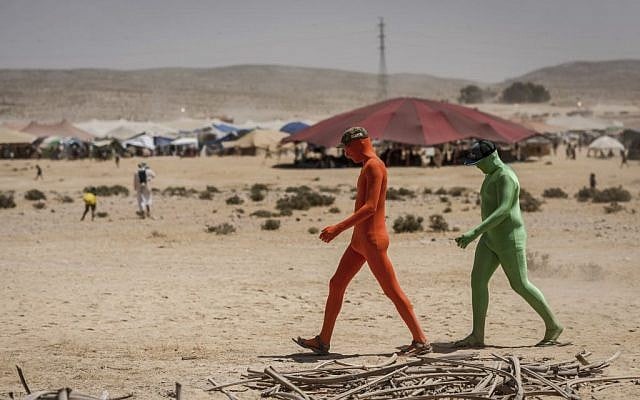
Midburn is, overall, an anarchic assault on your senses, lights and color and sounds and the fine “pudra” dust settling over everything.
My first day on the “playa,” the name for the area of the city, I ascended to the top of the Temple of One, a massive structure built for introspection in the exact center of the camp.
In front of me, laid out in a semi-circle stretching more than a kilometer wide, were thousands of tents and pieces of art, lights and LEDs flashing with colors and sound and the desert wind howling as the sun set over this temporary creation.
The next five days were a whirlwind of intense experiences and color, clambering over an enormous glass table set for a tea party for eight, watching the clouds pass through a pyramid constructed of old records, raising my hands to the heavens as music coursed through my veins at 4 a.m., bare feet kicking playa dust up to the sky.
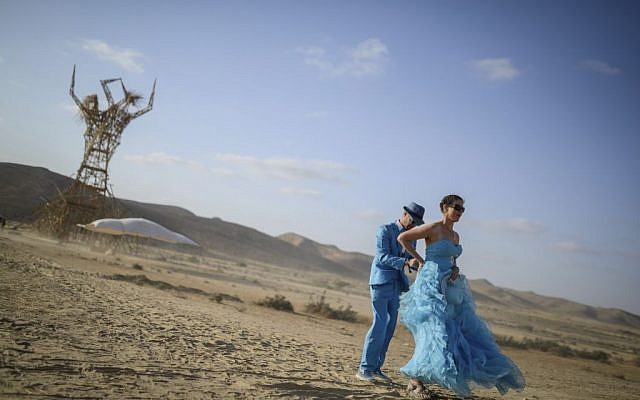
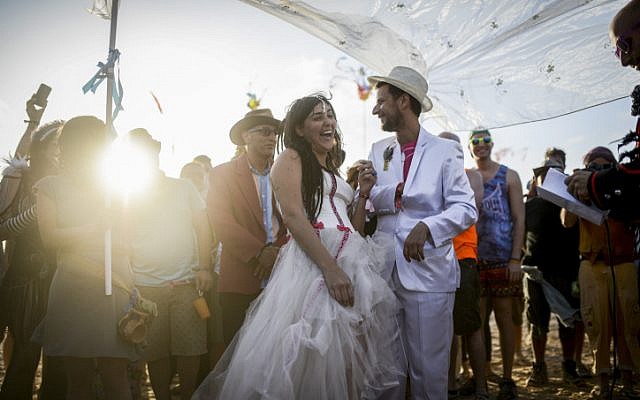
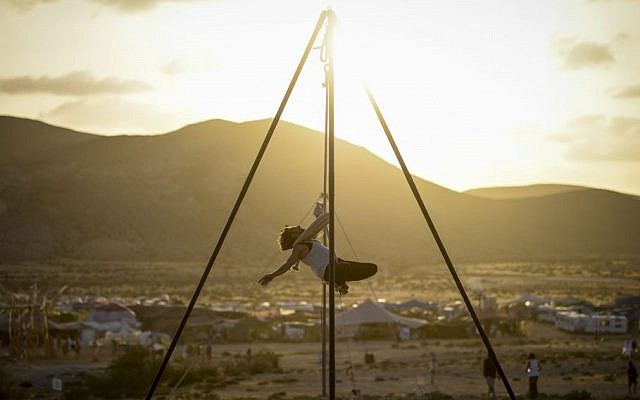
I met artists and creators and tightrope walkers and musicians and acrobats and even a ventriloquist. I stumbled across a few playa weddings, reconnected old friends and embraced new strangers in this alternate universe in the middle of the desert.
Sometimes it was hard, to see the amount of waste created by this temporary city. The event places great emphasis on Leave No Trace principals of removing all trash to avoid making an environmental impact on the area. But it’s hard to escape the fact that no matter how you look at it, burning massive wooden structures is not environmentally friendly.
Sometimes it was hard to think that all of the beautiful artwork surrounding us would be destroyed, a veritable open air museum, that only people able to cough up at least NIS 450 for a ticket — plus hundreds of shekels in expenses for gas, water, food, and other necessities — could enjoy the pieces. But others argued that temporariness only serves to heighten the experience, knowing that everything is transient and will soon return to the silence of the empty desert.
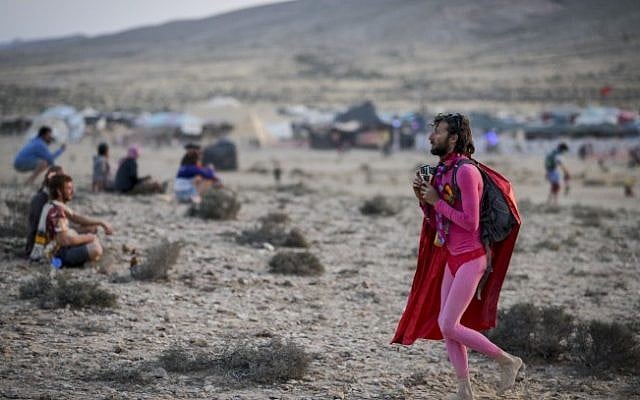
Sometimes the playa was too overwhelming, and I had to go back to my tent and close my eyes. Sometimes it was lonely, to be surrounded by so many new people and experiences. Sometimes it was challenging, to force myself out of my comfort zone into this strange world of creativity and free expression.
But on the last night of the festival, I gathered with a group of new friends under the Negev stars. We sat in silence with thousands of people in the center of the playa as they set fire to the Temple of One, where just a day before I had sat and watched a belly dancer perform to the sounds of a didgeridoo.
The structure burned for two hours, the outline of its majestic shape spread across the center of the city, flames reaching higher and higher until the whole structure was ablaze.
Just like the Man, it burned. And then, just like the rest of Midburn, it was gone.




The Times of Israel Community.