

EU envoys to nuclear talks warn of possible breakdown as Iran strikes a hard line
Diplomats say if Tehran does not show seriousness, ‘we’ll have a problem’; Iran says all previous agreements up for negotiation
 Add ToI as a Preferred Source on Google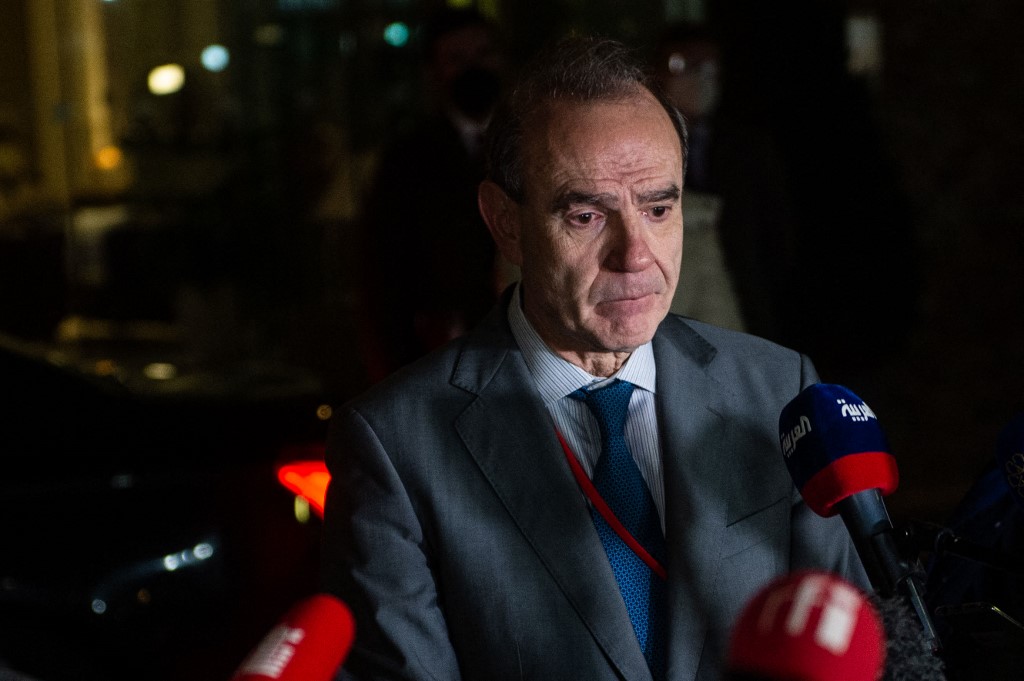
European negotiators on Tuesday said they will assess the “seriousness” of the Iranian position over the next few days to decide whether to continue with recently resumed talks about reviving the 2015 nuclear deal.
Without wanting to set “an artificial deadline,” “we don’t have the luxury to spend time on niceties,” one of the European diplomats at the talks said, declining to be identified.
“If they don’t show that they are serious about this work, then we’ll have a problem,” diplomats from the E3 nations of Britain, France and Germany said. “The next 48 hours will be very important.”
After Monday’s formal meeting, groups of experts began work on Tuesday on the sensitive issue of US sanctions, before tackling Tehran’s nuclear commitments on Wednesday.
While the EU chair of the talks, Enrique Mora, said he was optimistic at the end of the inaugural session, the diplomats were more measured: “We neither breathed a sigh of relief” nor cried disaster, one of them said.
The diplomats said they hoped to have “a clearer picture by the end of the week,” referring to a possible “breakdown” in negotiations if no progress was made. “It will be time to reconsider our diplomatic approach, but we are not there yet.”
The 2015 agreement, known by its acronym JCPOA, offered Tehran the lifting of some of the sanctions stifling its economy in exchange for a drastic reduction in its nuclear program, which was to be placed under strict UN control.
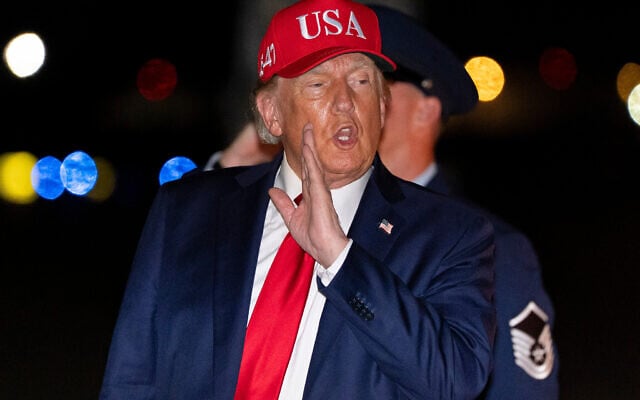
The United States left the pact in 2018 under then president Donald Trump and reinstated the punitive measures.
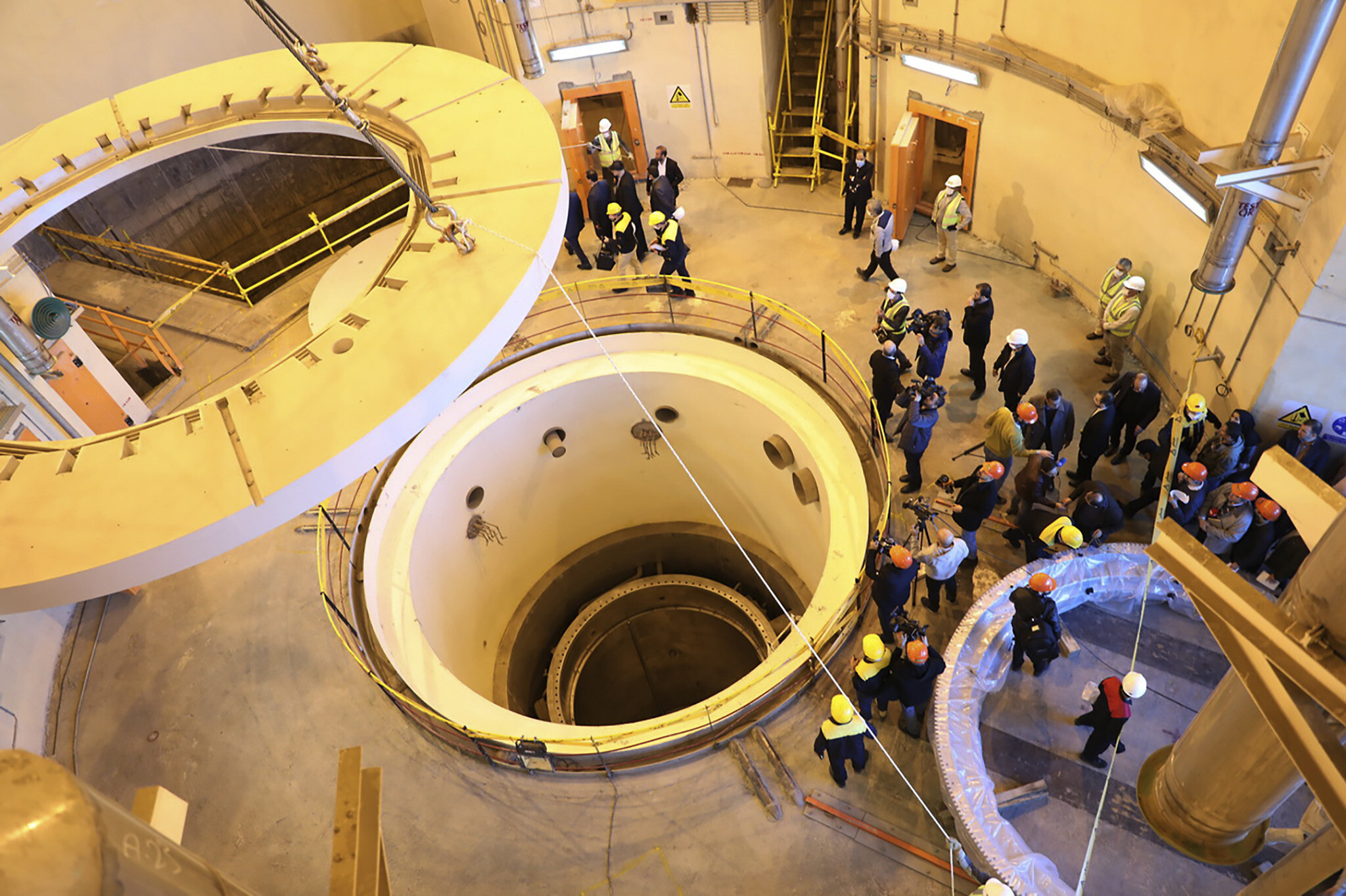
In turn, the Islamic Republic, which denies it wants the bomb, has gradually abandoned its commitments. Since the deal’s collapse, Iran now enriches small amounts of uranium up to 60% purity — a short step from weapons-grade levels of 90%. Iran also spins advanced centrifuges barred by the accord, and its uranium stockpile now far exceeds the accord’s limits.
US President Joe Biden’s administration, eager to get back into the deal, is indirectly involved in these talks, which began in April before breaking down in June with the coming to power of ultraconservative President Ebrahim Raissi in Iran.
In this round of talks, “we have 70 percent to 80 percent of the work done, but some of the most difficult issues are what remains,” the diplomats said.
The diplomats said that the issue of Iran’s centrifuges remains an unresolved issue.
Iran struck a hard line after the first day of talks on Tuesday, suggesting everything discussed in previous rounds of diplomacy could be renegotiated, in direct contradiction of comments made Monday by Mora.
Speaking to Iranian state television, Ali Bagheri, Iran’s top nuclear negotiator, referred to everything discussed thus far as merely a “draft.” It remained unclear whether that represented an opening gambit by Iran’s new president or signaled serious trouble for those hoping to restore the deal.
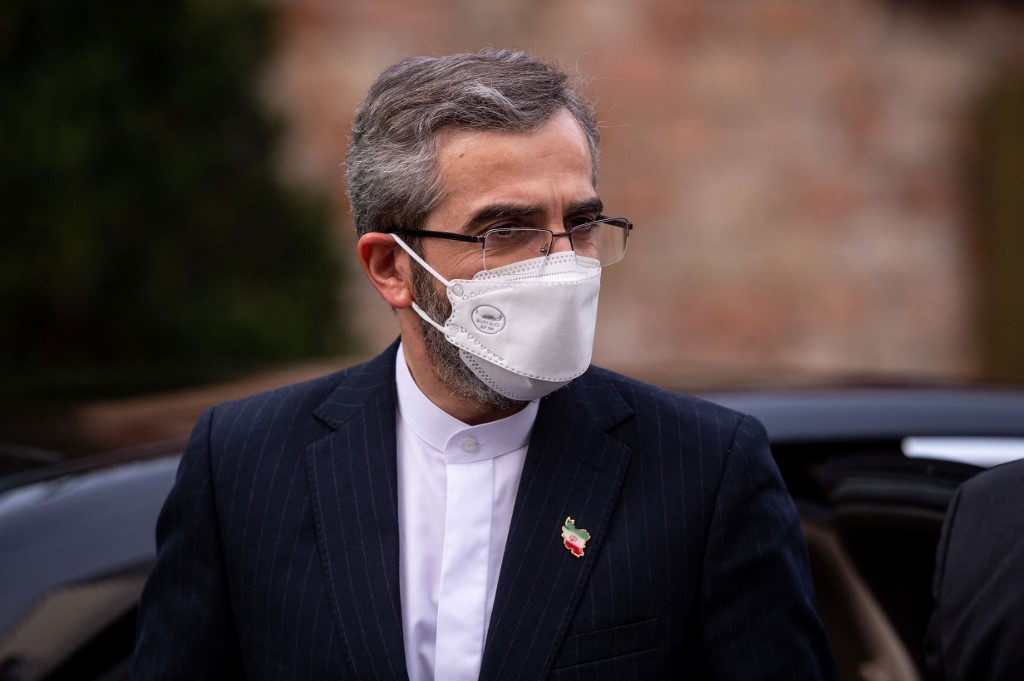
“Drafts are subject to negotiation. Therefore nothing is agreed on unless everything has been agreed on,” Bagheri said. “On that basis, all discussions that took place in the six rounds are summarized and are subject to negotiations. This was admitted by all parties in today’s meeting as well.”
Iran maintains its atomic program is peaceful. However, US intelligence agencies and international inspectors say Iran had an organized nuclear weapons program up until 2003. Nonproliferation experts fear any brinkmanship could push Tehran toward even more extreme measures to try to force the West to lift sanctions.
Making matters more difficult, United Nations nuclear inspectors remain unable to fully monitor Iran’s program after Tehran limited their access. A trip to Iran last week by the head of the International Atomic Energy Agency, Rafael Grossi, failed to make any progress on that issue.
Mikhail Ulyanov, Russia’s top representative to the talks, tweeted Tuesday that the resumption of negotiations was “quite successful.”
Ulyanov said the US was ready to lift sanctions on Iran in order to pave the way for a return to the 2015 nuclear deal.
“The #US confirms its readiness to lift all #sanctions inconsistent with the #JCPOA in exchange for return of #Iran to full compliance with JCPOA,” tweets Ulyanov of the deal, formally known as the Joint Comprehensive Plan of Action. “But in multilateral diplomacy, the devil is in the details. The concrete list of sanctions to be lifted is subject to negotiations.”
Foreign Minister Yair Lapid on a Tuesday visit to Paris urged French President Emmanuel Macron to strengthen sanctions against Iran and said “a credible military threat must be exercised.”





The Times of Israel Community.