

Expert says Nazi artifacts found hidden in Argentina are mostly fake
Museum of the Holocaust says exhibition still has value as the objects are from the period, even if modified later with addition of Nazi symbols
 Add ToI as a Preferred Source on Google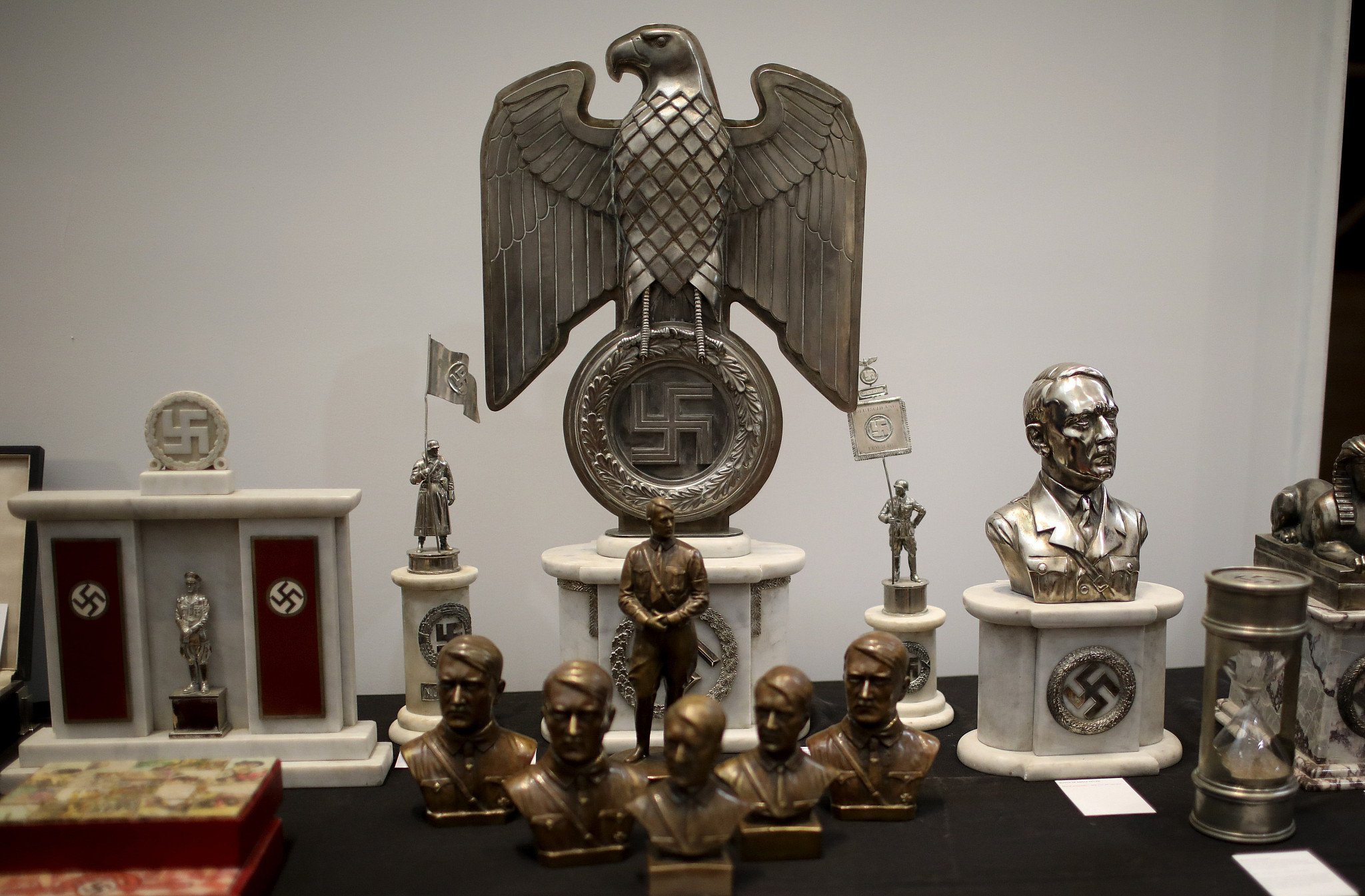
An expert brought in by Argentinian authorities to assess the largest collection of Nazi artifacts in Argentina’s history, has said they are mostly fake, the Guardian reported Friday.
The Museum of the Holocaust is due to reopen next month following extensive renovations and the collection will go on display despite the revelations, as the museum says the objects still have historical value.
Federal police and Interpol agents found the more than 70 Nazi objects hidden behind a bookcase in a collector’s home north of Buenos Aires in 2017 as part of an investigation into artworks of illicit origins. The Nazi items include busts of Adolf Hitler, an instrument to measure people’s heads to supposedly determine their racial purity, and statues of the Nazi eagle with a swastika under its talons.
Stephen Klingen, from Munich’s Central Institute for Art History told the Guardian that the objects are either outright fakes or original pieces from the 1930s which had Nazi symbols added at a later date.

“You can display the objects as counterfeits, but you cannot learn anything about the Nazi era from them,” Klingen told the newspaper.
However, the Museum of the Holocaust said that the exhibition still has value.
“They are original objects — original from the period — even if they were modified later,” said museum director Jonathan Krszenbaum. “The skull-measuring instrument, even if the swastika was added later, is still from the Nazi period, or from the pre-Nazi period, and as such it has educational value because it exemplifies the Nazi obsession with the question of race.”
Krszenbaum added: “They are not forgeries — they are originals which were adulterated later. That doesn’t reduce their historical significance.”
Klingen said that he thought only a few of the objects could be genuine — including three toolboxes from a Mauser munitions factory, part of a grenade launcher, a sundial with a swastika, a Nazi-era newsreel and various Hitler busts — but that he could not check them thoroughly to ascertain their authenticity.

The objects were discovered after agents with Interpol began following the collector and with a judicial order raided the house on June 8, 2017. A large bookshelf caught their attention and behind it agents found a hidden passageway to a room filled with Nazi imagery.
Owning Nazi objects in Argentina can be illegal if it is determined that the items incite racial or religious hate in public, although they can be allowed in private. It has not been determined if the collector violated the anti-discrimination law, although he has been charged with owning pieces of illegal origin.

The main hypothesis among investigators and members of Argentina’s Jewish community was that the items were brought in by Nazis after World War II, when the South American country became a refuge for some of the most infamous war criminals.
AP contributed to this report.










The Times of Israel Community.