

Experts identify 7 new cases of Syria chemical attacks
Investigation of sites to begin next month; task force charged with analyzing samples, but not pinpointing who’s responsible
 Add ToI as a Preferred Source on Google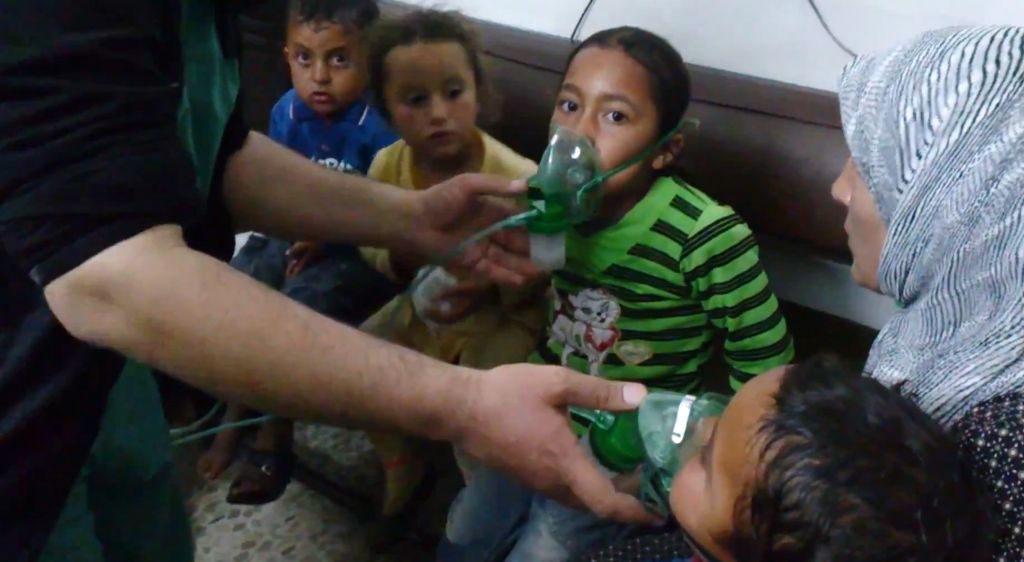
UNITED NATIONS (AP) — The international body charged with establishing who is responsible for chemical attacks in Syria said Monday it has identified seven potential sites for investigation, which it hopes to begin next month.
Virginia Gamba, who heads the Joint Investigative Mechanism of the UN and the Organization for the Prohibition of Chemical Weapons, said an initial report to the Security Council had identified five cases where chemical weapons might have been used. Further analysis led to two other suspected cases: in Binnish in Idlib governorate on March 23, 2015 and in Al Tamanah, also in Idlib, on April 29-30 and May 25-26 in 2014.
Before the Joint Investigative Mechanism, or JIM, was established in August, investigators were charged only with determining whether chemical weapons had been used in an attack. They could not lay blame on the government, opposition or other armed groups.
Gamba said investigators were still analyzing information gathered by the OPCW and hoped to finalize the list of potential cases by March 1, at which point JIM would begin in-depth investigations.
Syria’s government denies using chemical weapons, but the United States and other Western nations say it is to blame, especially for dropping barrel bombs containing chlorine and other toxic agents by helicopter. The opposition doesn’t have such aircraft.
Reports also have surfaced in recent months that the Islamic State extremist group has used toxic chemicals.
The potential cases cited in the report to the Security Council include Kafr Zita in Hama governorate on April 11 and April 18, 2014, and three villages in Idlib governorate: Talmenes on April 21, 2014 and Qmenas and Sarmin, both on March 16, 2015. The fifth case was on August 21, 2015 in the town of Marea near the Turkish border, at a time when Islamic State fighters were attacking rebels.
“Any use of toxic substances, weapons by anybody, anywhere, under any circumstances, is totally abhorrent and I would like to assure individuals, groups, entities or governments … that these acts will be identified and they will be held accountable for these actions,” Gamba said after briefing the Security Council in a closed-door session.
Copyright 2016 The Associated Press.






The Times of Israel Community.