

Family says son captured — not killed — in ’73 war, asks to open grave
The IDF claims that Tzion Tayeb was slain during a battle on Mount Hermon, but his family wants to test the body said to be his
 Add ToI as a Preferred Source on Google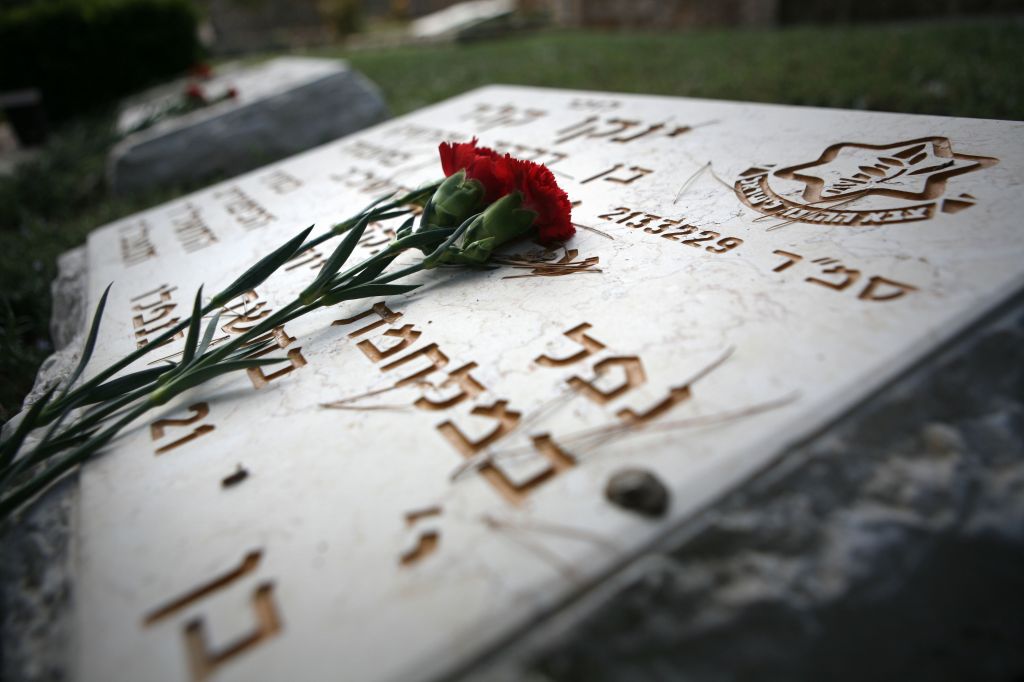
The family of a soldier believed to have been killed in the 1973 Yom Kippur War petitioned the High Court on Tuesday to allow the exhumation of his grave, claiming that he was in fact captured alive in Syria.
The family of Cpl. Tzion Tayeb want to conduct DNA tests on the body said to be his at the Mount Herzl Military Cemetery, in order to determine its identity.
Tayeb served as a radioman on Mount Hermon, where Israel borders both Lebanon and Syria, in a particularly heavy battle where many soldiers were killed and others taken prisoner.
Tayeb’s sister, Katie Orr, told Israeli radio station 103 FM that immediately following the war, her brother was officially listed by the IDF as missing in action. Shortly afterwards, he was listed as a captive, and not long after that, when Israeli soldiers held by Syria were released, the army informed the family that when the snow on the Hermon melted, Tayeb’s body was found in a grave with some 50 other soldiers.
Bur Orr claimed that there was never any definitive proof that her brother was among the dead found at the site. “They have no fingerprints, and they have no evidence — really, none at all,” she told radio host Nissim Mishal.
She further said that in all of the paperwork the army has sent the family, the facts simply don’t add up. According to Orr, nobody actually saw her brother die, nor did they see a body identifiable as his afterwards.
Orr went on to tell Mishal that the IDF lost all credibility in the eyes of the family by instructing a soldier who had been held captive in Syria, whom she identified as Efraim Zinger, to tell Tayeb’s mother than he saw her son fall during the battle. According to Orr, when the family approached Zinger, “he told us that he did not know [Tzion], he never saw him, and he could not give any evidence” regarding her brother.
The family further claims that in photographs sent by the Syrian army to the IDF a month after the war, they saw a captive Israeli whom they are convinced was Tayeb.
The Yedioth Ahronoth daily reported that according to the family, a captured Syrian officer who led the IDF to the mass grave on Mount Hermon named the soldiers buried within, but Tzion Tayeb was not among them.
The IDF’s Missing Persons Branch conducted an investigation in 2000 in which it claimed to have a fingerprint of Tayeb’s from when he was 10 years old, a claim the family rejects as impossible.
In recent years, the Defense Ministry and the attorney general have both rejected the family’s request to exhume the grave said to be Tayeb’s.
The family is now hopeful that the High Court of Justice will allow it.
“We deserve to know,” said Orr. If her brother is not buried on Mount Herzl, Orr said, she does not know where he is. But if tests determine that Tzion is in fact interred, it will afford the family closure.
In the meantime, Orr said that her 86-year-old mother refuses to leave the family house in the northern city of Nahariya, just in case her son returns.
The petition to the High Court of Justice noted that his mother is “waiting anxiously for her son’s return.”




The Times of Israel Community.