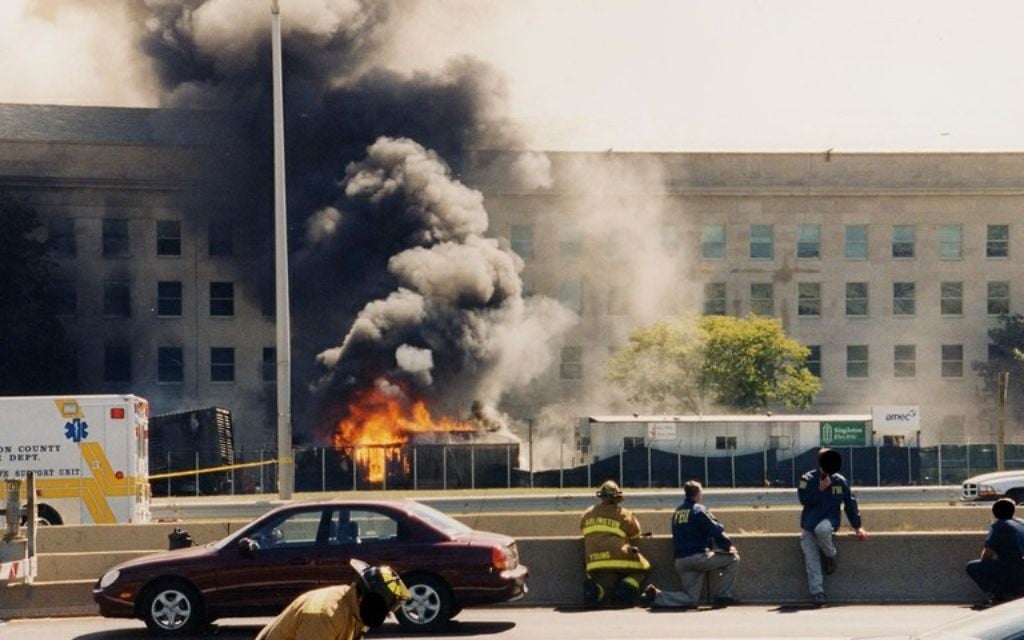
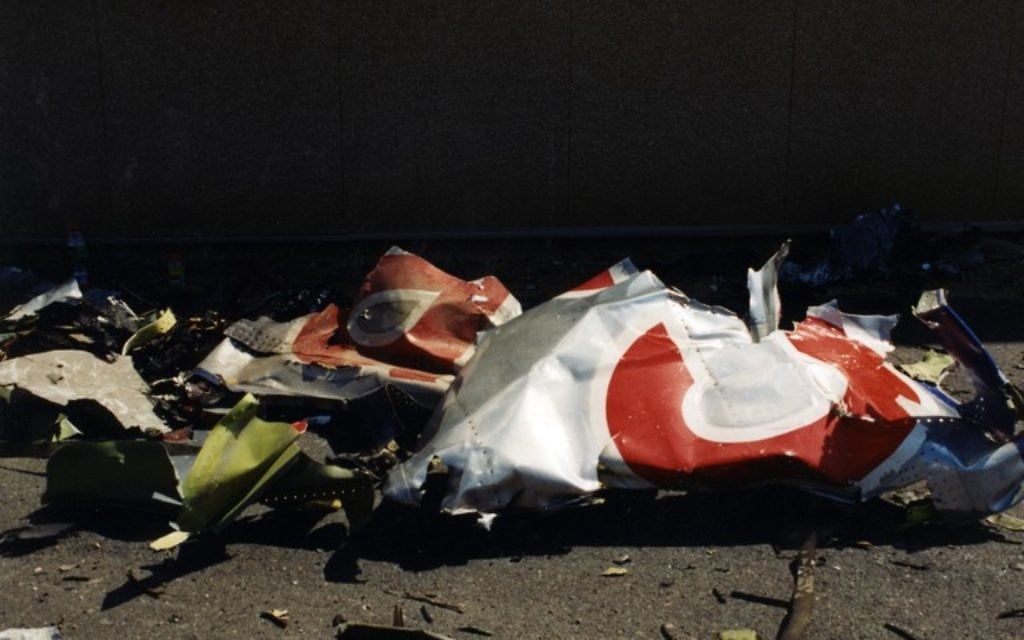
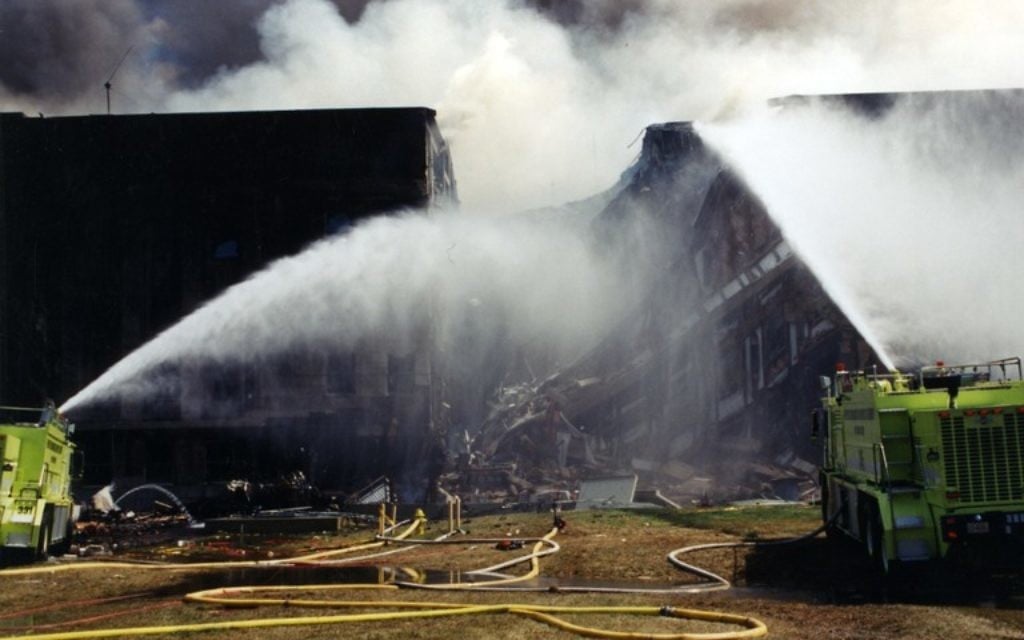
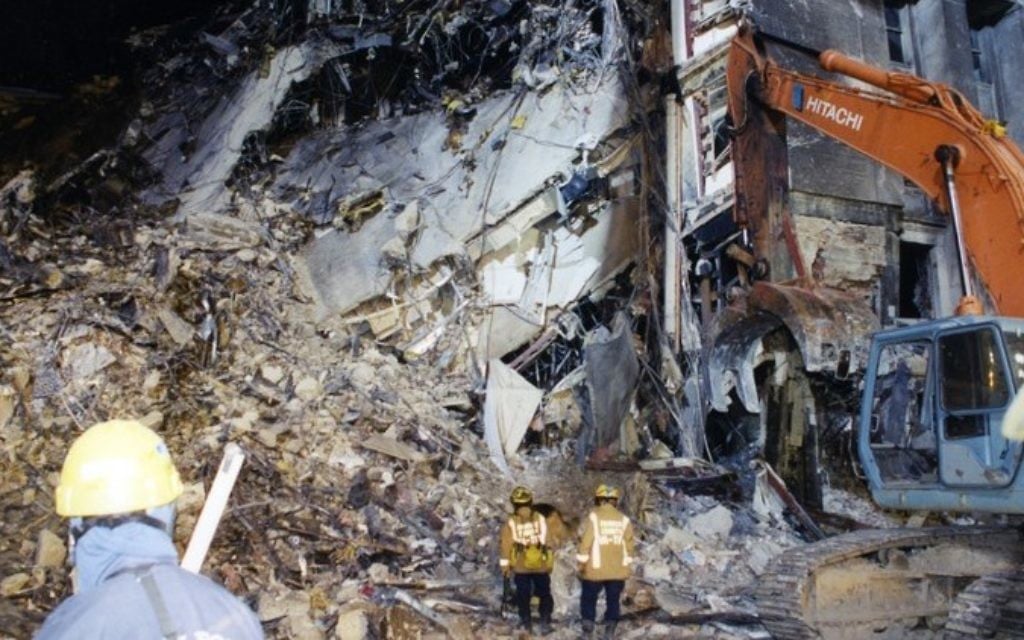
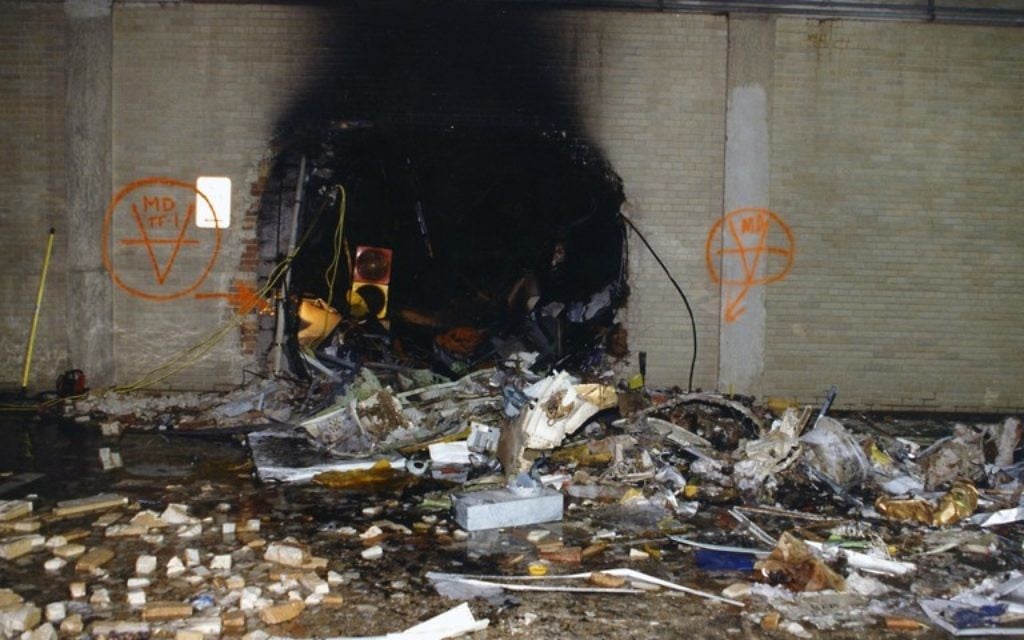
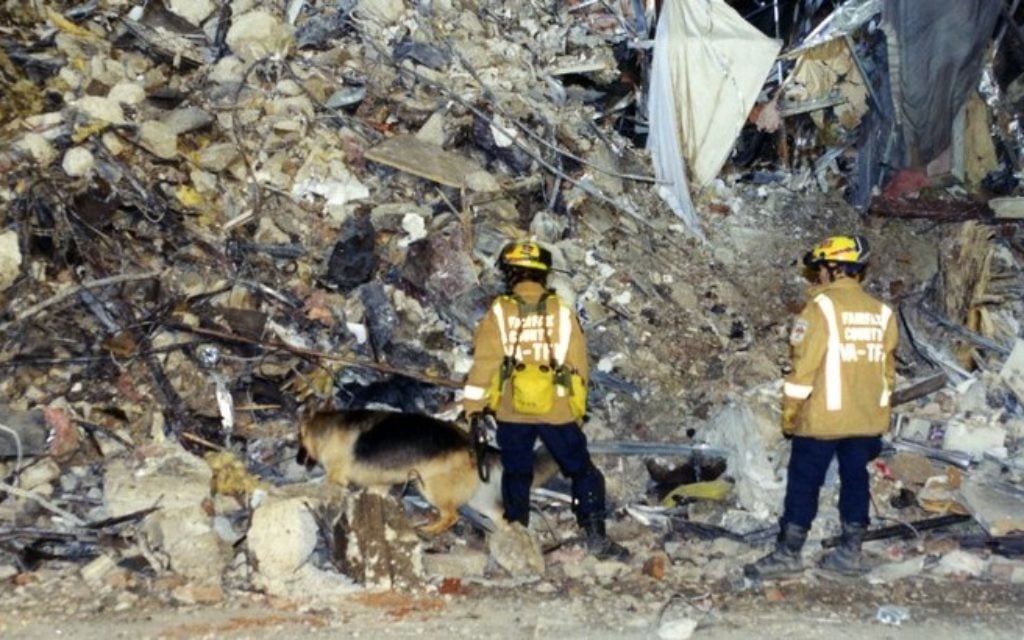
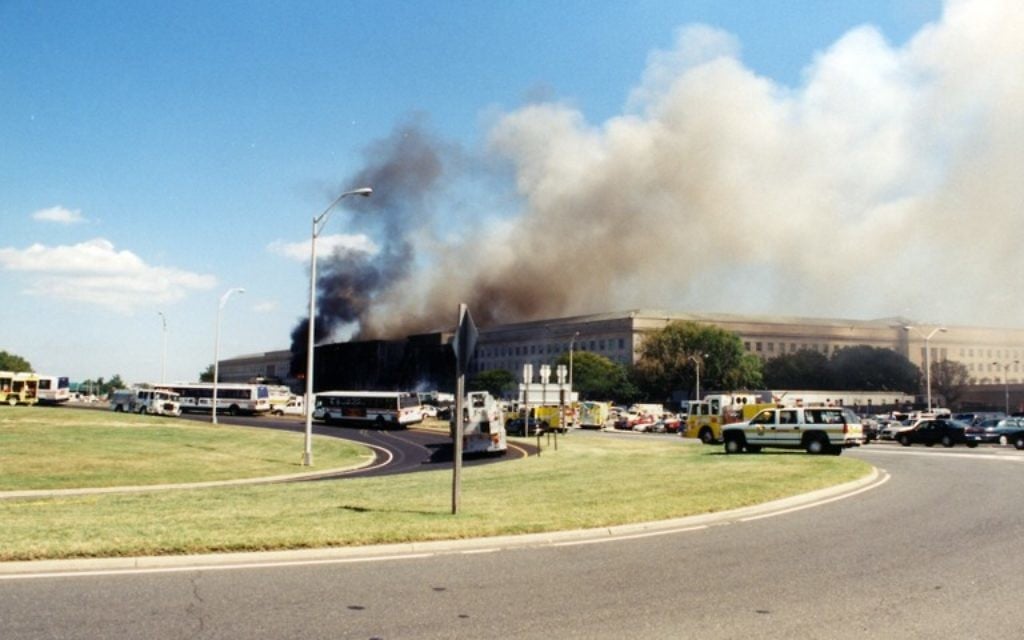
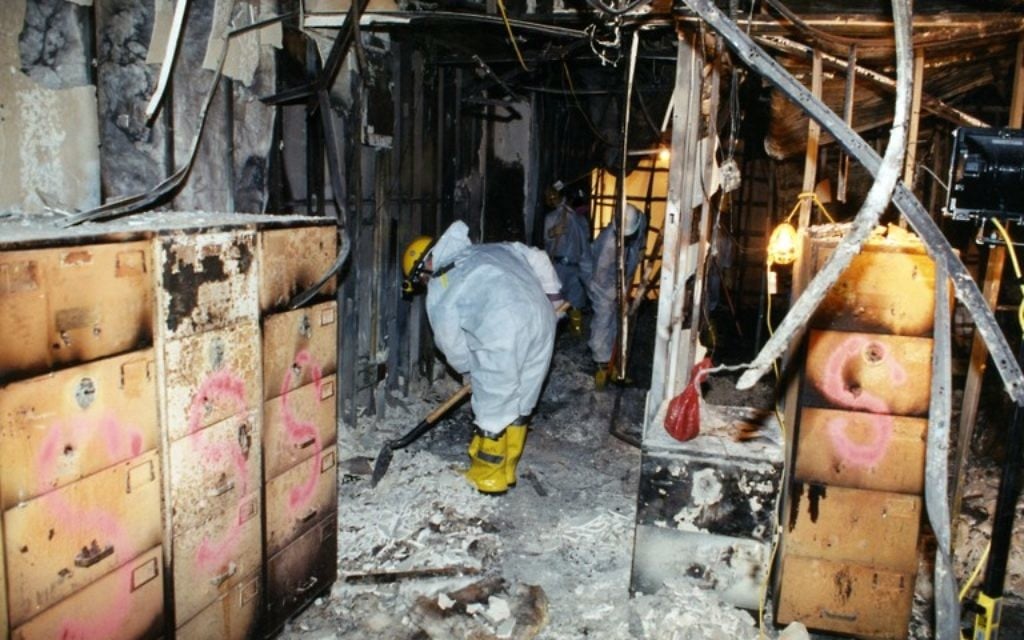
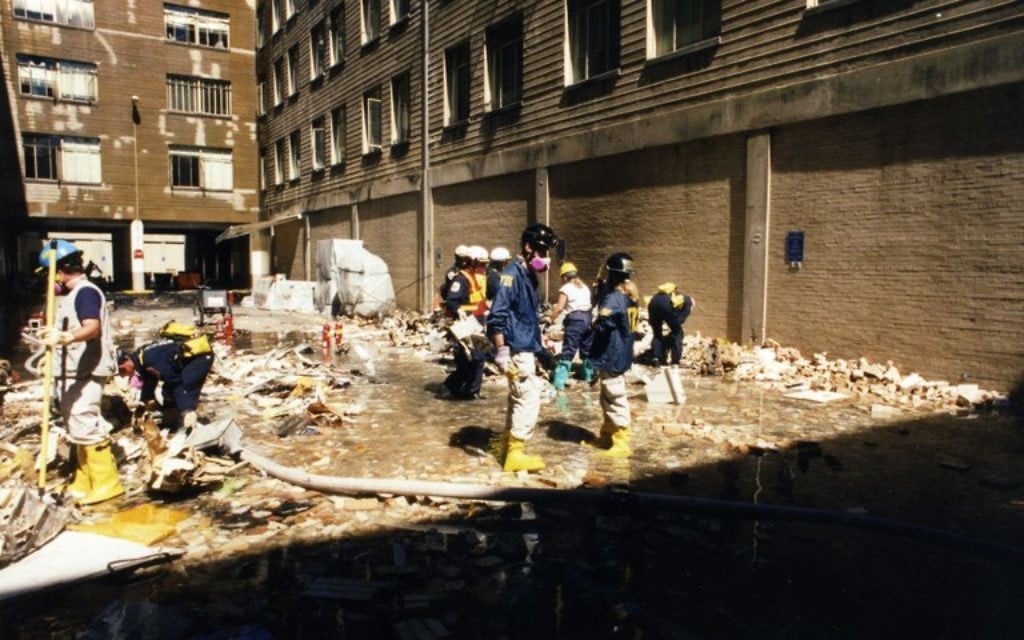
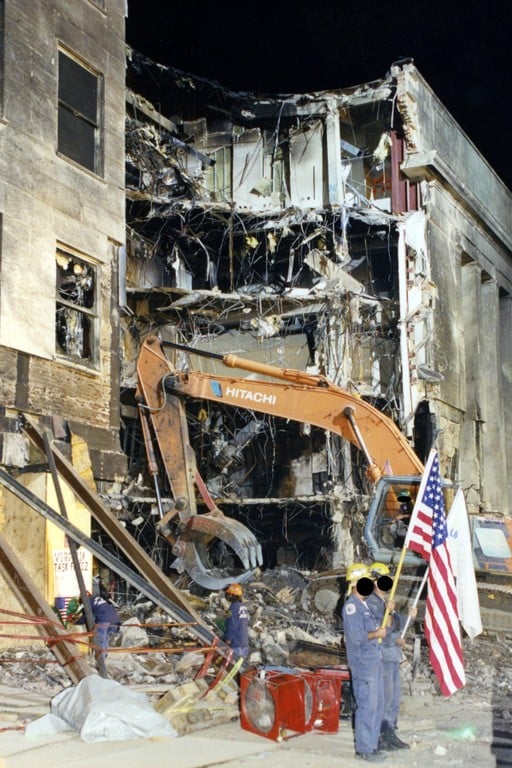
FBI photographs of the Pentagon, after the terror attack on 9/11 (FBI)
9/11 Pentagon debris (FBI photographs of the Pentagon, after the terror attack)
9/11 Pentagon emergency response (FBI photographs of the Pentagon, after the terror attack)
9/11 Pentagon exterior (FBI photographs of the Pentagon, after the terror attack)
9/11 Pentagon exterior (FBI photographs of the Pentagon, after the terror attack)
9/11 Pentagon exterior (FBI photographs of the Pentagon, after the terror attack)
9/11 Pentagon exterior (FBI photographs of the Pentagon, after the terror attack)
9/11 Pentagon interior (FBI photographs of the Pentagon, after the terror attack)
9/11 Pentagon (FBI photographs of the Pentagon, after the terror attack)
The FBI has released a series of never-before-seen photographs showing the devastation in the immediate aftermath of the 9/11 terror attack at the Pentagon.
The 27 photographs, uploaded to the FBI’s website, show the impact when American Airlines Flight 77, hijacked by Al-Qaeda terrorists, smashed into the building on September 11, 2001.
The attack, one of the four that day, killed 184 people — 125 Pentagon staffers and the 59 passengers and crew on the plane. In all, 2,996 people were killed in the attacks; two other planes were crashed into the World Trade Center in New York City and a fourth plane, headed for Washington DC, crashed into a field.
The coordinated attacks constituted the worst terrorist incident in world history and the deadliest foreign attack on American soil since the attack on Pearl Harbor on December 7, 1941.
The newly released photographs, including overhead and interior shots, show the inferno caused by the crash at the Pentagon, the hole the plane tore which extended 100 yards into the building, the emergency response and the aftermath of the devastating attack.
Get The Times of Israel's Daily Editionby email and never miss our top stories
The damage was repaired the following year, and a memorial garden to the victims was opened in 2008.
FBI photographs of the Pentagon, after the terror attack on 9/11 (FBI)
Help us report truthfully on social media
As a multimedia journalist, my job is to take the quality, fact-based journalism produced by The Times of Israel newsroom and make it accessible across every platform — from Instagram posts to podcasts to short-form videos.
This is how many, especially young people, consume news these days. But misinformation is rampant on social media. Our team at ToI produces accurate, responsible short-form reporting on Israel and the Jewish world.
If you believe in the importance of factual social media journalism, please consider joining our reader support group, The Times of Israel Community. Your financial support is essential to sustain responsible multimedia reporting.
We’re really pleased that you’ve read X Times of Israel articles in the past month.
That’s why we started the Times of Israel - to provide discerning readers like you with must-read coverage of Israel and the Jewish world.
So now we have a request. Unlike other news outlets, we haven’t put up a paywall. But as the journalism we do is costly, we invite readers for whom The Times of Israel has become important to help support our work by joining The Times of Israel Community.
For as little as $6 a month you can help support our quality journalism while enjoying The Times of Israel AD-FREE, as well as accessing exclusive content available only to Times of Israel Community members.
Thank you, David Horovitz, Founding Editor of The Times of Israel


 Add ToI as a Preferred Source on Google