

Filling global data gap, Israeli team trucks roving climate lab across East Africa
Mobile tower and sensors developed by Weizmann Institute in Revohot sent to measure impact of land use changes on climate, starting in Kenya
 Add ToI as a Preferred Source on Google
Sue Surkes is The Times of Israel's environment reporter
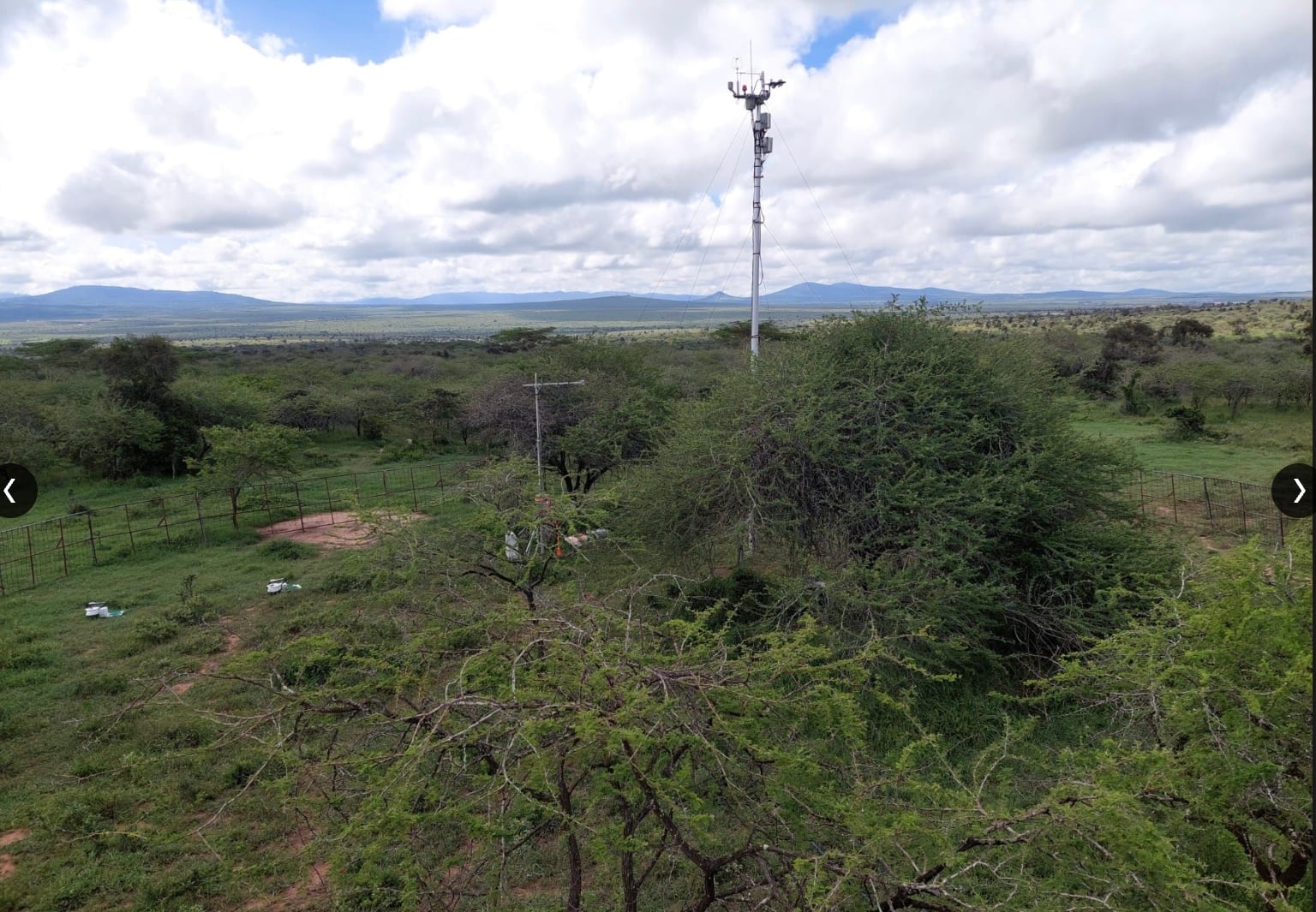
In an ambitious attempt to plug one of the largest data gaps in global climate science, a highly specialized mobile research lab from Israel’s Weizmann Institute of Science has begun a multi-year journey across East and Southern Africa to track how the continent’s vast living ecosystems interact with the atmosphere.
The lab, built onto a large truck, represents a rare — and possibly unique — asset in climate research. While permanent environmental monitoring stations exist worldwide, Weizmann researchers believe this is the world’s only fully mobile unit measuring ecosystem “fluxes” — the continuous movement of carbon dioxide, water vapor, energy, and more between vegetation and the atmosphere.
By filling the data gap, scientists hope to understand how land-use changes, such as deforestation to make way for grazing lands, impact water availability, carbon storage and other environmental facets. This will not only help local leaders make data-driven policy decisions, but also contribute to refining climate models on a global scale.
The project is a collaboration between Rehovot-based Weizmann and Fluxnet, a global network of scientists operating fixed towers that rise above vegetation to collect data on the fluxes. Though the group has roughly 600 measurement sites worldwide, there are almost none in East Africa.
The team has operated a fixed flux tower in Israel’s Yatir forest on the northern edge of the Negev Desert for 26 years. The tower is one of the oldest in the global network and the only one situated in a semi-arid forest, but scientists sought to get data from other sites as well, and so built a lab onto a truck.
“After 10 years there, we realized a permanent tower has strong limitations,” said Prof Dan Yakir, an Israel Prize laureate, who heads the Ecophysiology group at Weizmann’s Earth and Planetary Sciences Department. “We needed to move to see other ecosystems, and places where there are land use changes.”
For years, the truck moved between the Galilee in the north and the Negev in the south. Starting last year, the team began overhauling and updating the mobile lab, and then sent it to Mombasa, Kenya, by boat.
Because of the volatility of Red Sea shipping lanes, where Iran-backed Houthi rebels in Yemen have targeted maritime activity, the lab instead took a complex multi-month route around practically the whole of Africa.
In February, the mobile lab officially commenced its African field campaign, beginning a planned two- to three-year visit that will eventually span Kenya, Tanzania, Zambia, Botswana, and Namibia. This will enable research across a variety of ecosystems, from dry grasslands to tropical and even cloud forests.
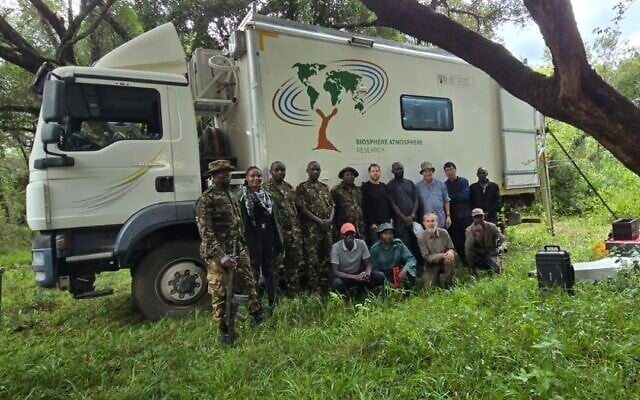
The truck spent its first month at an International Livestock Research Institute research station southeast of Nairobi and is currently at a site farther north.
At each site it visits, the mobile lab deploys an extendable tower and dozens of advanced sensors to gather data.
A key focus of the African project is understanding the consequences of land-use change. In Kenya, for example, where pastoralism and livestock herding are a central feature of life, once-forested landscapes are transforming into savanna and grassland; the data will reveal exactly how these changes alter carbon storage and affect local hydrology.
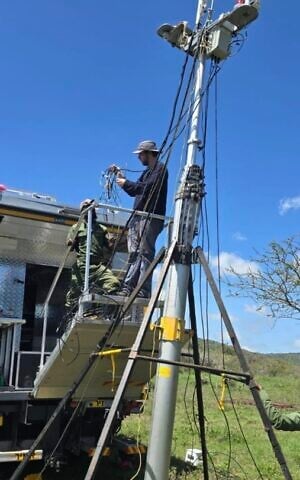
“All land-use change has implications for surface temperature, humidity, living conditions, hydrology, and carbon storage,” Yakir said. “You need data. This will help policymakers make data-driven decisions.”
The ground-level data will also contribute to international climate models.
Globally, nearly 30 percent of human-driven carbon emissions are absorbed on land, making the terrestrial biosphere act as a crucial brake on climate change. In regions like East Africa, scientists currently rely heavily on satellite data, which is limited by cloud cover and other factors.
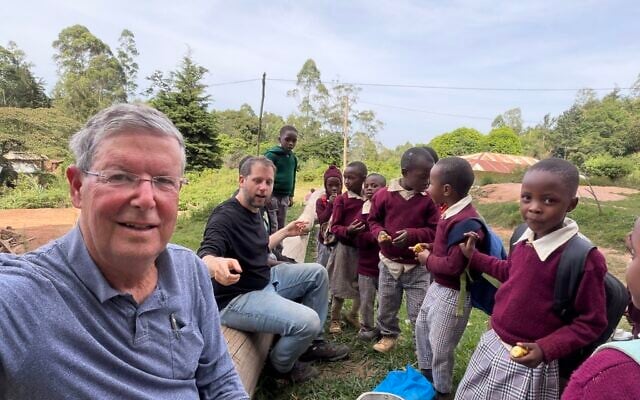
The project, funded by the Weizmann Institute and the Israel Science Foundation, will involve 10 Weizmann researchers, who will rotate in and out of Africa for month-long stints. A Kenyan postdoctoral student and others handle weekly maintenance and help with data analysis, while the team’s core in Israel maintains contact via Starlink.
It is enthusiastically backed by Israel’s Ambassador in Kenya, Gideon Behar, a former climate envoy.
Five years in the making, the climate data truck tour represents nothing short of “crazy ambition” for the team making it a reality, said Yakir.







The Times of Israel Community.