

Fresh clashes erupt as world leaders wrap up G20 summit
Protesters set cars on fire, face off with police for third straight day, hours after peaceful demonstration against top-level Hamburg gathering
 Add ToI as a Preferred Source on Google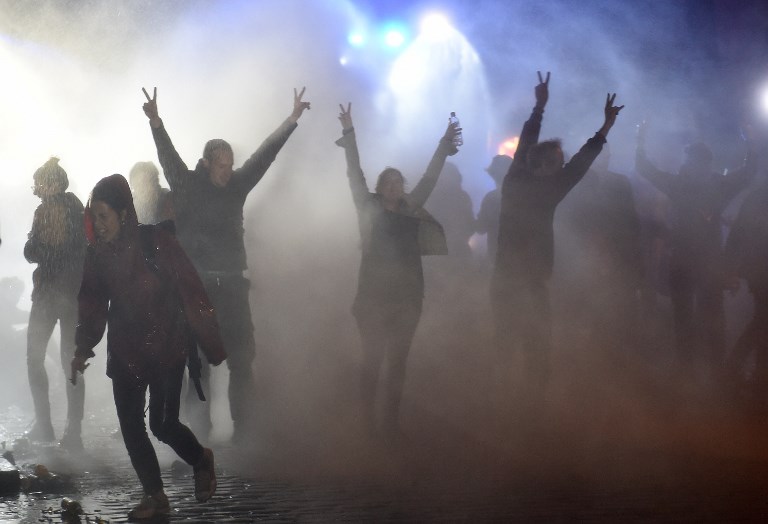
HAMBURG, Germany — Fresh clashes erupted early Sunday in the streets of Hamburg following the end of the G20 summit, with protesters setting fire to a number of vehicles, the police said.
The protesters gathered after the close of the summit in the Schanzen district, a stronghold for extreme left radicals which has been the site of multiple confrontations since Thursday. The clashes came hours after tens of thousands marched in a peaceful protest against the summit of world leaders.
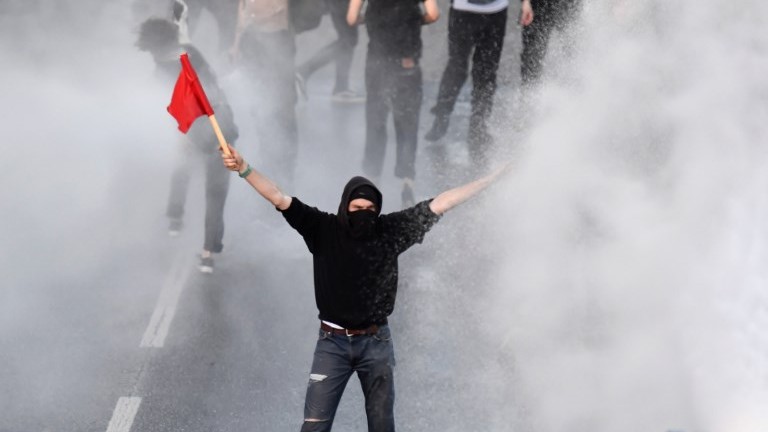
Armed with glass bottles and targeting vehicles, many of which they set on fire, the protesters were pushed back by the police, using water cannon and tear gas, the police said on Twitter.
The police said more officers had been injured, and more people arrested.
According to the most recent figures given by the police Saturday, some 213 police officers have been injured since Thursday, and 143 people have been detained. No accurate number for protesters injured is available.
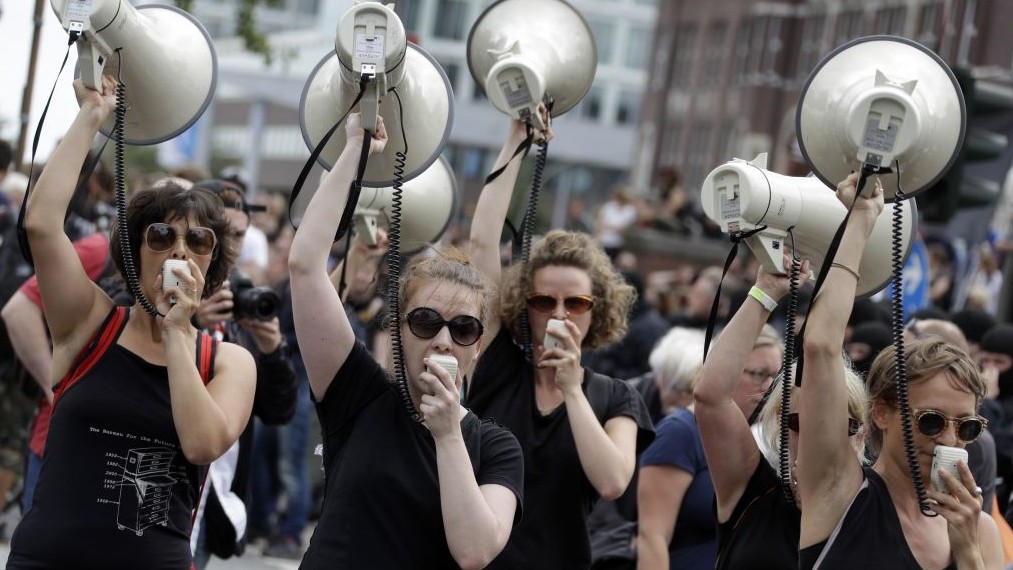
Hours earlier, tens of thousands of peaceful protesters marched on a route close to where some of the worst violence unfolded, chanting, singing, danced and played music as world leaders wrapped up their two-day summit in the German port city.
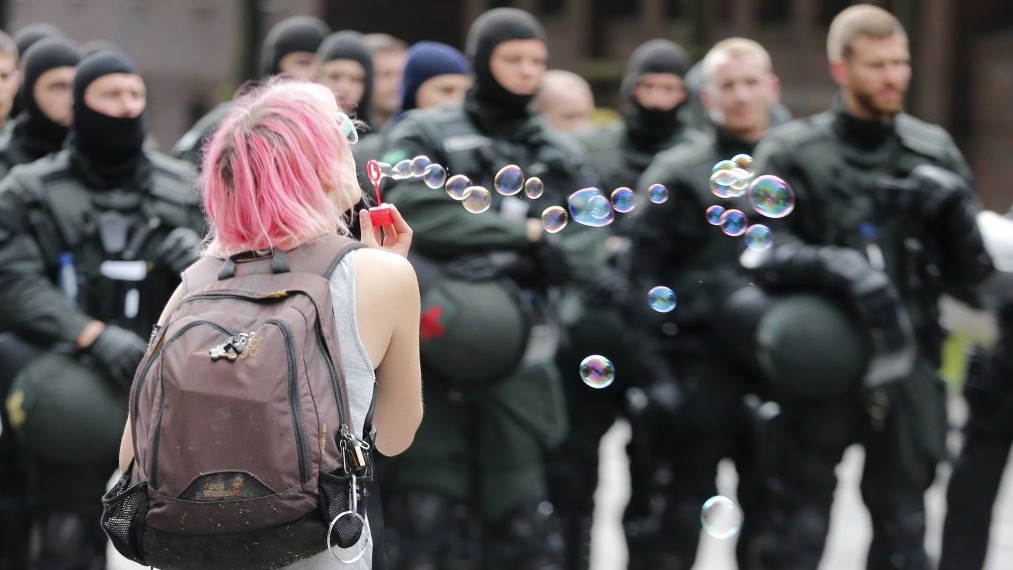
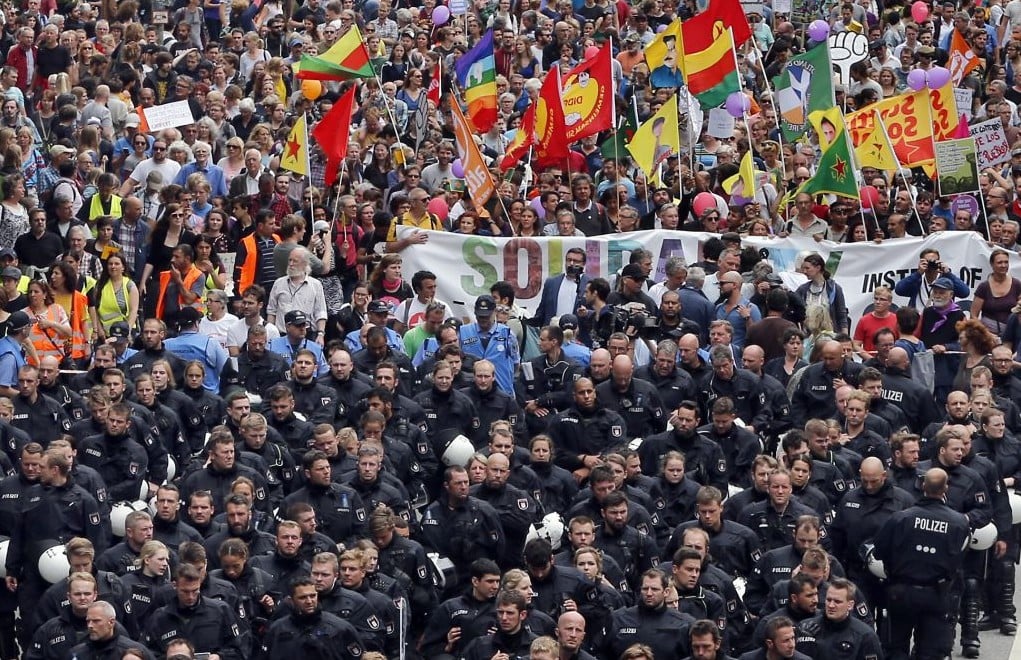
An eclectic crowd of families pushing baby carriages, Kurdish groups, Scottish socialists and anarchists waving flags and shouting anti-capitalist slogans progressed through the city accompanied by thousands of police officers.
Despite the mayhem of the previous days, many officers patrolling the march removed their helmets and appeared relaxed as the huge crowds passed by. Organizers said some 78,000 demonstrators participated, while police estimated the crowds at about 50,000.
The big gathering came after aggressive riots overnight in the city’s Schanzenviertel neighborhood, which is only a few hundred meters (yards) away from the summit grounds. Hundreds of special riot police went into buildings to arrest rioters wearing black masks from rooftops while being attacked with iron rods and Molotov cocktails. About 500 people looted a supermarket in the neighborhood as well as smaller stores. Cars were torched and street fires lit as activists built barricades with garbage cans and bikes.
German Chancellor Angela Merkel expressed shock and anger about “violence and uninhibited brutality” that broke out in Hamburg.
“There is not the slightest justification for looting, arson and brutal attacks on the life of police officers,” Merkel said, adding that the security forces did “excellent work and thanking them on behalf of all the summit participants.
Friday’s clashes occurred as leaders from the world’s 20 biggest developed and emerging economies began the two-day meeting focusing on trade, terrorism, climate change and other key global issues.
World leaders made concessions on trade and climate language to US President Donald Trump Saturday at the end of the most fractious and riot-hit G20 summit ever, in exchange for preserving a fragile unity of the club of major industrialized and emerging economies.
A few thousand rioters, some of them from elsewhere in Europe, created havoc in the city. They battled riot police for two consecutive days and nights, expressing rage against capitalism and globalization and calling for open borders to let all refugees enter Europe.
The protesters’ anger was not so much focused against US President Donald Trump or other leaders, but directed against police as symbols of authority.
Hamburg, Germany’s second-largest city, has a strong radical left scene and many critics had warned well before the summit that its dense streets would be almost impossible to control and clashes would be likely.
But, German Interior Minister Thomas de Maiziere said, “any criticism of the location of the meeting misjudges cause and effect.”
“These were unbounded violent excesses out of a desire for destruction and brutality,” de Maiziere said. He added that police and judicial authorities must take a tough stance against such crimes and that the arrests were appropriate.
Merkel also defended the choice of Hamburg as venue for the summit, saying a big city was needed to accommodate all the participants at hotels. She said she and her finance minister would consult with Hamburg’s city government how they can help people affected by the violence repair the damage.
Many residents, however, showed frustration with the violence and destruction unleashed in their neighborhood.
Laura Zeriadtke watched the full-scale clashes unfold from her street-level apartment window and witnessed about 30 black-clad anarchists tearing down a construction fence across from her home and using it as a shield to push back riot police.
“It was a civil war,” Zeriadtke said.
Ludwig Geiss, a 65-year-old long-time resident living in the same building as Zeriadtke, said that he’d gotten used to the many protests in the alternative neighborhood, but had never experienced anything like the G-20 chaos.
“I know the scene, but what happened yesterday … puts it all in the shadows,” Geiss said as he was evaluating the damage outside his apartment. “I’m not staying here another night.”
Police called on witnesses of the riots to upload photos and video footage on their server to help with the investigation and prosecution of violent activists.
However, most protesters expressed their views peacefully, asking for quick action on climate change and solutions to the migration crisis.
During the protest marches on Saturday afternoon, activists of the Attac group rolled a giant globe along the road, while others carried signs with slogans such as , “Money For Bread, Not Bombs” and “We are many, you are 20.”





The Times of Israel Community.