

Gantz sends AG secret dossier in push for permission to appoint new army chief
Military legal opinion claims process can continue during caretaker government, sparking Likud threat to discard attorney general if she gives defense minister green light
 Add ToI as a Preferred Source on Google
Emanuel (Mannie) Fabian is The Times of Israel's military correspondent
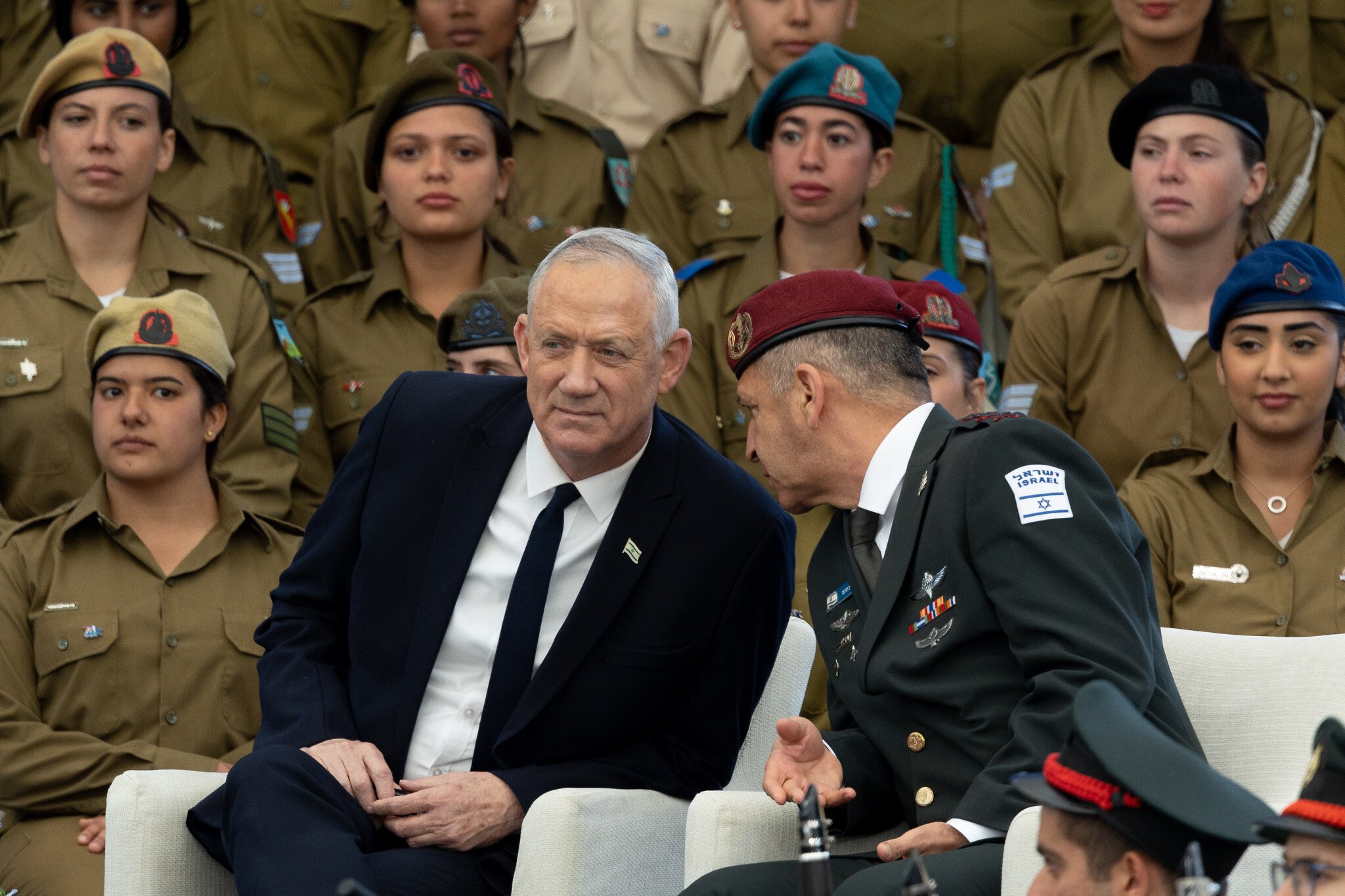
Defense Minister Benny Gantz on Sunday pushed ahead with his attempt to appoint the next chief of the Israel Defense Forces, dismissing concerns that widely impactful nominations be frozen until a new government is formed after elections.
Gantz is seeking to appoint a successor to IDF chief of general staff, Lt. Gen. Aviv Kohavi, whose four-year term is set to expire in January, despite the fact that new elections were called last week. Caretaker governments have traditionally avoided nominations for senior positions such as chief of police or the military.
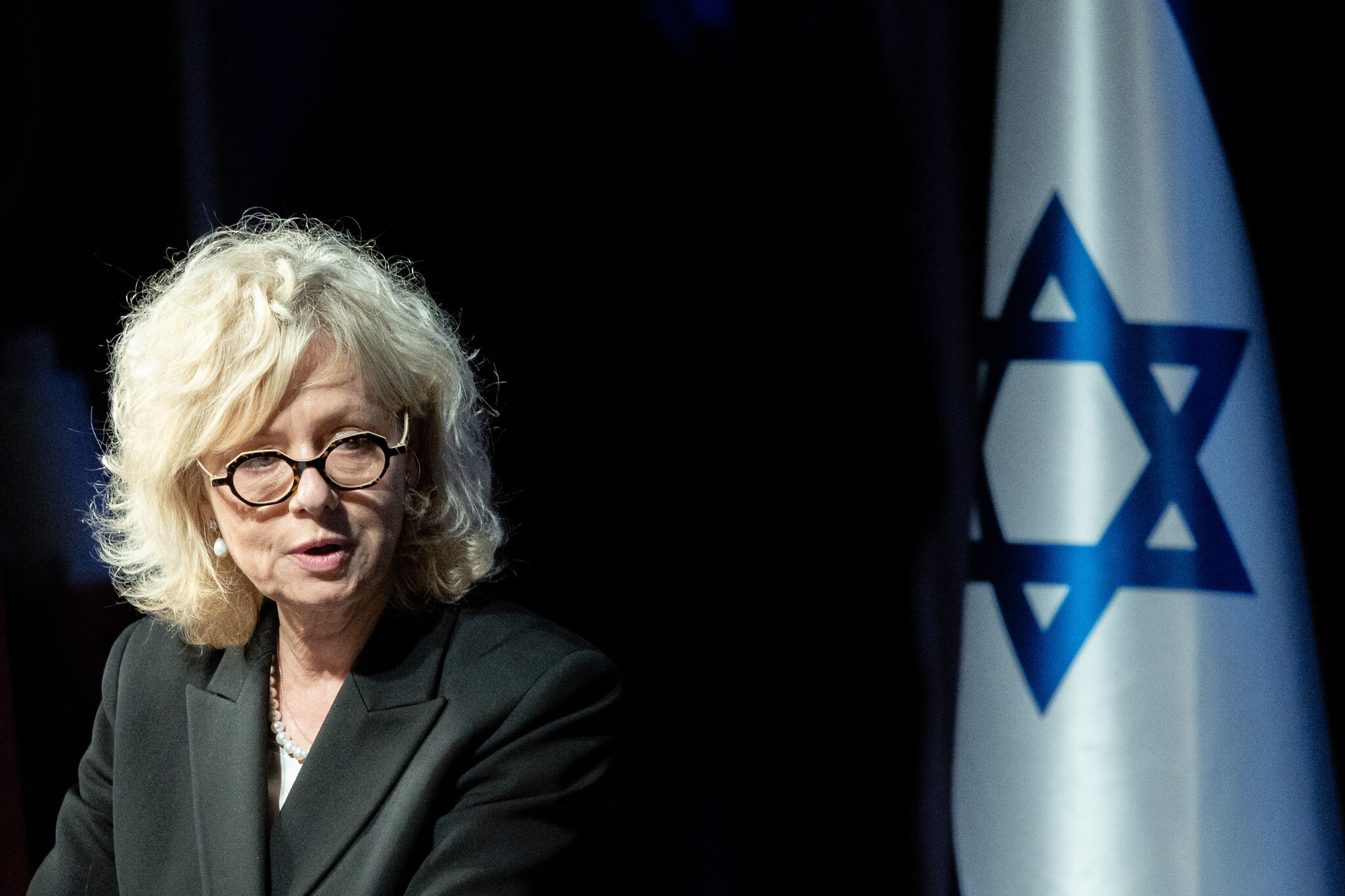
But Gantz’s office said Sunday that a legal opinion formulated by the defense establishment’s top law expert was sent to Attorney General Gali Baharav-Miara, arguing that it was possible to continue the process of appointing the next IDF chief of staff even during the election season.
Gantz’s office said the legal opinion from Defense Ministry legal advisor Itai Ofir was accompanied by a classified IDF operational summary and a classified political summary “regarding the security and political challenges Israel is currently facing.”
Baharav-Miara had earlier said that Gantz would need to present an “essential need” to justify the appointment.
Likud MK Yoav Kisch threatened to replace Baharav-Miara if she allows the appointment to be made, assuming his party manages to form a new government after the November elections.
“If she does so, she will be replaced immediately when we return to power,” he said on Twitter.
Justice Minister Gideon Sa’ar called Kisch’s threat “gangsterism,” in a one-word tweet.
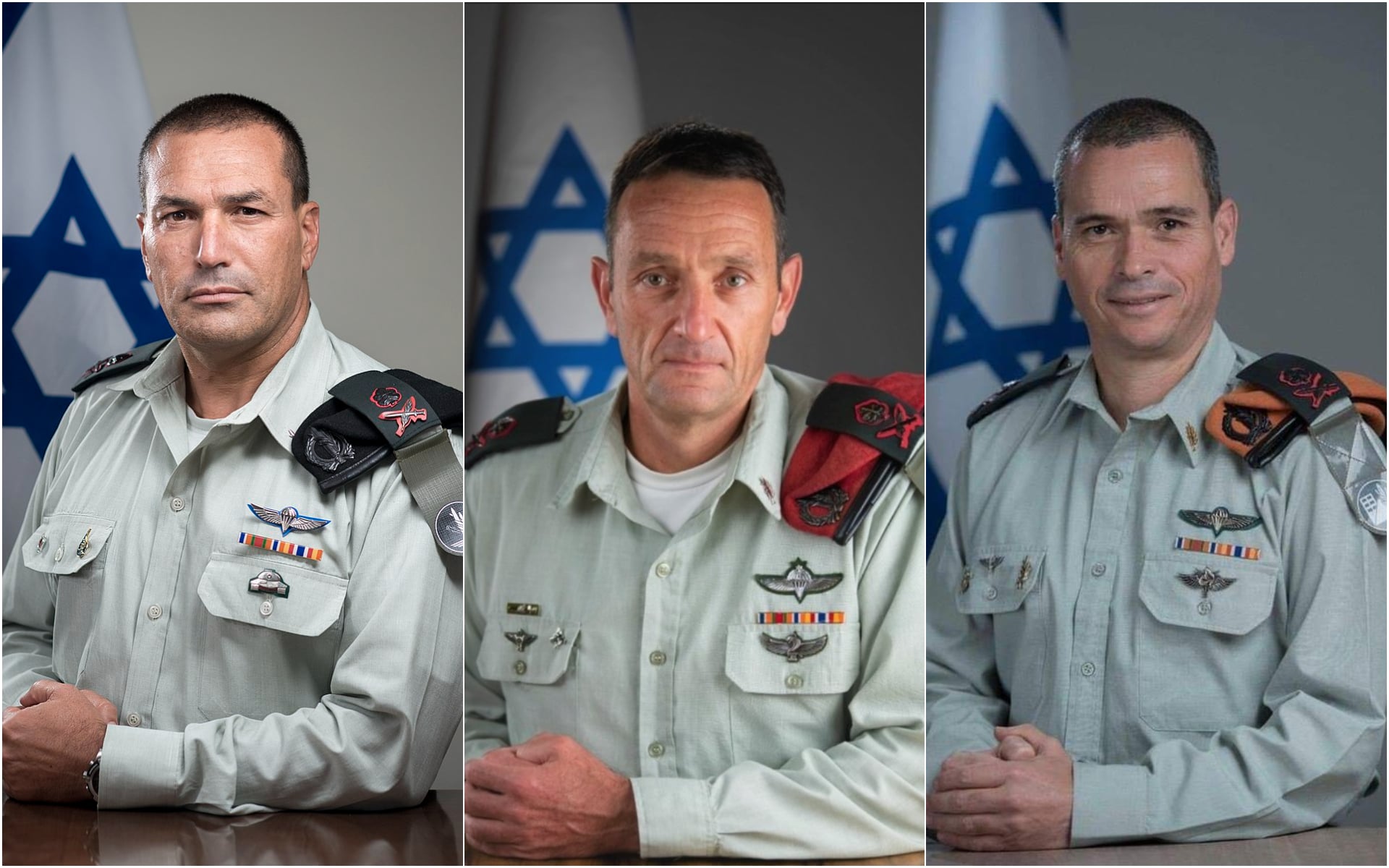
The candidates named by Gantz last month were Eyal Zamir, a former IDF deputy chief of staff currently serving as a research fellow at a think tank in Washington; Herzi Halevi, the current deputy chief of staff; and Yoel Strick, a former commander of the military’s Ground Forces, also serving as a research fellow at another think tank in Washington.
By law, candidates for chief of staff, as well as other senior positions such as police commissioner and Bank of Israel governor, must be vetted by the Senior Appointments Advisory Committee. After that, a nominee is confirmed in a cabinet vote.
Halevi is thought to be the frontrunner, with Zamir a rumored dark horse candidate. Halevi and Kohavi started off their military careers in the same paratrooper unit, and, later, both served as chiefs of the IDF’s Military Intelligence Directorate.
Before serving as deputy chief of staff, Halevi, 54, was the commander of the IDF’s Southern Command, overseeing several rounds of fighting between Israel and terrorists in the Gaza Strip in 2018 and 2019.
Kohavi’s three-year post has already been extended for a year, as is standard, though on rare occasions, some IDF head have remained in office for two extra years.







The Times of Israel Community.