

Give peace a chance? 8 things to know for February 26
Jared Kushner reveals vague details of his administration’s perennially approaching peace plan, which political rivals use as an opportunity for infighting
 Add ToI as a Preferred Source on Google
Jacob Magid is The Times of Israel's US bureau chief

1. Not-so friendly fire: US President Donald Trump’s son-in-law/senior adviser Jared Kusher has revealed details of his country’s perennially approaching peace plan, though Israel’s top two dailies focus more on the right-wing infighting the vague outline has caused.
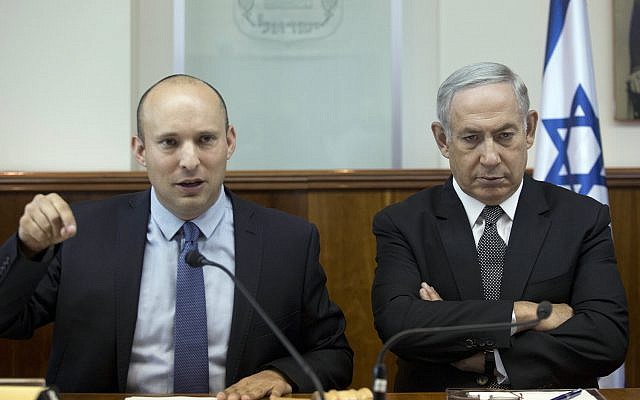
- New Right co-chair Naftali Bennett — whose party is polling just above the electoral threshold — picks a fight with the big tuna, Likud, saying Prime Minister Benjamin Netanyahu’s party will cave to pressure from the Americans and invite the “disastrous” reality of a Palestinian state
- Bennett goes full-on alarmist in an interview with Israel Radio, asserting that only the New Right will be able to prevent “the deaths of thousands of Israelis,” which he suggested would be the result of Trump’s “Deal of the Century.” He was comparing the current peace proposal to the Oslo Accords of the mid-90s which were followed by the deadly Second Intifada.
- While the Likud party does indeed respond to its right-wing rival, it focuses less on its anti-Palestinian state credentials and more on chastising Bennett for friendly fire within the right-wing camp after he had promised to play nice:
- “When Bennett and Shaked established the New Right they said they were doing it in order to pull votes from Lapid and Gantz to enlarge the right-wing bloc, and that they wouldn’t subject us to friendly fire. Now they are making false charges against Likud with the goal of pulling votes from Likud, which will bring about the rise of the left-wing government of Lapid and Gantz, whose party will be bigger than Likud.”
2. State-minus? As for the peace plan itself, Kushner tells Sky News Arabic that it will offer “realistic solutions for the issues of 2019” and will require a unified Palestinian leadership in the Gaza Strip and the West Bank.
- While the PA has been barely talking to Hamas as of late, let alone the White House, Kushner likely was able to unify rival Palestinian factions over his failure to mention a sovereign Palestinian state in the Sky New interview.
- Analysis on the plan is limited but Yedioth’s Sever Plotzker makes clear that he’s not buying any of it, calling the initiative “another doomed statement by an American president who can’t control his mouth.”
- Plotzker points to previous Trump initiatives that were introduced with gusto, but have since not gone exactly as planned: the cancellation of trade deals with Canada and the EU, the quick and complete pullout of US forces from Syria, and the “big, beautiful” Mexico border wall.
- He argues that Kushner’s belief in “economic peace” places him squarely in a camp with Netanyahu and a minority of late former prime ministers (he cites Shamir and Meir) who argue that Israel can still thrive despite its military control over the Palestinians.
3. Skin in the game: Hebrew media basks in the glory of Sunday night’s Oscar win for Israeli filmmaker Guy Nattiv and his short film “Skin,” which was awarded after papers already had gone to press the day prior.
- Israel Hayom quotes President Reuven Rivlin characterizing the victory as “a gift for our children.”
- Nattiv tells the Hebrew daily, “My grandparents were Holocaust survivors and this film is Israeli every way; it educates against racism.” To be clear, the 20-minute movie, about a gang war that breaks out in a small town after a black man smiles at a white child, was shot in the US.
- Reviewing “Skin,” Yedioth’s Benjamin Tobias says, “It flows, it ignites, it leaves you with a pit in your stomach, but it mainly shows what talented people have grown out of the Israeli film industry in the last twenty years — the same industry that so many people in Israel insist on correcting or canceling.”
- Yedioth points out that Nattiv is just the second Israeli filmmaker to win an Oscar. He shares the rare honor with Moshe Mizrachi, who won an Oscar in 1977 for his movie “Madame Rosa.”

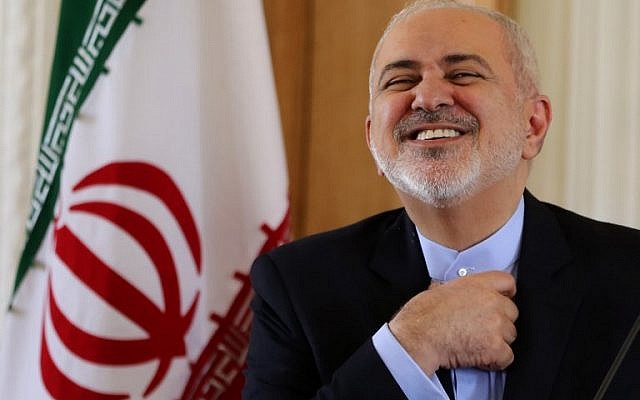
4. Don’t let the door hit you on your way out: Most of the Israeli press does not seem interested in shedding a tear in its reporting of Iranian Foreign Minister Mohammad Javad Zarif’s abrupt resignation.
- Yedioth refers to Zarif as “the smiles diplomat” and says he will now be able to return to Tehran University where he can teach international relations courses based on all that he learned during his time in the US.
- “Zarif is gone. Good riddance,” Netanyahu tweets of the lead negotiator of Iran’s landmark 2015 nuclear agreement with world powers that he had bitterly opposed. “As long as I am here, Iran will never acquire nuclear weapons,”
- But Haaretz’s Tzvi Barel calls the resignation a “gift” to hardliners in Iran, with whom Zarif sparred more often than not in his push for the nuclear deal.
- Barel says Zarif was the first domino to fall as a result of Iranian frustration with the country’s spiraling economy following the renewal of American sanctions. Whether the resignation will stop the bleeding of President Hassan Rouhani’s administration remains to be seen, but Barel predicts Supreme Leader Ali Khamenei will use the opportunity to appoint someone of his own choosing, ensuring greater influence in foreign policy matters moving forward.
5. He loves you, he loves you not: The brouhaha surrounding the entry of the long-tabooed party of Kahanists into the political arena appears to show no signs of letting up, with New Right co-leader Naftali Bennett telling Israel Radio that the Otzma Yehudit party is beyond the pale.
- “I do not accept their positions at all. People who see (Jewish supremacist Meir) Kahane as a model are not fit to sit in the Knesset.”
- But Bezalel Smotrich, whose Jewish Home party merged with Otzma Yehudit at the prime minister’s behest, is having none of Bennett’s criticism and tweets an article from earlier this month in which the New Right leader called the far-right alliance “essential.”
- When Bennett and Shaked left the Jewish Home, they argued that their new party would allow the right-wing bloc to expand, with them attracting more secular voters, leaving the national religious party more free to go after the hardline Orthodox Israelis supportive of Otzma Yehudit.
6. Enemies at both gates: Haaretz leads its front page with a report quoting senior Palestinian officials in the West Bank and Gaza who warn that a confrontation with the Jewish state will ensue if the Israeli government does not take steps to ease pressure on the Palestinian leadership.
- Senior Palestinian officials tell Haaretz’s Jacki Khoury that Israeli cuts in PA tax revenues in an effort to cease Ramallah’s payments to the families of security prisoners are turning the West Bank into a pressure cooker.
- “Nobody knows when the camel’s back will break but all the elements required for an explosion already exist, and (the Israelis) are constantly adding oil to the fire,” Kadura Fares says.
- A Hamas official tells Khoury that while the terror group is not interested in a confrontation with Israel at the moment — an evergreen line recycled by both Israelis and Palestinians — an Israeli strike on Gaza could lead to a dangerous renewal of violence

7. Before, during and after: New allegations are made against alleged sexual predator Malka Leifer. The 51-year-old has made headlines as she faces extradition to Australia, where she is charged with 74 counts of sexual abuse. Earlier this year, a man in the Emmanuel settlement, where she lived after fleeing from Melbourne, accused Leifer of trying to molest his daughter. Now, two woman have come forward saying the former principal made inappropriate advances to them when she taught at Bnei Brak before moving to Australia.
- “She would take me for private conversation, one on one… down in the bomb shelter. We would sit there and she would stroke my leg,” the woman, who declined to disclose her identity, tells the Kan public broadcaster.
- ToI confirms that there is a second former student of Leifer’s from her time in Bnei Brak who has accused the former principal of having made inappropriate sexual advances to her nearly two decades ago.
- A former education official in Bnei Brak said she believed that rather than reporting her, community leaders sent Leifer to Australia after they learned of her transgressions.
8. So long, we hardly knew you?: The Central Elections Committee informs Labor’s shiny new ex-general Tal Russo that he may not be eligible to run, given a recent position he took on in the IDF reserves after his active duty was finished, which calls into question whether he completed his legally required post-army “cooling off” period before entering politics.
- Russo was tapped just last week by party chairman Avi Gabbay to serve as the party’s No. 2 as part of nearly every Israeli party’s effort to boast a high-ranking veteran fresh (but not too fresh) off the battlefield.
- Yedioth reports that Labor’s legal adviser told Gabbay that he need not worry, given that the “cooling off” law does not apply to reserve duty.
- While the Hebrew dailies would typically take such an opportunity to poke fun at the increasingly irrelevant Labor party, no cracks are made in the reports on Russo, indicating a possible degree of pity felt by the media toward the left-wing faction.
- Channel 12’s Amit Segal argues that the elections committee is adopting a “very narrow interpretation” of the cooling off law, adding that future military-to-politics candidates’ best hope that they don’t see it similarly interpreted against them with “such negligence.”








The Times of Israel Community.