

Government punts bill to give Ben Gvir power to hold suspects without charge
For 4th week in a row, panel postpones decision on legislation that would let far-right police minister wield administrative detention authority; no new discussion date set
 Add ToI as a Preferred Source on Google
Carrie Keller-Lynn is a former political and legal correspondent for The Times of Israel

A government panel on Sunday postponed discussion on a bill that would give far-right police minister Itamar Ben Gvir unprecedented powers, which he says he seeks in order to combat violent crime in Arab communities.
Although it was the fourth week in a row that the Ministerial Committee on Legislation put off a debate on the Otzma Yehudit party-backed bill, it was the first time it pushed off discussion without announcing when the bill would return to consideration. Obtaining the committee’s support significantly eases a bill’s path through the Knesset.
The postponement came a day after Defense Minister Yoav Gallant was said to have warned Justice Minister Yariv Levin that giving Ben Gvir the power to order administrative detentions could undermine the public legitimacy of the tool for fighting terror, thus harming national security.
Administrative detention is a controversial tool that lets suspects be held without charge, trial, or access to classified evidence against them for renewable six-month terms. It is currently used as a tool to fight terror and about 1,000 Palestinians and a handful of Jewish Israelis are in custody under administrative detention, which requires the defense minister’s signature, upon recommendation of the Shin Bet.
The new bill would give Ben Gvir parallel authority and allow him to jail criminal suspects without trial, provided he thinks the person poses a danger to the public and the move was requested by the police commissioner and had the approval of the attorney general, the state attorney, or one of their deputies.
The State Attorney’s Office in June wrote that the bill’s broad expansion of the minister’s power “constitutes a dramatic change to world order in criminal enforcement in Israel.”

In addition to expanded powers to jail citizens, the bill would grant the minister power to act alone, under certain circumstances, in ordering restrictions on where a person can live or visit; confiscating their passport; limiting who they can speak to; forbidding them from using the internet; and placing curbs on what they can purchase, what services they are allowed to receive and what actions they are allowed to perform.
Similar to ordering administrative detentions, the main test to apply such restrictions would be that the minister is “convinced that there’s a reasonable concern of harm to public security.”
Before becoming national security minister, Ben Gvir previously was charged with incitement to racism and support for a Jewish terror organization, and acted as a lawyer defending Jewish extremists.
A staunch supporter of Jewish sovereignty within Israel and the West Bank, Ben Gvir ran on a tough on crime and lawlessness campaign, mainly targeted toward strengthening governance in areas with large Arab populations.
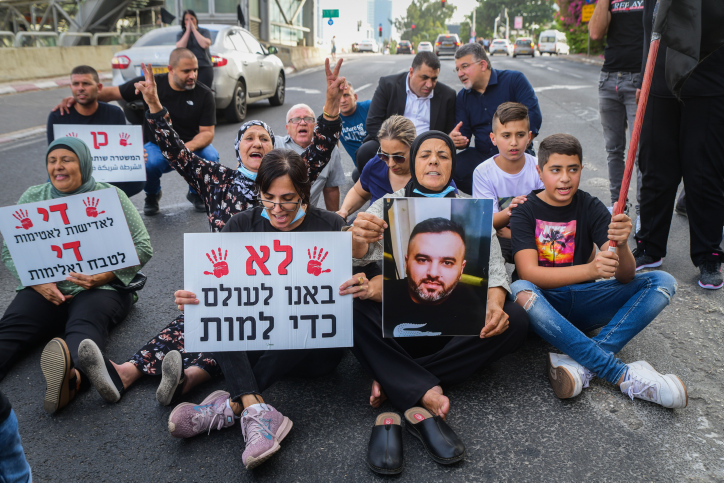
Since his appointment in December, Ben Gvir has sought to exercise more direct control over police operations and personnel, including an ultimately successful drive to remove the Tel Aviv police commander, and has pushed to expand his powers, in moves critics say tamper with the independence of the police.
Last month, the High Court of Justice issued a temporary injunction against a separate law granting Ben Gvir increased powers over police, signaling growing concerns over the politicization of law enforcement.
He also secured several billion shekels to develop a national guard force, which he claims will help restore governance to under-policed areas once it gets underway. Critics have accused him of trying to build a private militia.
Since the start of this year, 124 Arabs have died from violent crime, as compared to 116 throughout all of last year, according to the non-profit Abraham Initiative.
Many Arab community leaders blame the police force, which they say has failed to crack down on powerful criminal organizations and largely ignores the violence, which includes family feuds, mafia turf wars, and attacks against women. The communities have also suffered from years of neglect by state authorities.









The Times of Israel Community.