

Government to weigh marking Jerusalem ‘red’ zones, quarantining residents
Those in neighborhoods hard hit by virus will be confined to them, TV report says, as some in cabinet said to criticize plan as heavy-handed; daily testing continues to decline
 Add ToI as a Preferred Source on Google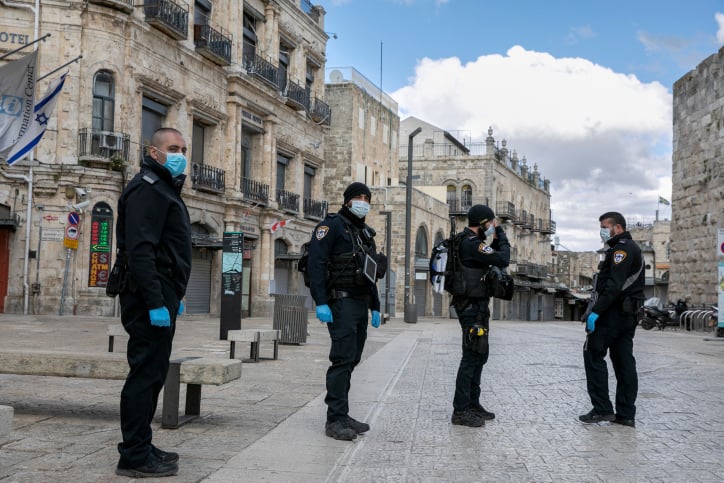
The cabinet was set on Saturday night to discuss splitting Jerusalem’s neighborhoods into green and red zones, with tighter restrictions to apply to those in the red areas where coronavirus cases have been particularly widespread, Channel 12 reported.
Residents of “red” neighborhoods will be confined to them and will not be able to exit to green areas, according to the report.
It also said some in the cabinet have criticized the move as heavy-handed and unnecessarily restrictive. Jerusalem Mayor Moshe Lion was reported to have told cabinet officials: “Take the Ramot neighborhood for example — 60,000 residents and 140 of them sick. Why do we need to close off the whole neighborhood?”
Jerusalem has led the country in the number of diagnosed infections with over 1,800 as of Saturday, with many of those reportedly centered in the city’s ultra-Orthodox neighborhoods.
Channel 12 news reported Saturday night that 75% of COVID-19 cases in Jerusalem are in ultra-Orthodox neighborhoods. The infection rate is highest in Har Nof, it said, with 8 cases per 1,000, followed by several north Jerusalem neighborhoods including Sanhedria and Ramat Eshkol with 5 cases per 1,000.
The TV report also said there are thousands of known carriers in the Jerusalem neighborhoods and in the city of Bnei Brak, who ought to have been evacuated to state-overseen quarantine hotels. Unless that happens, clocking down such areas would risk turning them into still greater incubation hotspots.
The past week saw a nearly four-day lockdown on all Israeli communities due to the Passover holiday. The curfew saw the populace confined to their hometowns between Tuesday evening and Friday morning. During that time, Jerusalem residents were confined to one of seven delineated zones dividing the city.
Friday saw the closures removed in all cities other than Bnei Brak, though the Health Ministry urged Israelis to continue maintaining social distancing regulations and not to become complacent. Residents must still remain within 100 meters of their homes at all times unless for specifically authorized activities such as stocking up.
Health officials had reportedly pushed for the nationwide lockdown to be extended until the end of Passover on April 15, but were shot down by the Finance Ministry, which has warned of lasting damage to the nation’s economy if the longer restrictions remain in place.
The mainly ultra-Orthodox Bnei Brak, which is the country’s second most infected community (1,594 cases as of Thursday) despite having a far smaller population, has been closed off from the rest of the country for the past 10 days. On Friday restrictions were eased somewhat, with residents allowed to travel outside the city for work and some other essential needs.
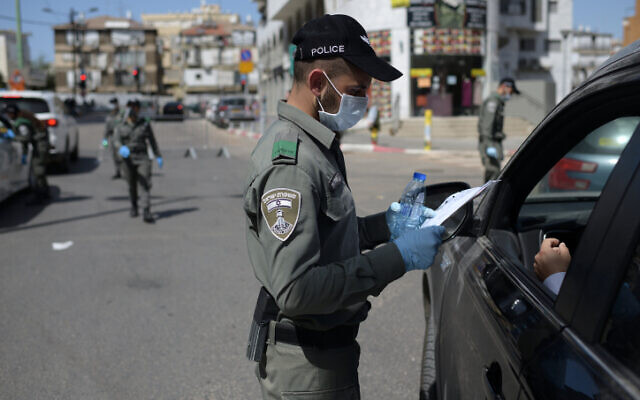
Prime Minister Benjamin Netanyahu and Interior Minister Aryeh Deri were reported to engage in a heated argument Thursday night during a cabinet discussion on imposing further lockdowns on predominantly ultra-Orthodox neighborhoods in Jerusalem and Bnei Brak.
Deri, of the ultra-Orthodox Shas party, reportedly said he felt that the Health Ministry was “quick on the trigger” when it came to imposing restrictions on Haredi communities.
As of Saturday afternoon, the national number of confirmed coronavirus cases stood at 10,525, with 96 people having died of the virus. Over 1,200 have recovered from the disease, according to the latest Health Ministry figures.
Also Saturday, figures released by the Health Ministry showed the number of coronavirus PCR test results published per day continued to decline — with only 5,980 results published Friday, down from a high of almost 10,000 on April 3.
Netanyahu has set a target of 30,000 tests per day, though it currently seems to be far out of reach.

The number of tests has dropped due to shortages in chemicals used in the tests, though the government has been working to address the matter.
According to a Friday report on Channel 13 news, health officials are expecting a surge in coronavirus deaths in the next 10 days. However, the rise in deaths does not signify an increase in infections. Patients who are already hospitalized and on ventilators are likely to succumb to the virus in the coming days, according to predictive models from the Health Ministry.
Almost all of those who have died from COVID-19 in Israel have been elderly and suffered from preexisting conditions, according to hospital officials. The novel coronavirus has been spreading quickly in nursing homes around the country, raising intense concern for the safety of elderly residents.
Experts have pointed to the relatively slow rise in the number of patients on ventilators as a source of potential encouragement.









The Times of Israel Community.