

Hallel Ariel, ‘princess in white,’ mourned in Hebron funeral
As young dancer killed by Palestinian terrorist is laid to rest, politicians and rabbi speak of building and annexation, while mother Rina thanks God for 13 years with ‘the light of my life’
 Add ToI as a Preferred Source on Google
Judah Ari Gross is The Times of Israel's religions and Diaspora affairs correspondent.
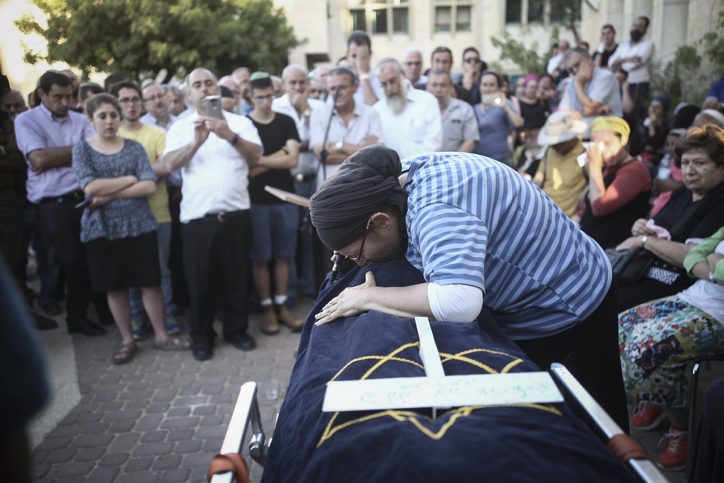
KIRYAT ARBA — Hallel Yaffa Ariel’s funeral service began just a few feet away from where she was brutally stabbed to death.
On Thursday evening, the 13-year-old’s body was covered in a shroud and laid out on a stretcher on her family’s front porch in the Kiryat Arba settlement outside of Hebron.
Surrounded by friends and family, Hallel’s mother, Rina, stood over her, weeping for the daughter she lost. Her father, Amichai, started the funeral procession with the mourner’s Kaddish, the Jewish prayer for the dead.
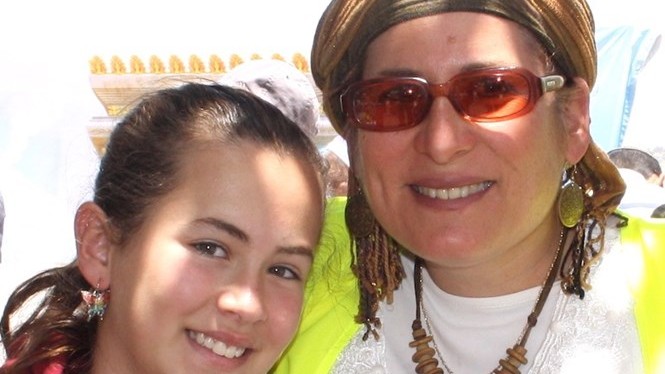
Hallel was a dancer. The eighth-grader wanted to become a zoologist when she grew up.
Muhammad Nasser Tarayrah, a 17-year-old Palestinian from the nearby Palestinian village of Bani Na’im, took that dream away from her.
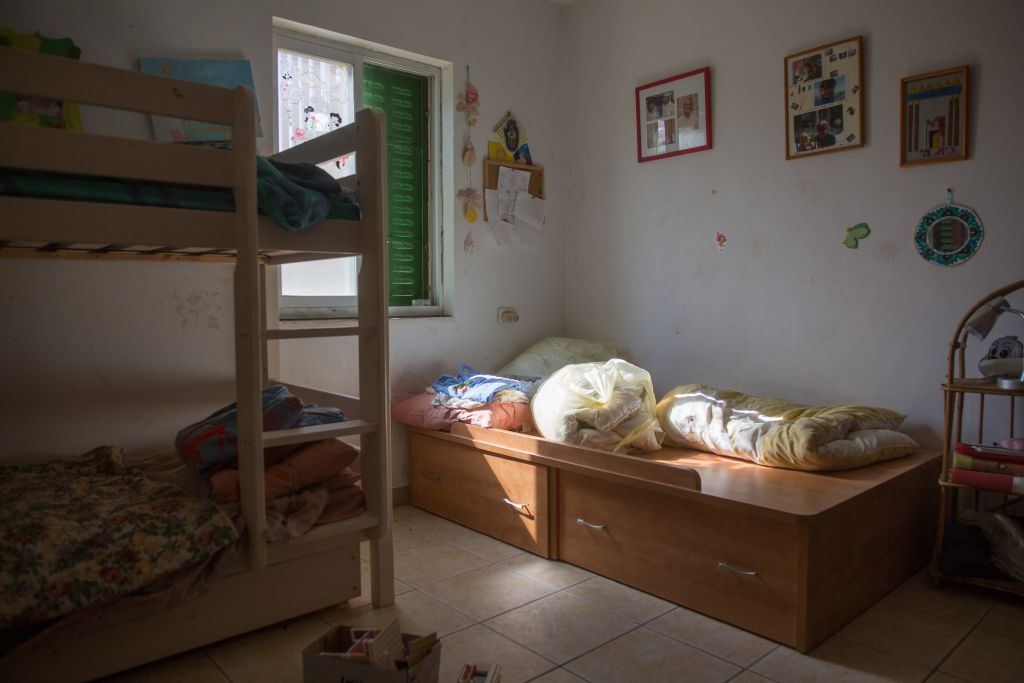
After climbing into the house through a window, Tarayrah entered the bedroom Hallel shared with her siblings and stabbed her repeatedly. Hallel, exhausted from a dance recital the night before, was still in bed when Tarayrah started his attack.
When paramedics arrived, she wasn’t breathing. She was pronounced dead in Jerusalem’s Shaare Zedek Medical Center a short while later.
At 13 years old, she is the youngest victim in the “wave of terror” that has been washing over Israel since September of last year.
From the family’s home, the funeral procession moved to the courtyard of a school across the street.
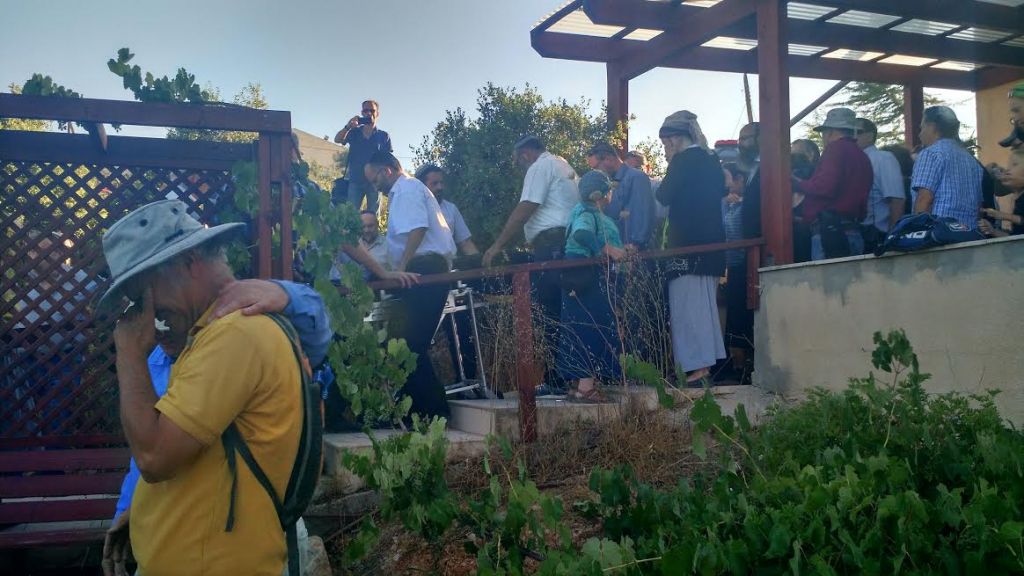
Hallel was eulogized by two government ministers, a member of Knesset and the settlement’s rabbi. But it was her dance instructor and her mother who sent shivers through the crowd.
The politicians’ and rabbi’s speeches seemed directed more towards the crowd and the television cameras than towards the 13-year-old girl lying dead next to them.
Their eulogies started out about Hallel, but after a few lines shifted to calls for building in the settlements, to accusations of Mahmoud Abbas’s culpability, or to the need for the government to take a stronger hand in dealing with terrorists.
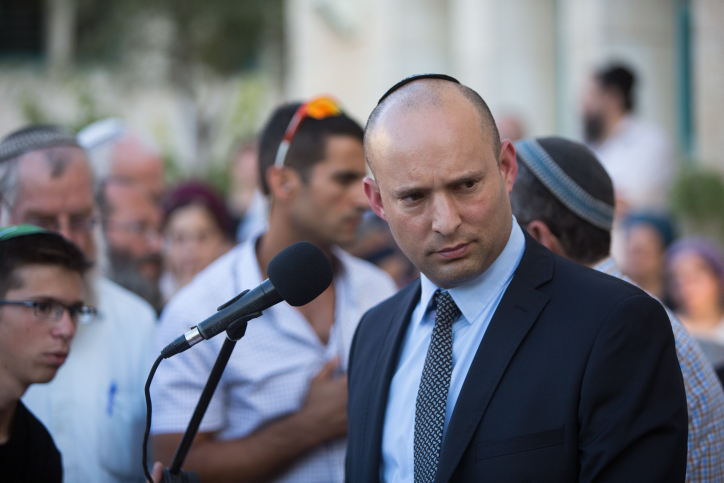
“There was no need for you to be here today. You should have been dancing or volunteering,” Education Minister Naftali Bennett said.
He went on: “We will build in Sarona and Kiryat Arba, in Jaffa and Jerusalem, in Itamar and Beersheba.”
Agriculture Minister Uri Ariel — Hallel’s cousin — also stressed the need for building in the settlements “now more than ever,” and called for Israel to declare its sovereignty over the West Bank.
Likud MK Yehudah Glick began his eulogy emotionally, crying out to God, saying there have been “enough parents burying their children and wives burying their husbands.”
But his speech, as well, turned to calls for Israeli annexation of the West Bank and for Jews to go up to the Temple Mount.
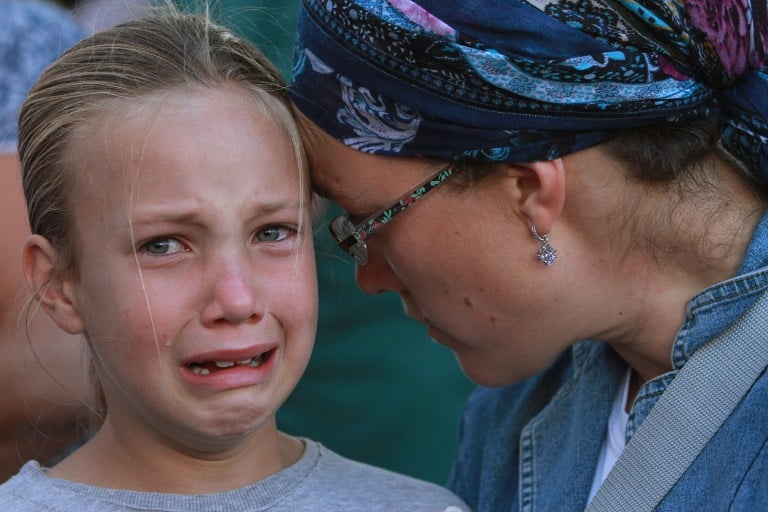
The settlement’s controversial religious leader, Rabbi Dov Lior, spoke the longest, yet the majority of his speech dealt not with Hallel, but with what he saw as Israel’s weakness in dealing with the Palestinians.
“Of course God will avenge [Hallel’s] death, and the deaths of others killed by these evildoers. But that does not forgive the government that doesn’t use the force it possesses. We have an army. We have security forces,” Lior said.
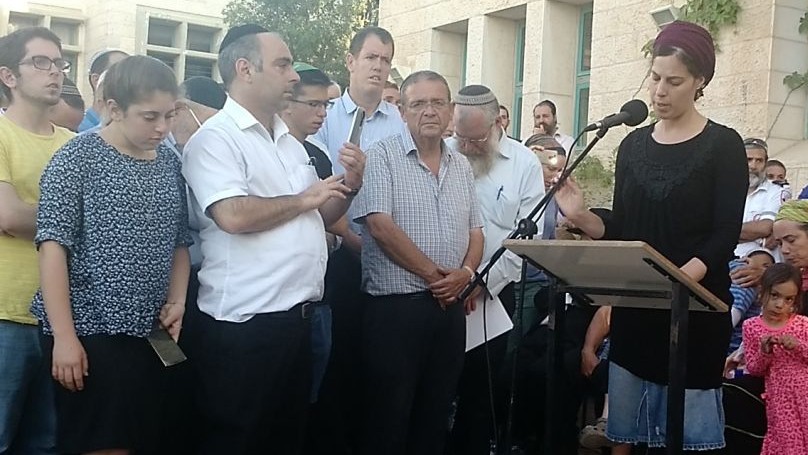
It was Hallel’s dance instructor Esther Marom who spoke the longest about her student — a “princess in white” — who had “a penetrating gaze and a stormy silence about her.
“Yesterday, like a white bird, you danced the dance of your life,” Marom said.
From the moment Marom began her eulogy, wails and cries began emanating from the crowd. She spoke with tears and a shaky voice.
“During the stabbing, before your mother knew what happened, she sent me a message that was so long and so proud, in which she wrote: ‘Congratulations, your class has become an anchor for [Hallel] and something central to her life,'” Marom said.
“I wrote back to her, ‘Thank you so much, and Hallel is incredible,'” she said. “A minute later, the reports came out about the terror attack. I couldn’t understand. How? How could it be?”
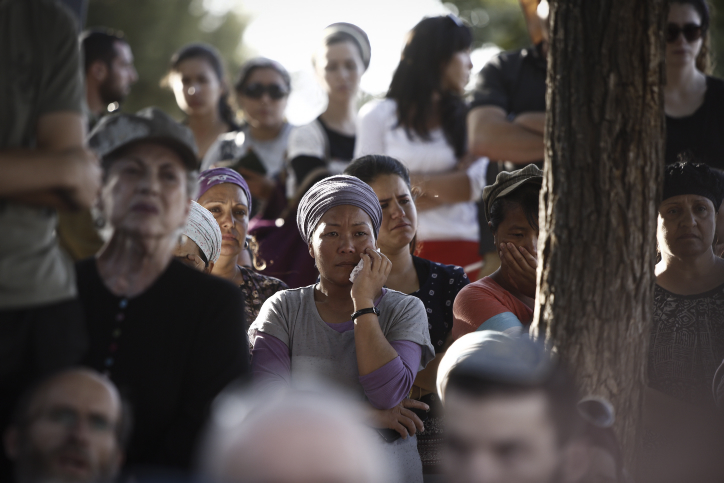
Then it was Hallel’s mother, Rina, who left the crowd stunned and in tears.
“How can you say farewell to a child of 13?” she cried. “What are the words that let you eulogize a flower, a pure soul, a girl with power, a beautiful girl?”
The bereaved, wailing mother thanked God for the gift of her daughter, for 13 years “with the light of my life,” then begged God to “let her be the last victim. Enough!”
Rina Ariel called on biblical figures to watch over her daughter in heaven. She asked Miriam, Moses’s sister, to “make room next to God’s holy seat so that Hallel can dance.”
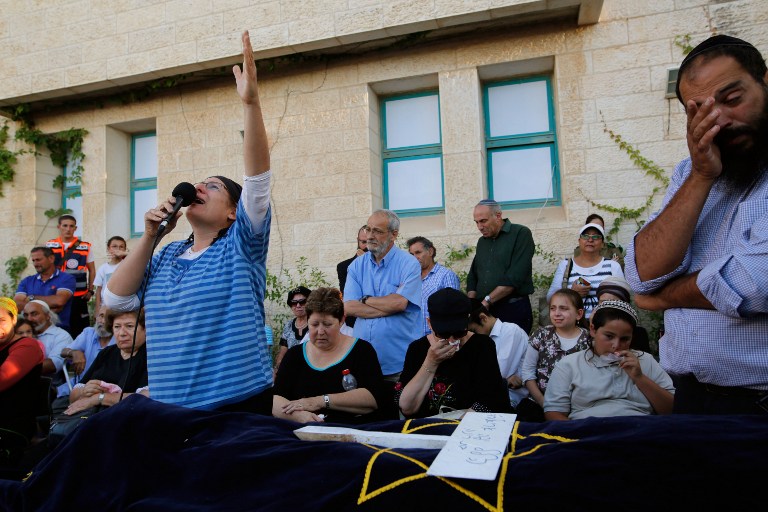
At one point, she broke down and gave her daughter’s body “one last hug,” and recited the Shema prayer.
Men and women in the crowd wept openly at the mother’s pain.
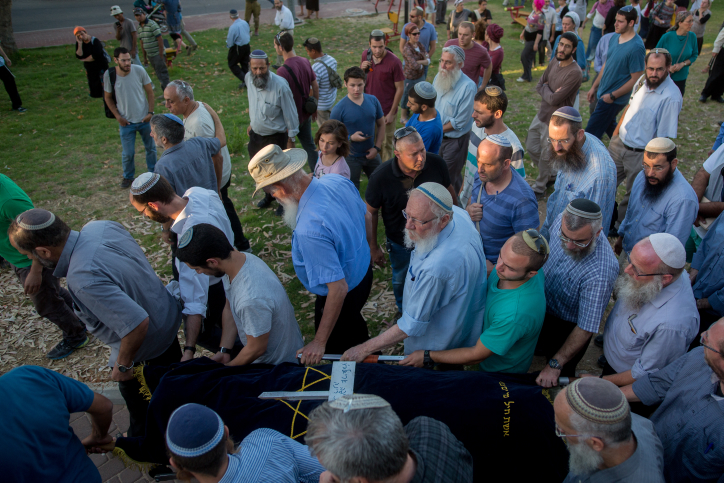
As the sun began to set, the procession continued to the Jewish cemetery in Hebron where Hallel would be buried.
Hebron’s tensions were never far from view during the funeral. The mourners arrived by bus and car to parking lots in the majority Palestinian city next door. From there, they walked on foot through closed-off streets under the protection of Israel Defense Forces soldiers, police officers and private armed guards.
In the background, the cannon shot and songs marking the end of the Ramadan fast could be heard as Muslim residents of Hebron began their iftar meals.
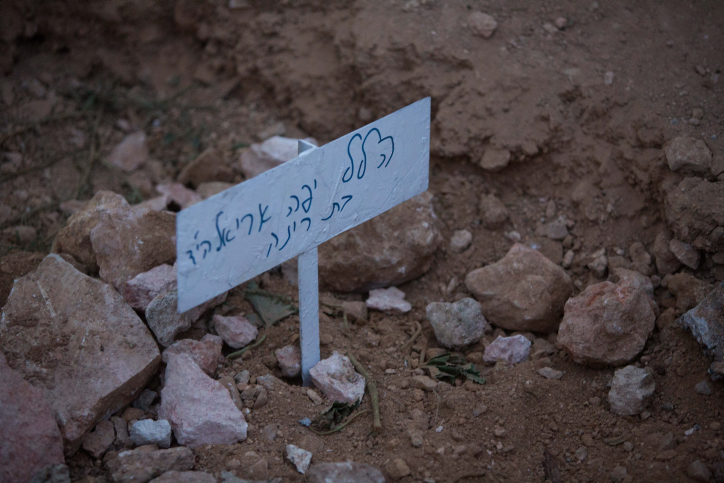
Many hundreds of mourners filled the cemetery, singing together and watching as the girl was buried.
Hundreds gathered and singing during the burial of Hallel Yaffa Ariel in the Jewish cemetery in Hebron. pic.twitter.com/ASB74x6c3X
— Judah Ari Gross (@JudahAriGross) June 30, 2016
After a little over an hour, Rina and Amichai Ariel left their daughter’s gravesite. The crowd parted for them as they walked out of the cemetery, stopping every few feet to hug a friend or family member.
As the hundreds of people who had come to the funeral began checking their phones after their service, they learned that another stabbing attack had taken evening, in Netanya.
While the Ariels were burying their daughter, a Palestinian from Tulkarem had stabbed a man and a woman in the coastal city, seriously injuring them.







The Times of Israel Community.