

‘Handcuff king’ Houdini’s secrets finally unlocked
New museum in Hungary reveals escape artist’s feats, and his immigrant Jewish past
 Add ToI as a Preferred Source on Google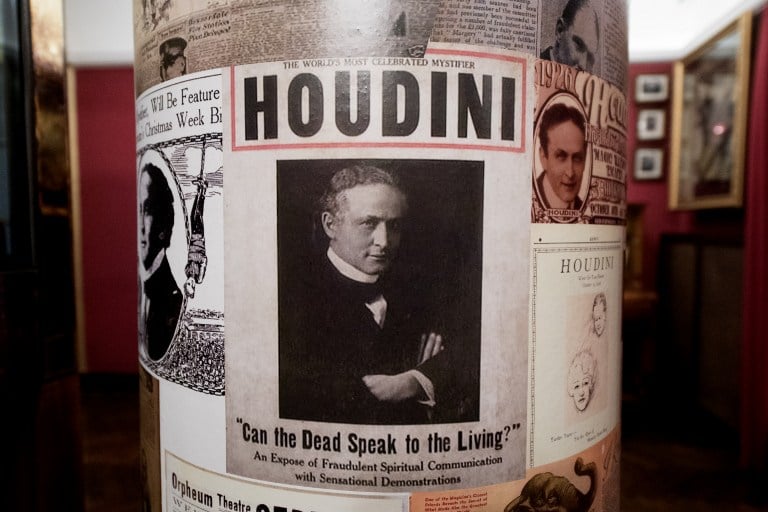
BUDAPEST, Hungary (AFP) — Ninety years after his death, the secrets of the world’s greatest escape artist, Harry Houdini, have been unlocked in a recently opened Hungarian museum devoted to the Jewish Budapest-born illusionist.
Set high in the capital’s lofty Castle district, the House of Houdini lifts the veil on the box of tricks used by the famous magician, who lived most of his life in the United States.
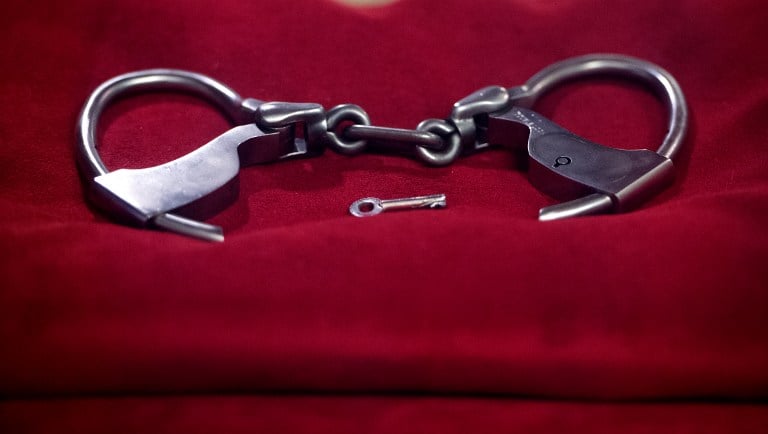
Amid gleaming chandeliers and old Chesterfield seats, the red-painted rooms showcase handcuffs and padlocks used by Houdini in performances.
Visitors can also see props from a recent television production on him such as a box from an illusion where a woman appears to be cut in half.
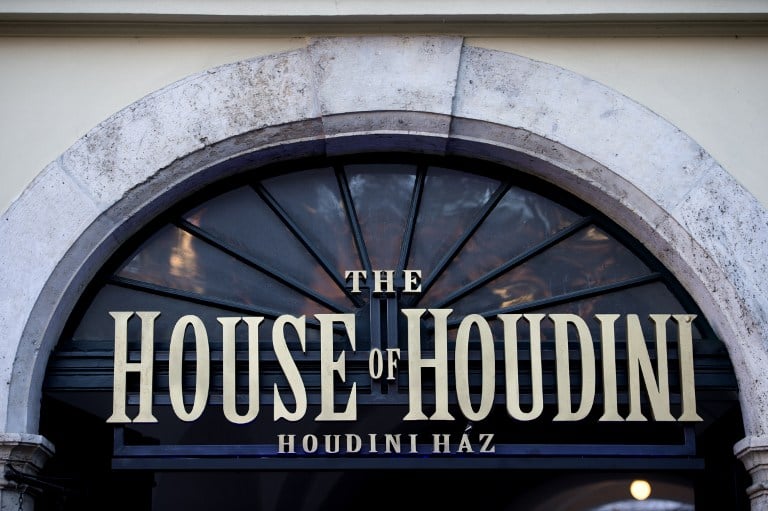
There’s even a stage where budding magicians charm visitors with card tricks.
“I had an urge to pay tribute to Houdini,” said museum owner and fellow escapologist David Merlini who has dedicated his life to collecting the items on display.
“We are all Houdinis. Everyone has a secret desire sometimes to get out of a certain situation, to be somewhere else, in a different pair of shoes, that is his enduring universal appeal,” he told AFP.
Beyond its entertainment value, the museum also employs a researcher who delves into Houdini’s mostly unknown early life and family history in Budapest.
Born Erik Weisz to a Jewish family in Budapest in 1874, Houdini and his family left for Appleton, Wisconsin, when he was just 4 years old.
By his late teens, he was performing stunts and using the stage-name “Houdini,” a nod to the French magician Jean Eugene Robert-Houdin.
Fame arrived thanks to his feats with handcuffs and straitjackets, and sensational escapes from sealed water-filled milk urns, and caskets buried underground.
“The world’s handcuff king, nothing on earth can hold Houdini a prisoner!” read a contemporary publicity poster.
Although Houdini extensively toured Europe, he never put on a show in Budapest.
Hungary represented a “dark side” for Houdini, says Merlini.
“He was not proud of his Hungarian background because he was a poor Jewish immigrant from Europe (in the US),” he noted.
“But we are trying to keep the legend alive.”
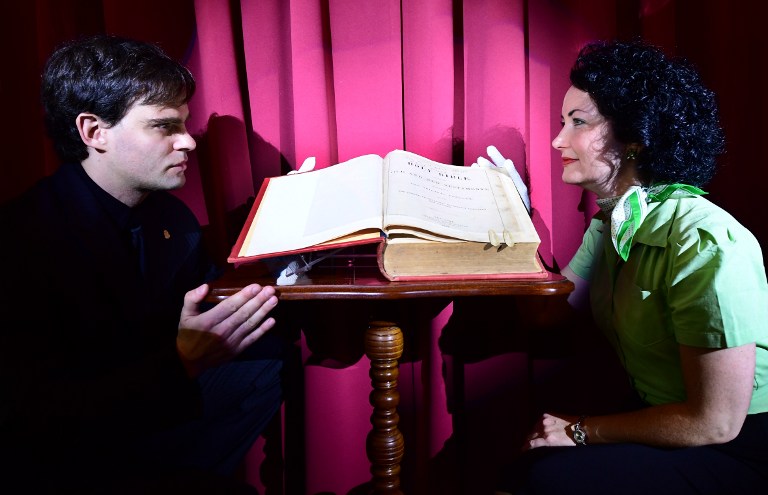
At the start of December, the museum pulled a new rarity out of its hat — a Bible once owned by Houdini.
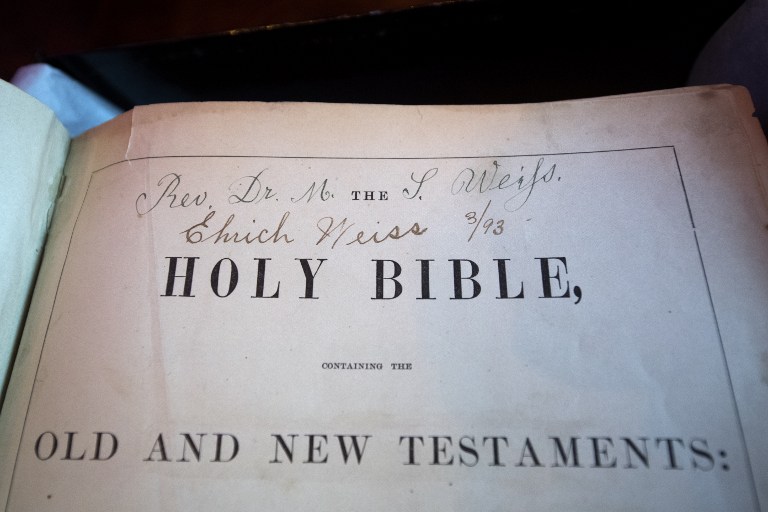
The book, which he signed as a 19-year-old, was delivered to the museum by its previous owner, New York-based jazz-blues singer Tara O’Grady.
“I feel like it has come home,” O’Grady, whose family had owned the book since the late 1970s, told AFP after the artifact’s handover.
The Bible had been gifted by Houdini’s brother to a nurse in the 1960s who then gave it to her Irish immigrant neighbor, Tara’s mother.
Little attention was paid to the book, until a friend’s recent interest alerted O’Grady to its potential value.
‘Wild about Harry’
When Merlini first heard about the Bible’s reemergence on a Houdini historian’s website, “Wild about Harry,” he knew he had to have “this special collector’s item.”
“My friends tell me I spend too much on these artifacts but what is of real value today? Real estate? A diamond ring or a nice car? I believe it is what makes you happy,” he said.
Like his hero, Merlini has made an art of getting himself first into and then out of trouble.
The Hungarian-Italian daredevil has performed stunts around the world, escaping from inside blocks of ice, quick-setting concrete or blazing cars.
He has held his breath underwater for a world record of around 21 minutes and coached Oscar-winning actor Adrien Brody on the 2014 “Houdini” television miniseries that was filmed in Budapest.
Merlini says he shares Houdini’s “fetish of locks, safes, and the art of escape,” Instead of playing with Lego, he collected padlocks as a child.
“Escapism is not just about unlocking padlocks. It’s the desire to get rid of things that are binding our freedom in a world with so many rules and regulations,” observed Merlini, who was born on October 31, the same day as Houdini died.
He said it bothered him that Houdini, despite his Hungarian roots, was not publicly acknowledged in his home country.
“I couldn’t understand why, for such an enormous artist of such caliber, there was not even a sign on the street where he was born,” Merlini added.
To rectify the situation, he decided to open his private collection to the public earlier this year.









The Times of Israel Community.