

Flashpoint Hebron neighborhood partially reopens after 8-month IDF closure
Nonresidents aged 15-30 still barred from Tel Rumeida, but other restrictions have been eased, army says
 Add ToI as a Preferred Source on Google
Judah Ari Gross is The Times of Israel's religions and Diaspora affairs correspondent.
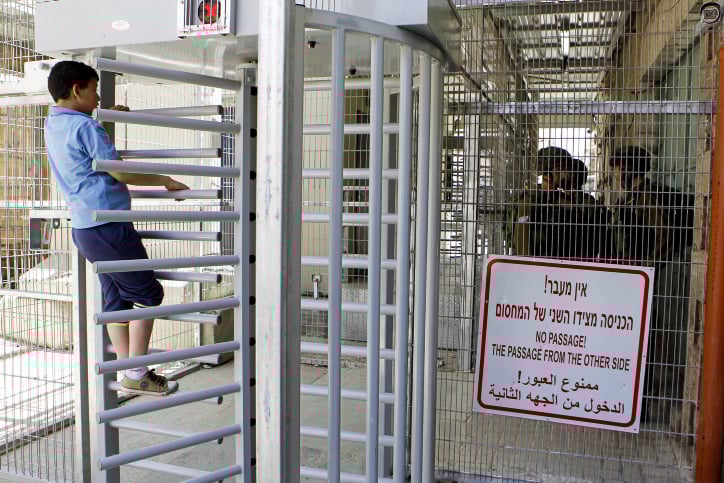
The Israel Defense Forces has eased the limitations on a divided Jewish-Muslim neighborhood of Hebron, which has been a closed military zone since October, the military said Thursday.
“Following a situation assessment in the Tel Rumeida area in Hebron, the restrictions which were implemented for security purposed have been relieved,” the IDF said in a statement.
However, new orders were being drafted that would prevent nonresidents between the ages of 15 and 30 years from entering the neighborhood in central Hebron.
“In accordance with military orders,” the IDF said, “pedestrian movement is allowed from the Hashoter checkpoint toward Tel Rumeida through Jilbar checkpoint, with the exception of nonresidents between the ages of 15-30, which remains in accordance with the recent security assessment.”
Residents of the area and local rights groups reported they had been informed on Wednesday that the closure order for the neighborhood, located in the center of the flashpoint West Bank city, had been lifted.
Initially the military denied the claims, saying the area was “still a military zone, and nothing has changed.” But just a short time later, the IDF updated their previous statement with news of the policy change.
Hebron — and Tel Rumeida in particular — has been a hotspot of violence and conflict since October, with residents of the city and surrounding villages carrying out numerous stabbing, shooting and car-ramming attacks against IDF troops during the more than half-year of violence that rocked Israel.
In March, an IDF soldier was caught on film shooting a Palestinian assailant in the head nearly 15 minutes after a stabbing attack in Tel Rumeida.
“Tel Rumeida is a sensitive area of Hebron under H2 (Israeli jurisdiction), in which both Palestinians and Israelis reside,” the IDF said in a statement. “Due to the multiple terror attacks that have occurred in this area, significant security measures were established, including restricted movement, imposed by orders of the military commander.”
As a closed military zone, only registered residents who received an official identification number could enter the area, though some refused out of principle.
“I am not a number,” Issa Amro, a local Palestinian activist from the Youth Against Settlements organization, told journalists visiting Hebron in November. He made do, instead, with scaling walls and clambering over rooftops to gain access.








The Times of Israel Community.