

High Court challenges ‘stability clause’ in controversial gas deal
Government has a week to answer questions on provision preventing changes to framework agreement for 10-15 years
 Add ToI as a Preferred Source on Google
Raoul Wootliff is a former Times of Israel political correspondent and Daily Briefing podcast producer.
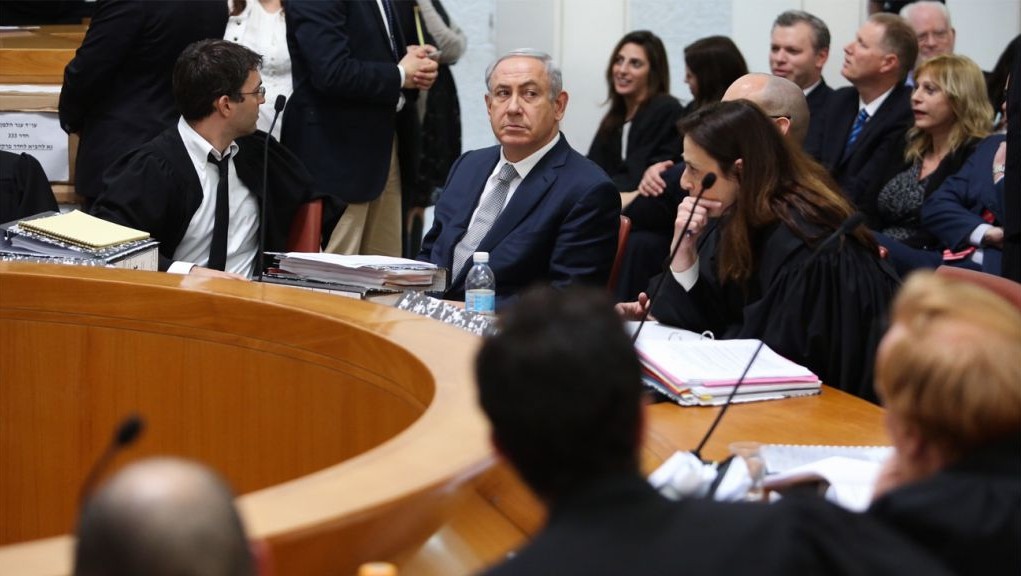
The High Court of Justice has challenged a key component of the government’s controversial framework agreement to develop Israel’s newly found natural gas fields, questioning its ability to enshrine the terms of the deal for years to come, without Knesset legislation.
In an opinion published Monday, the court expressed its reservations over a clause included in the agreement, which prevents the state from making any substantial changes to the framework deal for 10-15 years. It demanded the government respond to its questions within seven days.
“We are focusing at the moment on the stipulations dealing with the stability of the deal, and with the question of whether this sort of clause is possible without legislation,” the court wrote.
“In order to remove all doubts, we want to know whether there is any room to write this clause into law,” the statement added.
The agreement would grant a two-company partnership — America’s Noble Energy and Israel’s Delek Group — the rights to develop the Leviathan gas field in the Mediterranean, the largest yet found in Israel’s territorial waters.

The opinion was published following a Sunday appearance of Prime Minister Benjamin Netanyahu before the court where he urged the deal be approved, saying it was critical to ensuring Israel’s security and position in the Middle East.
If the current deal isn’t approved, he told the panel of five justices, “we will lose our export potential to Jordan, Turkey, Egypt, the Palestinians and also the European Union.”
The appearance by the prime minister at the High Court to defend the deal was nearly unheard of in the annals of the court, and came after Netanyahu, in his capacity as economy minister, requested permission to testify in person in response to a court challenge against the draft agreement.
Netanyahu sought to convince the judges to dismiss five petitions submitted by opposition parties and a handful of NGOs seeking an injunction against the plan.
The “stability clause” — which has been included at the behest of the gas companies, fearful that a change to the framework would affect the profitability of the project — has caused considerable opposition from the groups protesting the deal. But some predict that, without it, the companies may make good on their threats to pull out altogether.
“The public regards the stability clause as though the state surrendered to the gas companies. The state needs stability, perhaps even more than we do. Without stability, there can be no development of the Leviathan reserve or other gas reserves. And if there’s no development of the gas reserves, it’s the state that loses,” a senior gas company executive told Globes.

Echoing testimony he gave to a Knesset panel before the deal was approved, Netanyahu warned the court that “Israel is seen [overseas] as an over-regulated state, and this creates a significant problem for us. Other countries will go to our enemies and take [gas] from them.”
These fears, he said, explain why “we are now in a decisive moment.”
In an affidavit submitted to the court last week ahead of his testimony, Netanyahu argued that a failure to implement the deal would damage Israel’s security, economy and foreign relations.
The court’s decision on the deal could be decisive, as Netanyahu is fighting for the right to overrule a December 2014 ruling by Israel’s then-antitrust commissioner David Gilo that found the Noble-Delek consortium may violate antitrust rules.
In December 2015, Netanyahu successfully overcame a year-long delay in approving the controversial deal in the Knesset and cabinet — but only by appointing himself the minister of economy in place of Aryeh Deri, who resigned.
The economy minister is empowered through Article 52 of the Antitrust Law to override an antitrust ruling if the minister determines the monopoly to be in Israel’s national-security or diplomatic interest.

After becoming economy minister in November 2015, Netanyahu finally signed the controversial agreement with the gas companies on December 17.
The current court hearings are the final hurdle for the leasing agreement, with lawmakers and NGOs, including the Movement for Quality Government, arguing that the prime minister’s justifications for invoking Article 52 do not fulfill the demand of the law for a clear advantage in national security or diplomacy.
Opponents have argued that the de facto duopoly in the gas market will lead to higher prices for Israeli consumers, while supporters of the deal say the protections given to the gas companies are necessary to entice them to invest the billions of dollars upfront in order to develop the fields.
Five separate petitions have been lodged with the High Court urging it to throw out the deal over these and other legal issues.
Times of Israel staff contributed to this report









The Times of Israel Community.