

Houston residents living like ‘cavemen’ because of Harvey, Israeli consul says
Gilad Katz, head of Israel’s diplomatic mission in flooded city, says no indications that any Israelis are in danger from days-long downpour
 Add ToI as a Preferred Source on Google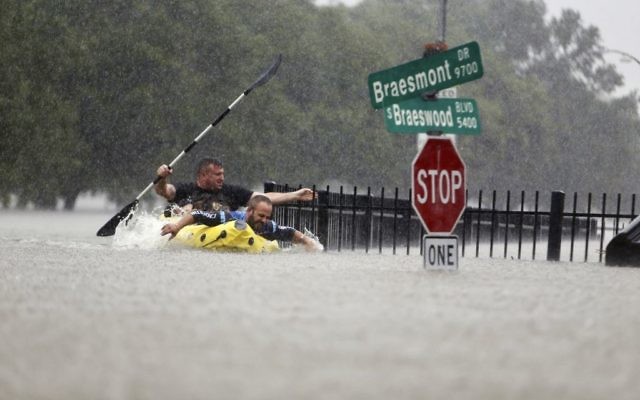
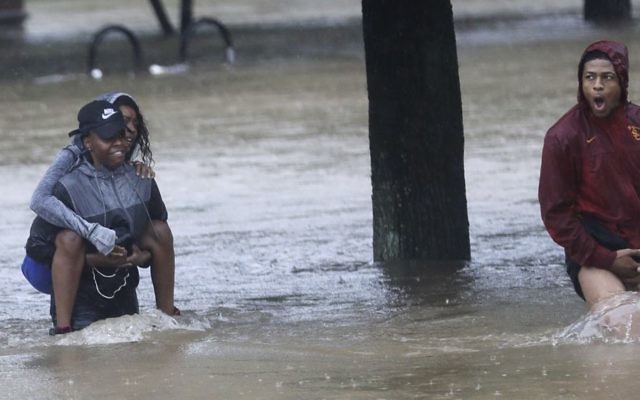
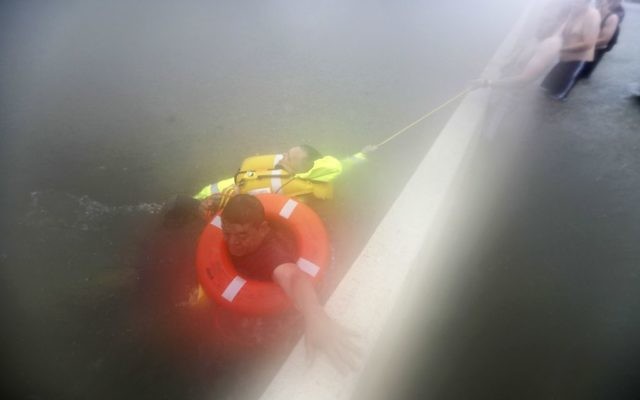
Israel’s consul general in Houston said Monday that people were living like “cavemen” in the city as a result of the flooding brought on by the heavy rains from Harvey, saying many residents of America’s fourth-largest city were stuck without food, water and electricity.
“It is like they returned to being cavemen. Everyone is waiting for it to end,” Gilad Katz told Israel Radio, adding that many homes will need to be gutted and rebuilt because of the flooding.
He said that as a result of the rising water levels, many people were stranded in their homes and would not be able to leave until the water begins to recede.
Katz said that the head of security at the consulate made the decision to evacuate the facility on Friday before the storm began, and that residents he knew who had stayed behind now regret doing so.
“At first people thought it would be okay, ‘don’t worry, we’ve been through this.’ But everyone who stayed thinks they should have left,” he said.
Katz added, “We are in touch with Israeli groups and the Jewish community” and “as far as we know no lives are in danger” in the local Israeli or Jewish communities.
On Sunday, the Jewish Federation of Greater Houston said “parts of our community have been impacted by the severe weather of the past two days.”
“We are working with our partner agencies to assess the current situation in our community and determine priority on action items. We will communicate out as soon as we know how best to move forward in the short and long-term,” the organization wrote on Facebook.
The post did not specify what in the Jewish community had been damaged, but a video uploaded by the group showed one of its staff members being rescued from her home.
This video was taken by staff member Barbara Stein Eisenbaum as she was rescued from her home by boat. It gives folks an accurate depiction of the devastation experienced by some in our community. Our thoughts are with Barbara, her family and all those who have been negatively impacted by the weather events of this weekend. We will work together as a community to help rebuild the Texas Gulf Coast. #TexasStrong #GoAwayHarvey
Posted by Jewish Federation of Greater Houston on Sunday, August 27, 2017
As Houston braced for more rain and rescues Monday, officials started releasing more water from reservoirs overwhelmed by Harvey, even though the move aimed at protecting the city’s downtown could make already devastating flooding worse around thousands of homes.
Harvey, which made landfall late Friday as a Category 4 hurricane and has lingered dropping heavy rain as a tropical storm, sent devastating floods pouring into the nation’s fourth-largest city on Sunday. The rising water chased thousands of people to rooftops or higher ground and overwhelmed rescuers who could not keep up with the constant calls for help.
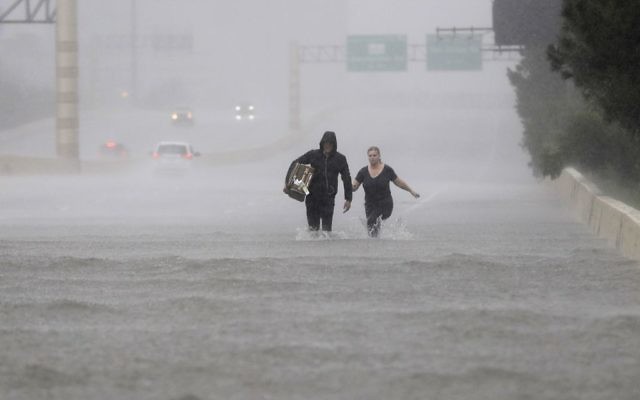
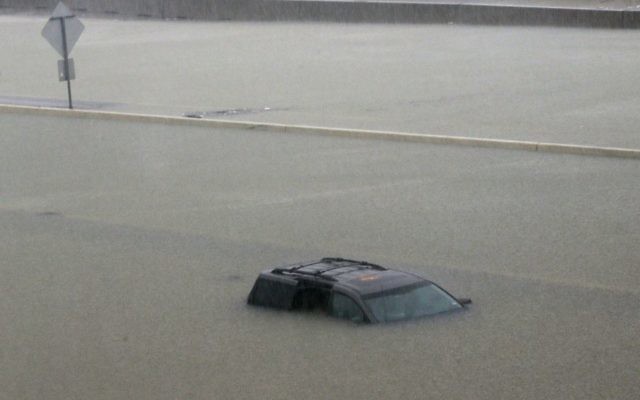
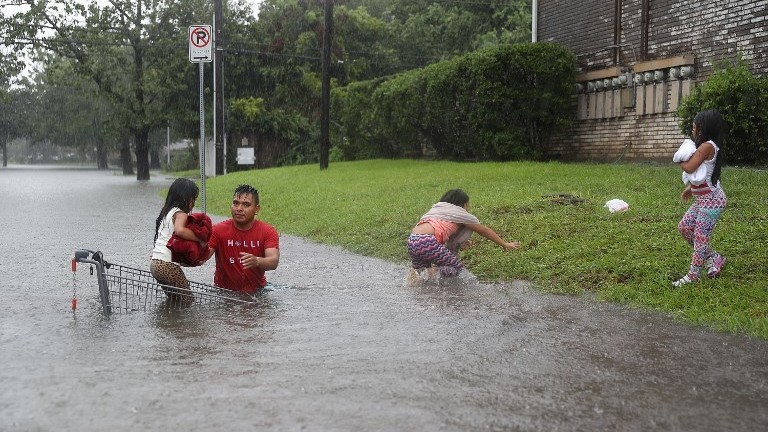
On Sunday, incessant rain covered much of Houston in turbid, gray-green water and turned streets into rivers navigable only by boat. In a rescue effort that recalled the aftermath of Hurricane Katrina, helicopters landed near flooded freeways, airboats buzzed across submerged neighborhoods and high-water vehicles plowed through water-logged intersections. Some people managed with kayaks or canoes or swam.
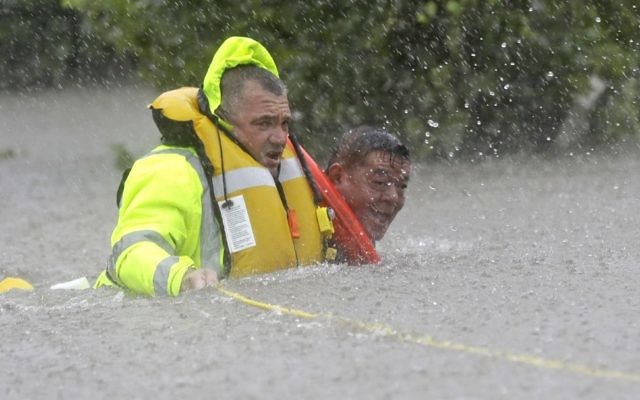
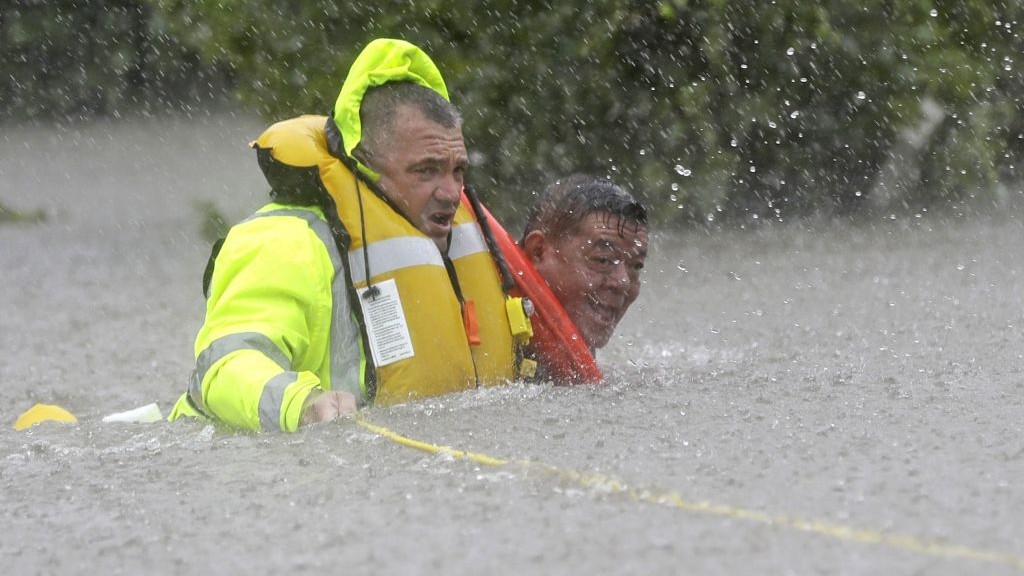
Volunteers joined emergency teams in pulling people from their homes or from the water. The flooding was so widespread that authorities had trouble pinpointing the worst areas. They urged people to get on top of their houses to avoid becoming trapped in attics and to wave sheets or towels to draw attention to their location.
Judging from federal disaster declarations, the storm has so far affected about a quarter of the Texas population, or 6.8 million people in 18 counties. It was blamed in at least two deaths.
As the water rose, the National Weather Service issued another ominous forecast: Before the storm that arrived Friday as a Category 4 hurricane is gone, some parts of Houston and its suburbs could get as much as 50 inches (1.3 meters) of rain. That would be the highest amount ever recorded in Texas.
The director of the Federal Emergency Management Agency, Brock Long, predicted that the aftermath of the storm would require FEMA’s involvement for years.
Rescuers had to give top priority to life-and-death situations, leaving many affected families to fend for themselves. And several hospitals in the Houston area were evacuated due to the rising waters.
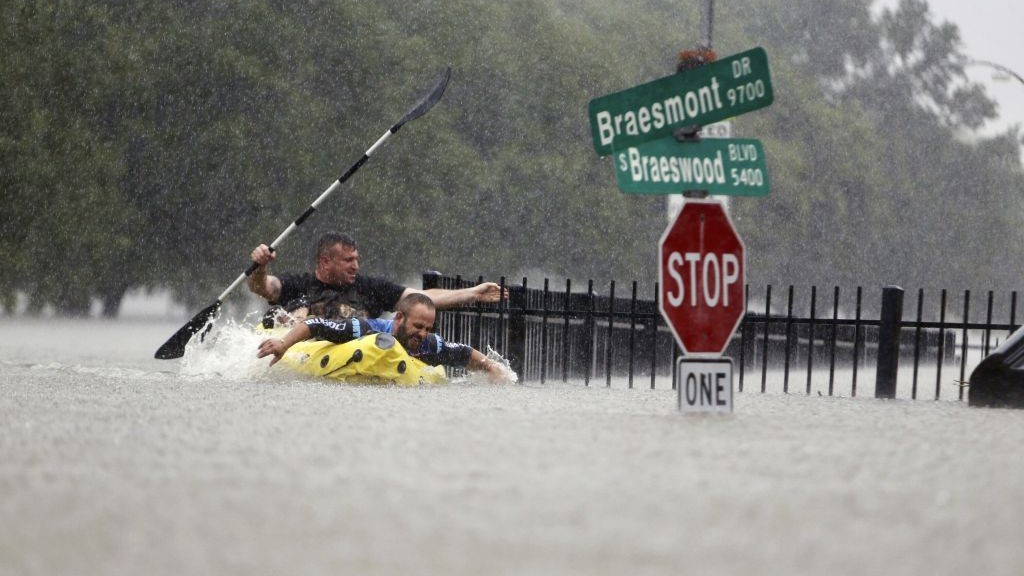
It was not clear how many people were plucked from the floodwaters. Up to 1,200 people had to be rescued in Galveston County alone, said Mark Henry, the county judge, the county’s top administrative post.
Houston Mayor Sylvester Turner said authorities had received more than 2,000 calls for help, with more coming in. He urged drivers to stay off roads to avoid adding to the number of those stranded.
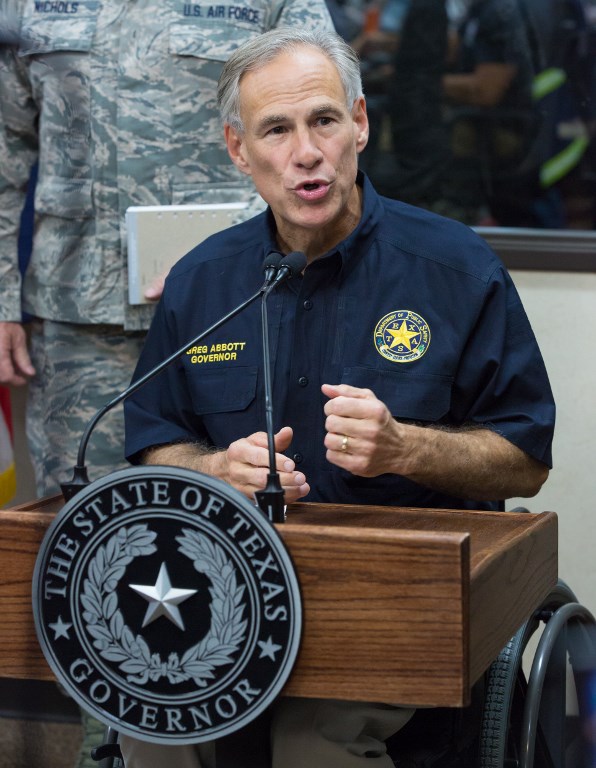
The deteriorating situation was bound to provoke questions about the conflicting advice given by the governor and Houston leaders before the hurricane. Governor Greg Abbott urged people to flee from Harvey’s path, but the Houston mayor issued no evacuation orders and told everyone to stay home.
The White House announced that US President Donald Trump would visit Texas on Tuesday. He met Sunday by teleconference with top administration officials to discuss federal support for response and recovery efforts.
The rescues unfolded a day after Harvey settled over the Texas coastline. The system weakened Saturday to a tropical storm.
On Sunday, it was virtually stationary about 25 miles (40 kilometers) northwest of Victoria, Texas, with maximum sustained winds of about 40 mph (70 kph), the hurricane center said.
Harvey was the fiercest hurricane to hit the US in 13 years and the strongest to strike Texas since 1961’s Hurricane Carla, the most powerful Texas hurricane on record.









The Times of Israel Community.