

Iconic posters of a nation under construction
Moving from the Holocaust to the enlistment of women in the IDF, a new exhibition of trailblazing graphic art from 1920-1960 shows the pleas and propaganda of Zionism’s pioneers as they built the modern Jewish state
 Add ToI as a Preferred Source on Google
“Immigration, defense, bread, and peace”, “We shall free the state from the shackles of a wretched government”, “Defeat the enemy, defend the border”, “Women’s military conscription has been proclaimed. Enlist!”, “A tax for our protection”, and “The world cannot be redeemed unless Israel is redeemed.”

These slogans – calls to defend and immigrate to Israel, lauding May 1 as a holiday, sounding the alarm against corrupt leaders – don’t derive from the recent social justice activism or the universal military enlistment movement or even a political campaign.
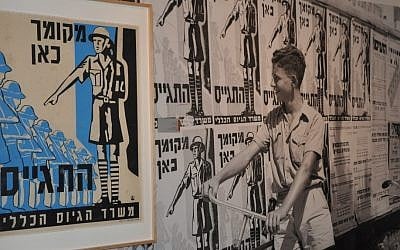
They are, rather, strident Zionist catchphrases printed on trailblazing, iconic graphic arts posters from British Mandate Palestine and the nascent State of Israel. And collected in a strikingly presented new exhibit, they take viewers back to an era when such posters were critical to communication among, and the energizing of, the pioneering generations here.
Zionism 2000 Collection, 1920-1960, a stunning new show at Shenkar Design Archive & Research Center in Ramat Gan, shuttles us back to an era when working the land was a matter of life and death, and when the Jewish people turned hopelessness into strength.
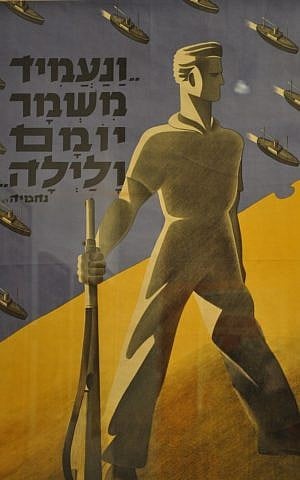
One of the posters reads We did this! and points to a new community that sprung to life in the desert. Another depicts ships breaking through barbed-wire — a metaphor for the concentration camps — and sailing, boldly, to Palestine. Some show ads for Jaffa oranges and Elite coffee, while others promote travels deals to sun-kissed Palestine.
The dominant themes of the 200-poster collection, however, are social fabric issues — national duty, purpose, courage, army, and of course, land — poignant and, some of them at least, relevant today.
The often imperative language urges youngsters to enlist, calls on neighbors to help each other and implores people to pay taxes. Reflecting the indomitable ethos of the pioneers, the posters capture a remarkable moment when the giant, blank canvas of modern Jewish sovereignty was beginning to be filled in.
Chronologically, they run from the ashes and despair from the Holocaust to late-1950s commercialism, some reflecting the modern advertising innovations of Roy Lichtenstein or Andy Warhol.
Among the most striking are the big, bold images and text of posters that, much like early Soviet Communist and Nazi war propaganda posters, incorporate muscular, heroic figures and potent heavy machinery.
Clean lines, big and black, with bright colors and repetition of form, create the illusion of movement, and convey clear, poignant messages about an ideal society. The characters in the story also evolve – worker morphs into soldier – and the idea of brotherhood, the basis for socialism, develops into love of country. As the years pass, the posters show nationalism begin to sprout.
Toward the end of the exhibit, the type fonts becomes sleeker, the messages more nuanced and the colors more diverse and subtle. The prominent use of socialist red gives way to greens, yellows, and blues – the colors of army outfits, the shades of the desert and of the fields.
With many of the posters mounted high on Shenkar’s walls, some of the subjects appear even more larger-than-life, as they gaze upward toward eternity. They create a distinct Israeli narrative whose subtext reads: “Yes, we did it.”
On Friday, October 5, the exhibition’s curator will hold a special event at 11 a.m. featuring relatives of some of the artists who created the original posters featured in the show.
A full photo gallery of the posters from the exhibit can be found here. Below is a video-art installation by Ran Slavin that is featured in the exhibit.
http://www.youtube.com/watch?v=kLIRf9aBP6s&feature=youtu.be
The exhibition, “Zionism 2000 Collection, 1920-1960,” runs through October 10 at Shenkar College of Engineering and Design in Ramat Gan, 8 Jabotinsky Street. It was curated by Batsheva Goldman Ida, under the direction of Roni Duek, chairman, Zionism 2000 for Social Responsibility. For visiting hours please see the website or call 03-577-1893. Entrance is free.










The Times of Israel Community.