

Insulting Muhammad may encourage ‘violence, bloodshed,’ Iran’s Rouhani warns
President makes comments after France’s Macron strongly defends secular values, right to mock religion, following beheading of teacher
 Add ToI as a Preferred Source on Google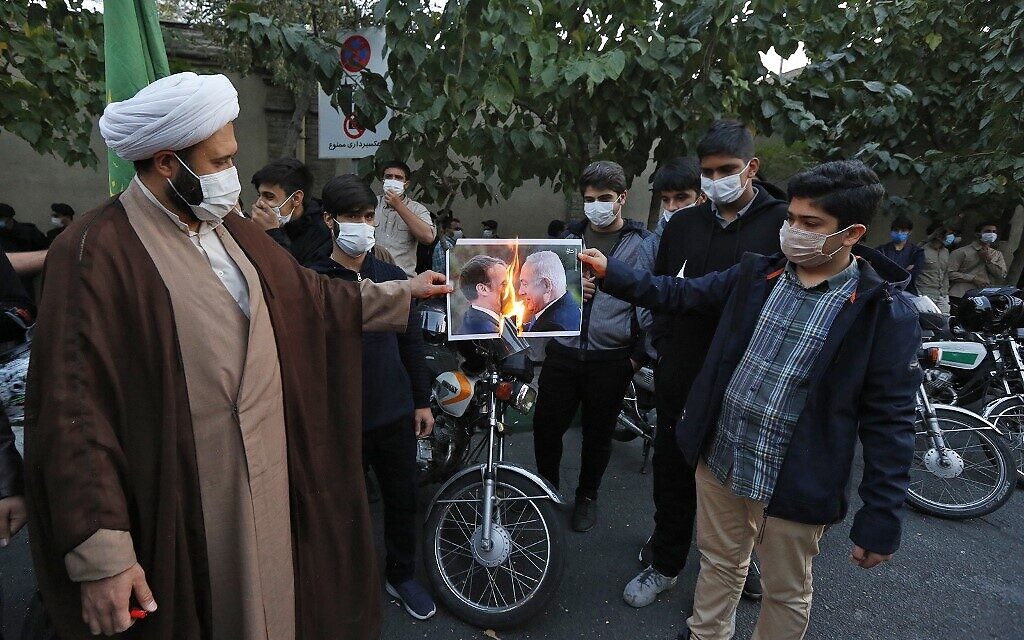
TEHRAN — Iran’s President Hassan Rouhani on Wednesday warned that insulting the Prophet Muhammad may encourage “violence and bloodshed” following Paris’s defense of the publication of cartoons depicting the prophet.
“Insulting the prophet is no achievement. It’s immoral. It’s encouraging violence,” Rouhani said in a televised speech during the weekly cabinet meeting.
“It’s a surprise that this would come from those claiming culture and democracy, that they would somehow, even if unintentionally, encourage violence and bloodshed,” he added.
French President Emmanuel Macron has strongly defended secular values and the right to mock religion following the murder of a French schoolteacher who had shown his class cartoons of the Prophet Muhammad.
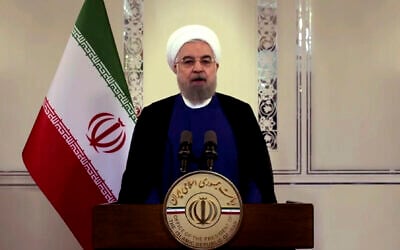
Macron’s comments triggered protests and a call to boycott French goods in some Muslim-majority countries.
Rouhani said that “the West should understand that… insulting the prophet is insulting all Muslims, all prophets, all human values, and trampling ethics.”
He added that “every single European is in debt to the prophet, as he was the teacher of humanity.”
Rouhani also called on the West to “stop interfering in Muslims’ internal affairs” if it “truly seeks to achieve peace, equality, calm and security in today’s societies.”
Separately, Iran’s supreme leader Ayatollah Ali Khamenei called Macron’s support for the cartoons a “stupid act” and an “insult” to those who voted for him.
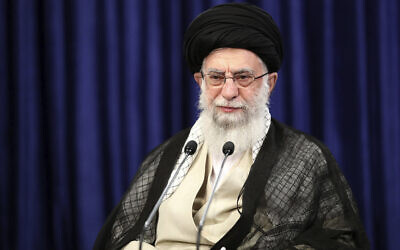
“Ask your president why he supports insulting God’s messenger in the name of freedom of expression. Does freedom of expression mean insulting, especially a sacred personage?” Khamenei said, referring to Macron, in a message addressed to “French youth” on his official website.
“Isn’t this stupid act an insult to the reason of the people who elected him?” he added.
He also tweeted a statement asking why Holocaust denial should be forbidden but pictures of Muhammad allowed.
The next question to ask is: why is it a crime to raise doubts about the Holocaust? Why should anyone who writes about such doubts be imprisoned while insulting the Prophet (pbuh) is allowed?
— Khamenei.ir (@khamenei_ir) October 28, 2020
Iran on Tuesday summoned a senior French envoy, the charge d’affaires, to protest the “unacceptable behavior of the French authorities,” after a chorus of criticism aimed at Macron by top Iranian officials in recent days.
The parliamentary bloc of the powerful Lebanese terror group Hezbollah, which is close to Iran, on Wednesday also issued a statement against insults targeting the Prophet Muhammad.
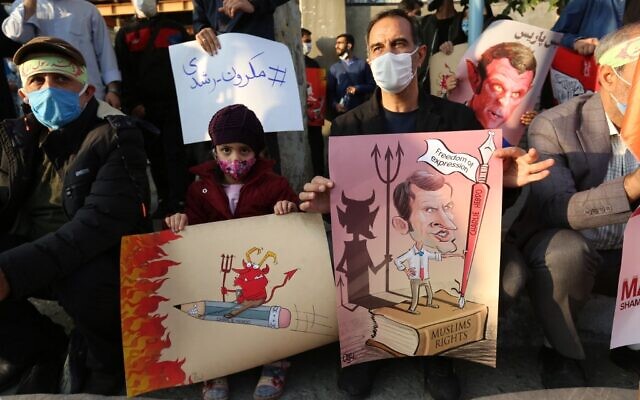
It slammed the “moral and ethical bankruptcy that groups, states and leaders are suffering from today,” adding that intentionally ridiculing the prophet revealed “malicious and hostile intentions.”
The statement did not mention France or Macron, but accused the states and groups in question of “abusing freedom of expression… by suppressing others and preventing them from expressing their convictions and beliefs.”
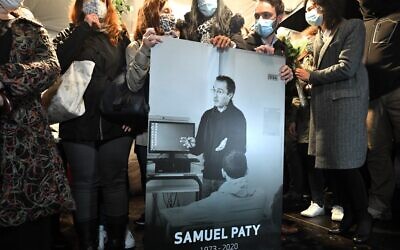
Depictions of the Prophet Muhammad are seen as offensive by many Muslims, but in France such cartoons have become identified with a proud secular tradition dating back to the Revolution and the issue of freedom of expression.
In the aftermath of teacher Samuel Paty’s murder, Macron issued a passionate defense of free speech and France’s secular way of life, vowing that the country “will not give up cartoons.”
France has been targeted in a string of jihadist attacks that have killed over 250 people since 2015 and led to deep soul-searching over the impact of Islam on the country’s core values.
Some of the attackers have cited the Muhammad cartoons as well as France’s ban on wearing the Islamic face veil in public as among their motives.
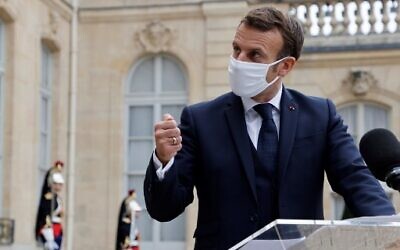
Several suspected Islamist radicals have been arrested in dozens of raids since Paty’s beheading.
Some 50 organizations with alleged links to radical Islam, as well as a mosque outside Paris, have also been earmarked for closure by the government.
Earlier this month, Macron unveiled a plan to defend France’s secular values against a trend of “Islamist separatism,” and described Islam as a religion “in crisis.”




The Times of Israel Community.