

Iran holds military drill, president warns of war situation, as sanctions resume
Defiant Rouhani claims ‘Iran is able to sell its oil and it will sell,’ rejects prospect of mediation with Washington
 Add ToI as a Preferred Source on Google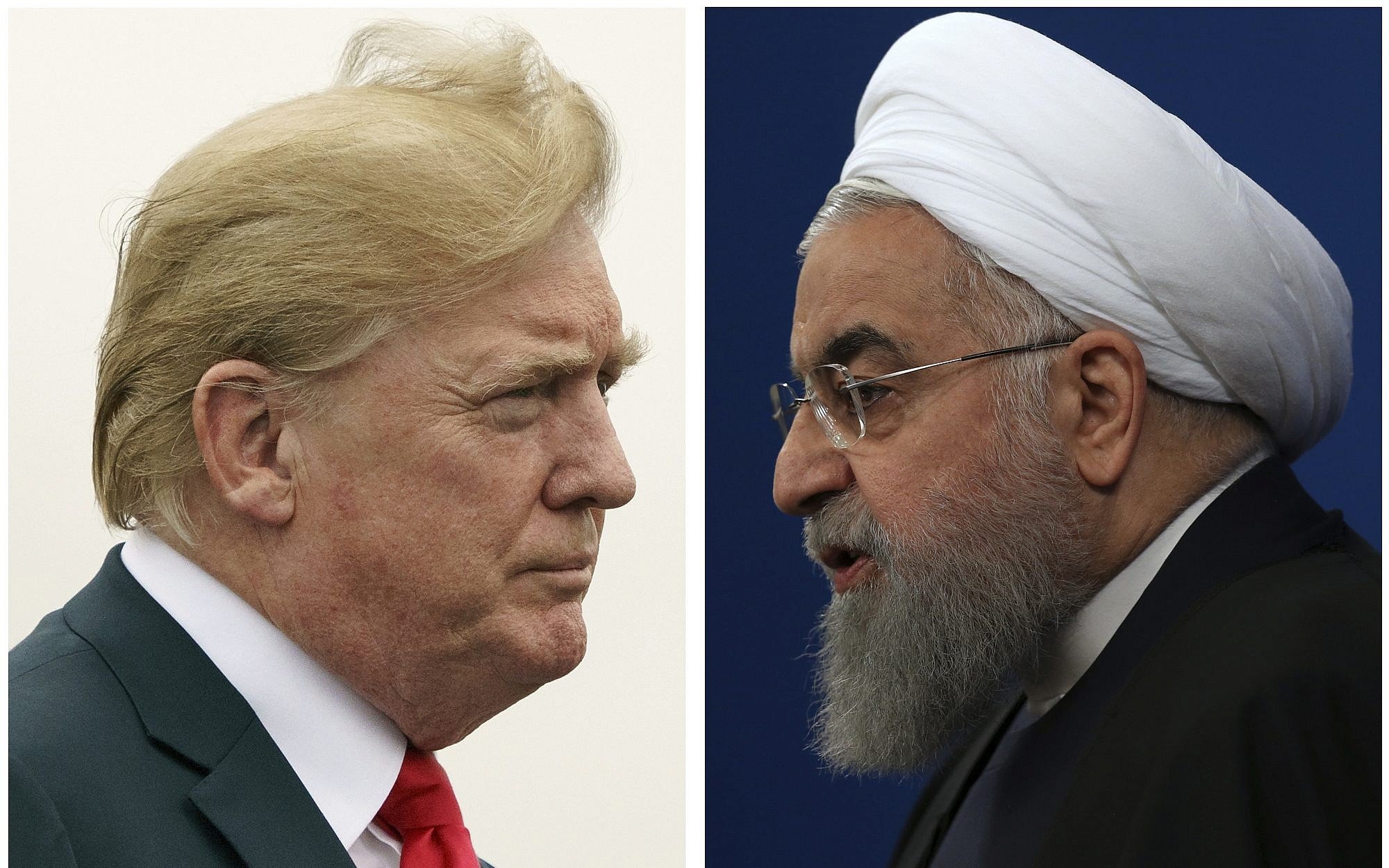
Iran greeted the re-imposition of US sanctions on Monday with air defense drills and an acknowledgement from President Hassan Rouhani that the nation faces a “war situation,” raising Mideast tensions as America’s maximalist approach to the Islamic Republic takes hold.
The sanctions end all the economic benefits America granted Tehran under its 2015 nuclear deal with world powers, though Iran for now continues to abide by the accord that saw it limit its enrichment of uranium. While for now not threatening to resume higher enrichment, Iranian officials in recent months have made a point to threaten that could resume at any time faster than before.
The new American sanctions particularly hurt Iran’s vital oil industry, a crucial source of hard currency for its anemic economy. Its national currency has plummeted over the last year, sending prices for everything from cellphones to medicine skyrocketing.
“Today, Iran is able to sell its oil and it will sell,” Rouhani vowed Monday as the sanctions kicked in.

Iranian state television aired footage of air defense systems and anti-aircraft batteries in two-day military maneuvers underway across a vast stretch of the country’s north.
The drill was to continue through Tuesday. Iranian army Gen. Habibillah Sayyari said both the national army and the country’s paramilitary Revolutionary Guard were taking part in the exercise.
Rouhani, meanwhile, pledged to government officials in comments aired on state TV that Iran would overcome the sanctions.
“I announce that we will proudly bypass your illegal, unjust sanctions because it’s against international regulations,” Rouhani said.
“We are in the war situation,” he added. “We are in the economic war situation. We are confronting a bullying enemy. We have to stand to win. I don’t think that in the history of America, someone has entered the White House who is so against law and international conventions.”
The United States has given temporary exemptions to eight countries — including India, Japan and Turkey — to continue buying oil in a bid to avoid disturbing their economies and global markets.
But US Secretary of State Mike Pompeo vowed to push Iran’s oil sales to zero.
“Watch what we do. Watch as we’ve already taken more crude oil off the market than any time in previous history,” he told CBS’s “Face the Nation” on Sunday.
Trump’s administration says it wants a new deal with Iran that curbs its interventions around the Middle East and missile program — demands that have been flatly rejected by Tehran.
“Constantly they are sending us messages saying ‘Let’s sit and negotiate.’ Negotiations for what?” Rouhani said. “First, you respect the negotiations we already concluded, so that there are grounds for the next negotiations.”
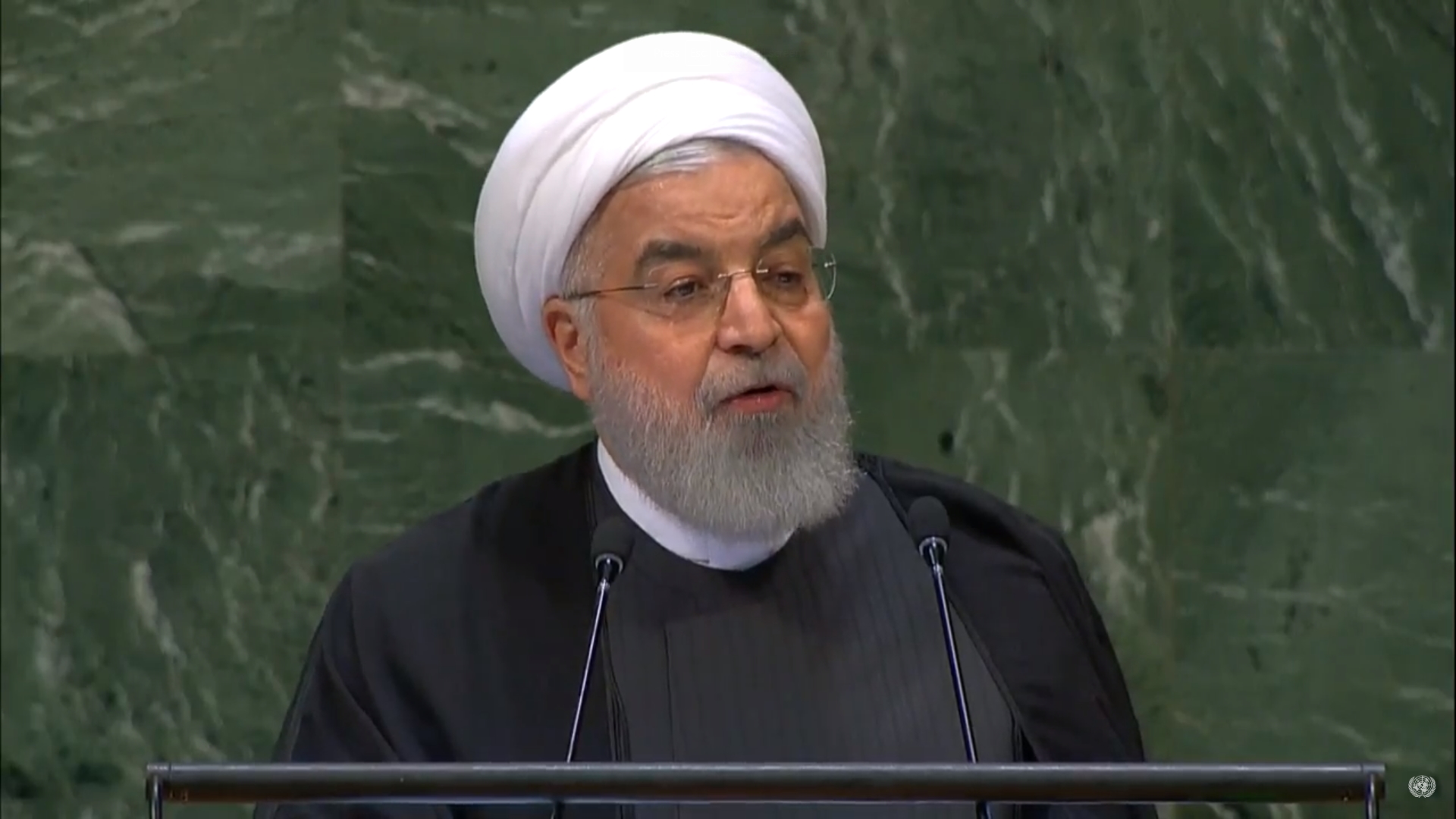
Rouhani said four countries had approached him during his visit to New York for the UN General Assembly in September, offering to mediate with the US but he turned them down.
“There is no need for mediation. There is no need for all these messages. Act on your commitments, and we will sit and talk,” he said.
Iran is already in the grip of an economic crisis. Its national currency, the rial, now trades at 145,000 to one US dollar, down from 40,500 to $1 a year ago. The economic chaos forced the government to resort to food handouts for the country’s poor and sparked mass anti-government protests at the end of last year which resulted in nearly 5,000 reported arrests and at least 25 people being killed. Sporadic demonstrations still continue.
The United States says the sanctions are not aimed at toppling the government, but at persuading it to radically change its policies, including its support for regional militant groups and its development of long-range ballistic missiles.

However, US President Donald Trump’s personal lawyer Rudy Giuliani and John Bolton, the president’s national security adviser, both have made public statements supporting overthrowing Iran’s theocratic government.
Israeli Defense Minister Avigdor Lieberman welcomed the newly restored US sanctions in a tweet on Monday, saying they would deal a “critical blow” to Iran’s military presence around the Middle East.
The Trump administration’s decision to restore sanctions “is the sea change the Middle East has been waiting for,” he said.
President Trump's bold decision is the sea-change the Middle East has been waiting for. In a single move, the United States is dealing a critical blow to Iran's entrenchment in Syria, Lebanon, Gaza, Iraq and Yemen. President Trump, you've done it again! Thank you.
— אביגדור ליברמן (@AvigdorLiberman) November 5, 2018
Israel has been a fierce opponent of the 2015 nuclear deal, from which the US withdrew in May, saying the accord failed to rein in Iran’s regional military threat.
Rouhani came to power in 2013, vowing to rebuild ties with the world and attract billions of dollars in foreign investment.
The other parties to the nuclear deal — Britain, France, Germany, China and Russia — have all vehemently opposed the US move and vowed to keep trade going, though they are struggling to convince private companies to stand up to US pressure.
Most of the international firms who lined up to work in Iran after the 2015 deal have been forced to leave, including France’s Total, Peugeot and Renault, Germany’s Siemens.
“Today, it’s not just us who are angry with America’s policies. Even European companies and governments are angry with America’s policies,” said Rouhani.


The Times of Israel Community.