

Crocodiles euthanized after escapes, poor treatment, cannibalism on West Bank farm
Officials say Nile crocs from a failed settlement tourist attraction were kept under abusive conditions that drove some to cannibalism
 Add ToI as a Preferred Source on Google
A bask of crocodiles brought to an Israeli settlement in the West Bank decades ago met its end, as authorities euthanized the aging reptiles, after years of their repeated escapes from a long-neglected farm.
Israeli authorities said Monday that government veterinarians had culled the crocodiles because they threatened the area’s residents and were themselves suffering from inhumane treatment.
The exact number of crocodiles euthanized and the method of culling were not immediately clear.
“The Nile crocodiles at the farm were being kept in an abandoned compound under poor conditions that constitute animal abuse, with insufficient access to food, which had driven them to cannibalistic behavior,” COGAT, the Israeli defense body that administers civilian affairs in the West Bank, said.
The crocodiles were initially brought to the community of Petzael as a tourist attraction — a business adventure derailed by violence between Israel and Palestinians in the West Bank.
They were later purchased by an entrepreneur who hoped to sell their skin. Their fate has been an open question since Israel in 2012 passed a law classifying the reptiles as protected animals and banned raising them for sale as meat or merchandise.
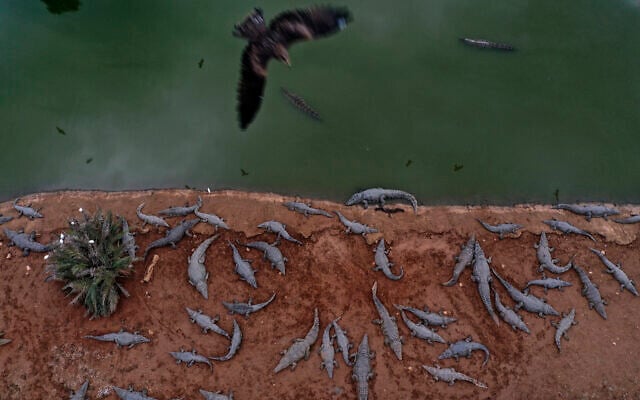
“I don’t want to think of what will happen if a crocodile manages to escape and reaches the Jordan River, and then we’ll have an international incident,” the head of the local community told The Associated Press in 2018, referring to the border with Jordan, 4.2 miles (6.8 kilometers) away.
COGAT said that authorities had spent hundreds of thousands of shekels (more than $29,000) to re-fence the dilapidated farm, which has been in a state of disrepair since it was shut down in 2013.
It said that veterinarians were consulted on how to humanely exterminate the animals.










The Times of Israel Community.