

Israel Museum exhibit explores the emojis of ancient Egypt
In recent years humans have found themselves one again communicating through pictograms, thousands of years after the invention of ancient hieroglyphics
 Add ToI as a Preferred Source on Google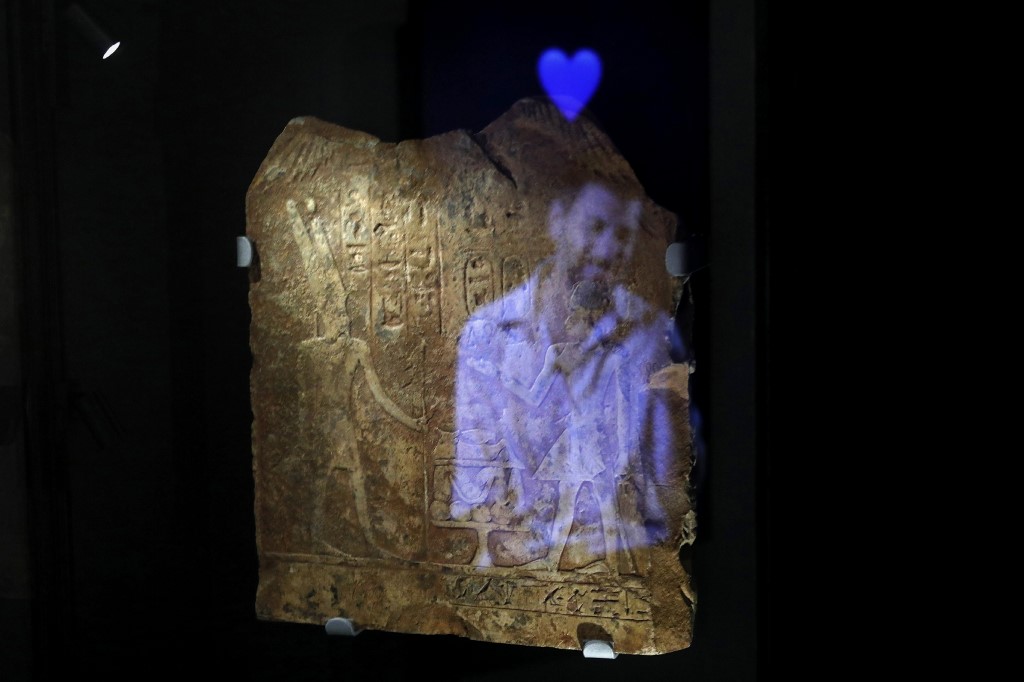
AFP — How does an academic explain the importance of ancient hieroglyphics to modern audiences glued to their phones? Through the cunning use of emojis.
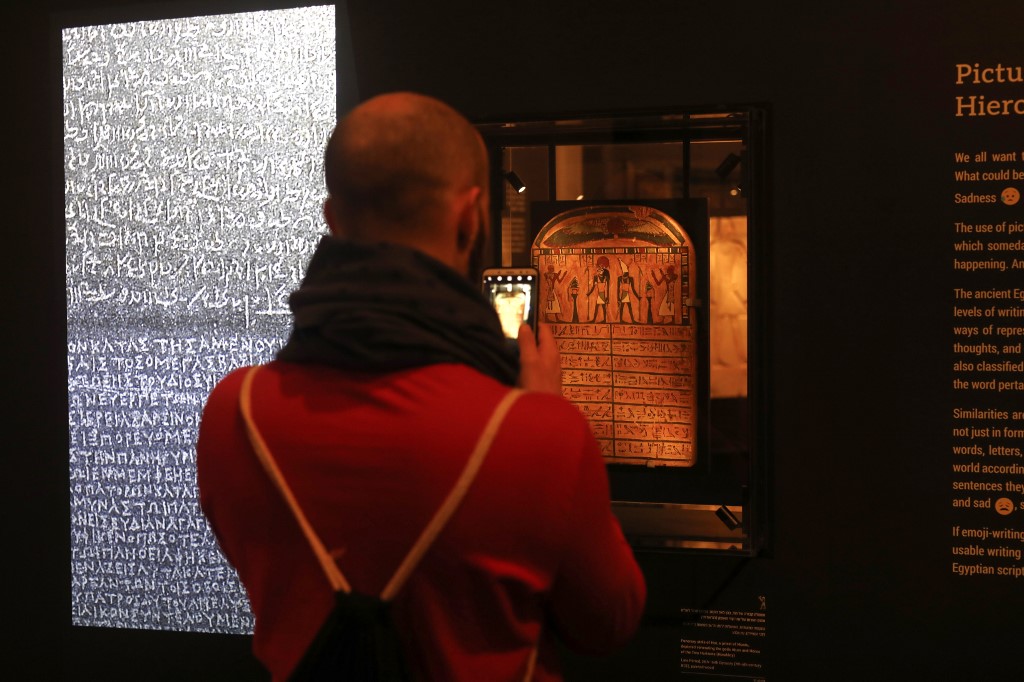
The Israel Museum in Jerusalem this week opened the “Emoglyphs” exhibition, comparing the pictograms of antiquity to those of today.
“I usually find it very hard to explain how hieroglyphs are used as a script,” the show’s curator, Shirly Ben-Dor Evian, told AFP.
“Then it occurred to me that some of the things can now be explained more easily because we are all writing with pictures now — it has become very widespread.”
From the heart symbol to little monkeys and foaming glasses of beer, the pictograms of our own time have enlivened discussion on social media and online messaging since the late 1990s.
Some emojis — from the Japanese word for a combination of an image and a written character — have hieroglyphic equivalents, said Ben-Dor Evian, who argues that the images are a language in their own right.
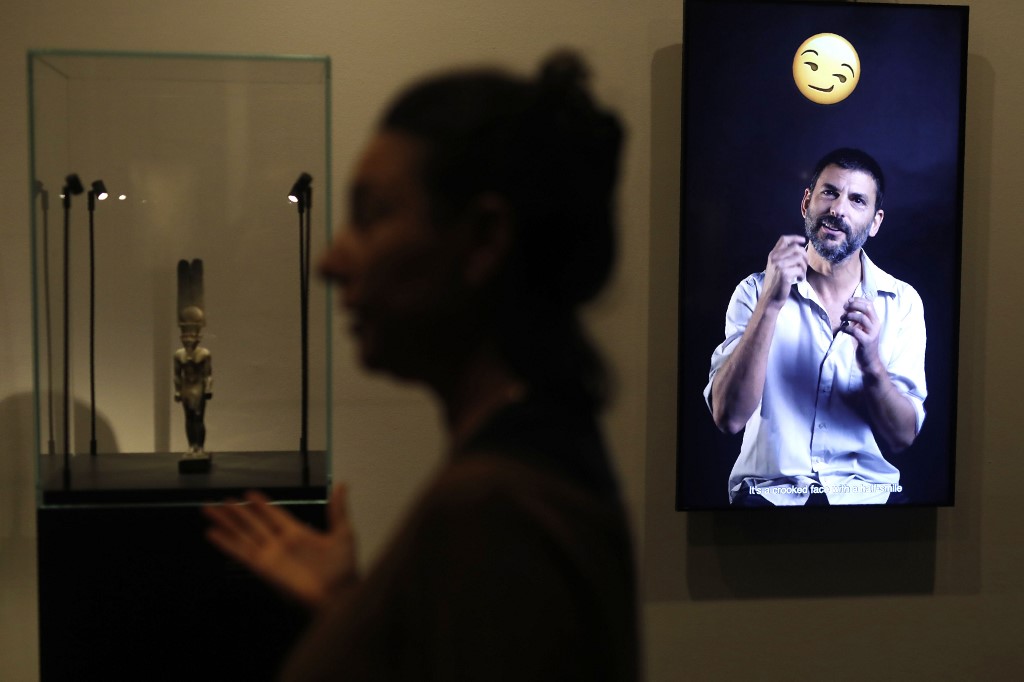
The exhibition, in a small gallery within the Israel Museum, welcomes visitors with a wall bearing similar pictograms from both eras.
The modern purple-suited dancer emoji with his hand raised strikes a similar pose to an Egyptian in a loin cloth from 3,000 years ago.
“There is a similarity in design and shapes, which is very interesting because there are thousands of years and very big cultural gaps between those two systems,” Ben-Dor Evian said.
In the Egyptian system, hieroglyphs could designate an object or an idea in so-called ideograms, indicate the sound of the word (phonograms) or serve as classifiers specifying the semantic category of the word.
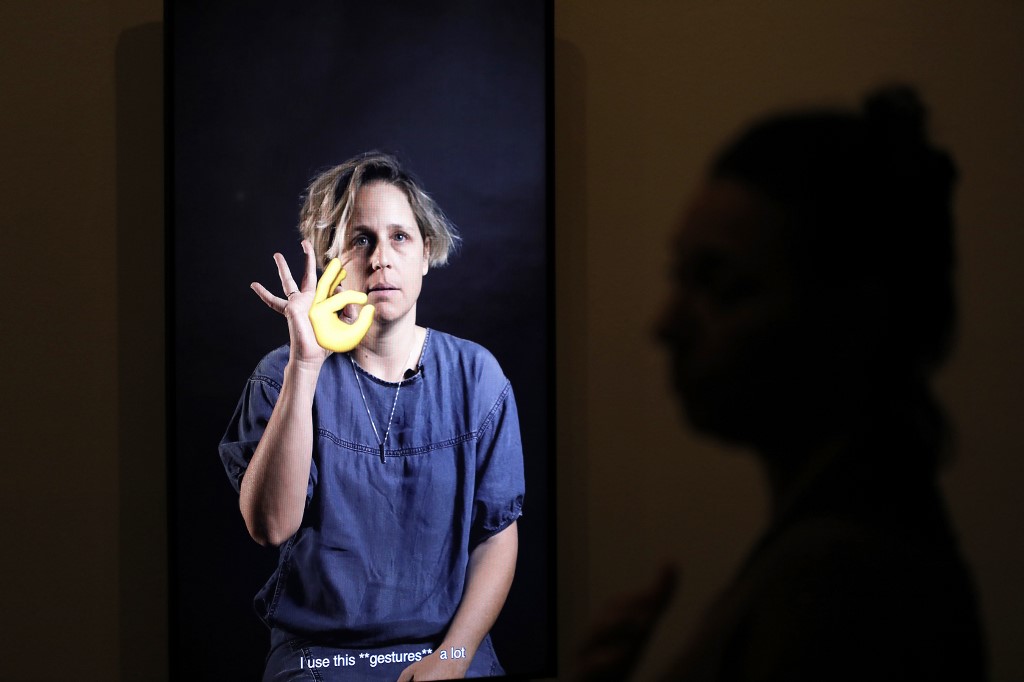
Emoji, on the other hand, are self-sufficient in designating an idea, a feeling or an object, and are not intended to be accumulated to form a sentence, noted Ben-Dor Evian.
“When you use ideographic writing, the image becomes more powerful than the word,” she said.
She cites the example of the revolver emoji, replaced by Apple in 2016 with a fluorescent green water pistol.
“Why did it change? The reason is, once you start using picture as writing, then it’s much more powerful than writing the word ‘gun’. It’s much scarier.”
She says the modern use of pictograms is not so different from that in antiquity.
One difference is that the writer decides how emojis are used, while the ancient Egyptians had strict rules around the use of hieroglyphics, believing they were sacred.
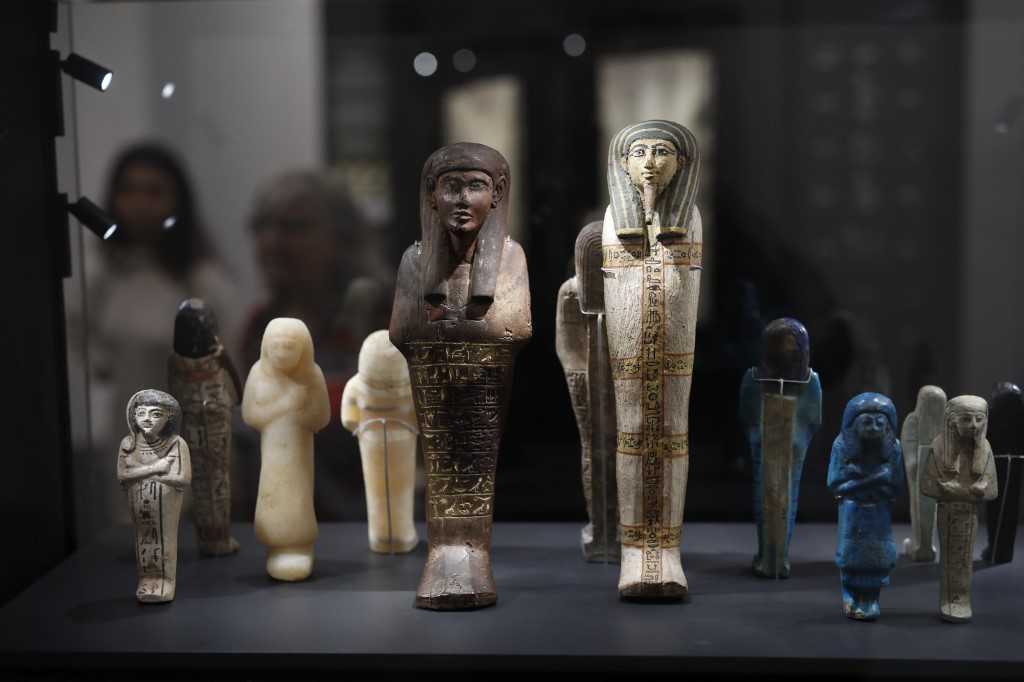
The exhibition, “Emoglyphs: Picture-Writing from Hieroglyphs to the Emoji,” is open until late 2020 and includes previously undisplayed items from the museum’s own collection and others on loan from abroad.
Among them is a necklace made of linen and papyrus and covered with gold, dating from around 100 BC, which bears the inscription of a scarab beetle, symbol of resurrection.
It is reminiscent of today’s ladybird emoji, said Ben-Dor Evian.
“My goal as an Egyptologist is to show to people that something that is ancient is still relevant to their lives today,” she said.









The Times of Israel Community.