

Israelis, Arabs pursue peace — at model UN
‘There is hope,’ Palestinian student says. ‘There’s got to be some sort of solution’
 Add ToI as a Preferred Source on Google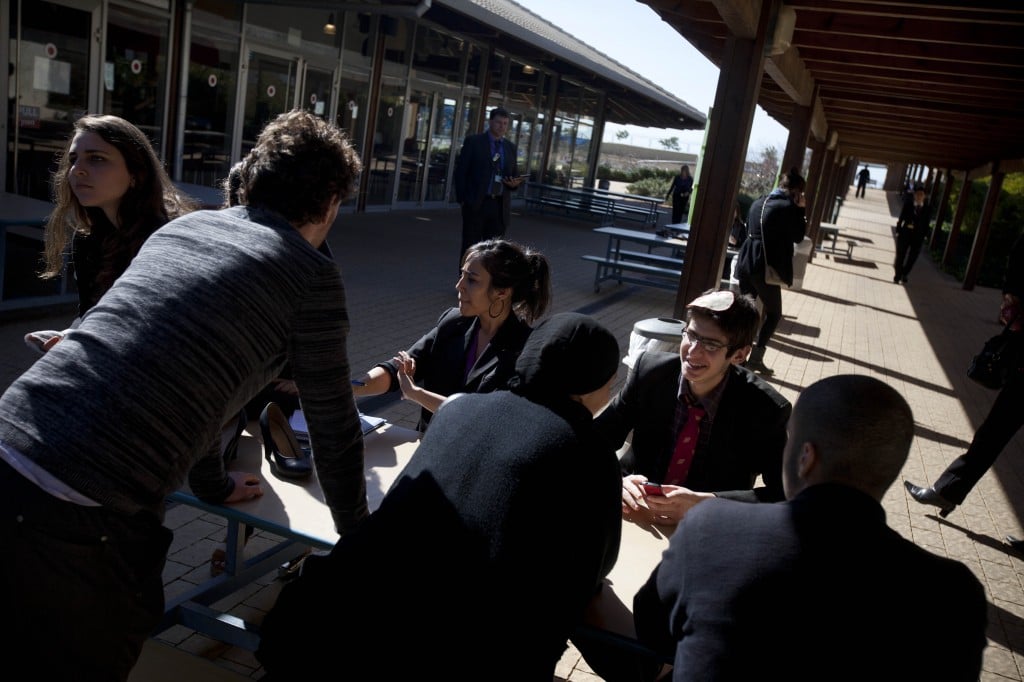
EVEN YEHUDA (AP) — Israeli and Palestinian peace negotiators have rarely spoken to each other during the last three years, but that didn’t stop a group of Jewish and Arab teenagers from trying to settle the decades-old conflict.
More than 500 students gathered last month in Even Yehuda, a Tel Aviv suburb, for the Israel-Middle East Model United Nations. The conference capped six months of meetings by the group’s “conflict resolution committee” to analyze the dispute that has shaped their lives.
They didn’t resolve it, but many said they understand the other side better now.
“I always dreamed of changing. I never liked the situation we’re in,” said Lisa Rahamim-Flam, a teenager from central Israel.
While high school students around the world participate in model United Nations conferences, many attending the Israeli version had first-hand experience with conflict.
Rahamim-Flam comes from a small village that lost three teenagers in a 1996 Palestinian suicide bombing. Outside the grounds of the conference’s meeting place at American International School, the signs pointing to nearby bomb shelters provided a clear reminder that this is the volatile Middle East.
The mock conference included a Security Council and several committees, including disarmament. human rights and territorial disputes.
Most of the participants were Israeli Jews and Arab citizens of Israel, who make up about one-fifth of the country’s population. They complain of discrimination by the Jewish majority and tend to identify with their Palestinian brethren in the West Bank and Gaza Strip.
Beyond the political debates, students said they found that personal contact with “the other side” brought down walls that typify relations between Arabs and Jews.
Shrouk Badir, 18, from the West Bank village of Battir was the only Palestinian on the committee. Badir went to great lengths to win a scholarship to the American school in Israel and gain personal exposure to Israeli society and culture.
“There is hope,” she said. “There’s got to be some sort of solution.”
Badir said she wanted to break down Israeli stereotypes about Palestinians. “There are people who are open-minded from the other side,” she said. “They’re not all terrorists.”
After months of debating, the last committee session ended in hugs and tears.
In one emotional moment, American student Jessica Fordon turned to a teary-eyed Badir. “Palestinians, I feel, they get kind of a bad rap, but from now on I will have a very, very open mind when I meet Palestinians,” she said.
Badir and Rahamir-Flam became close, as did Shaya Schloss, and Orthodox Jew from the Israeli town of Beit Shemesh, and Reem Shaheen, a Muslim girl from Nazareth in northern Israel.
Many participants acknowledged their core beliefs haven’t changed. But they said they are more open-minded and will use the skills they’ve learned to create bridges between Jews and Arabs.
In a reflection of the real world, a decision was made not to come up with a final peace resolution. Instead, the students created a YouTube video called “iWish Conflict Resolution 2012” and pledged keep working together through youth groups and volunteer work.




The Times of Israel Community.