

Italy’s Renzi resigns, hints at early election
PM forced to quit after a crushing referendum defeat, but gives no sign he will step down as PD party chief
 Add ToI as a Preferred Source on Google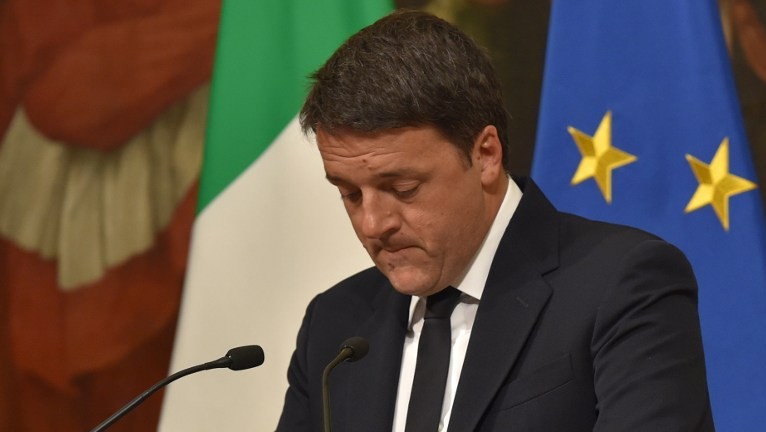
ROME (AFP) — Matteo Renzi bowed out as Italian prime minister on Wednesday with a combination of jokes, regrets and a strong hint that he wants to lead his party into an early election battle.
Forced to quit after a crushing referendum defeat, Renzi formally submitted his resignation to President Sergio Mattarella on Wednesday evening.
The presidential palace said political consultations on forming a caretaker government would begin on Thursday at 6 p.m.
Before handing back the keys to his Palazzo Chigi residence, the 41-year-old chaired a meeting of the executive of his Democratic Party (PD).
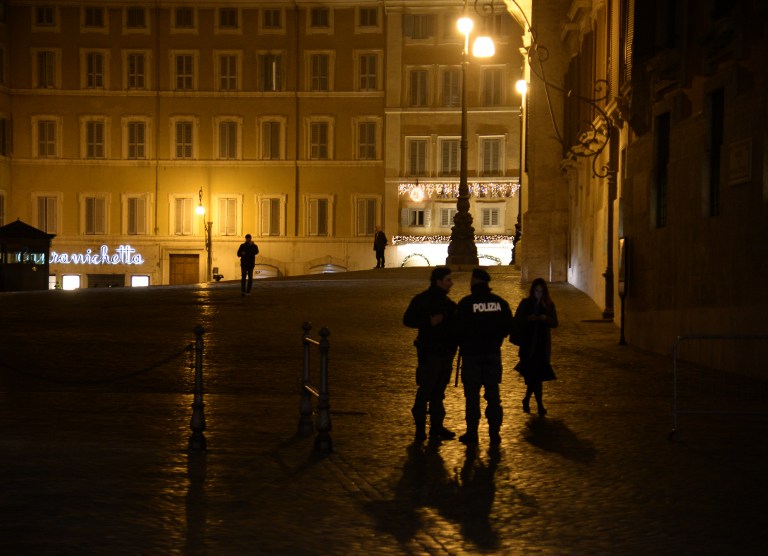
“We are not afraid of anything or anybody, if other parties want to go to the polls …. the PD is not afraid of democracy or elections,” Renzi said, in reference to opposition clamor for a nationwide vote due in early 2018 to be brought forward by up to a year.
Ironically, Renzi’s rule came to an end with his government winning a vote of confidence in the Senate, the parliamentary chamber he tried to emasculate with a referendum in which he suffered a crushing defeat on Sunday.
The confidence vote curtailed prolonged discussion on the approval of Italy’s 2017 budget — an unfinished task which had prompted Mattarella to ask Renzi to delay his departure for a few days.
“Budget law approved. Formal resignation at 1900. Thanks to everyone and viva l’Italia!” (“long live Italy!”) he tweeted. This being Italy, 7 p.m. came and went, and Renzi had still not resigned.
Better luck at PlayStation
After the talks at his party headquarters, Renzi said he assumed full responsibility for the referendum but gave no indication he was considering stepping down from the PD leadership.
He said he would be spending Thursday, a public holiday, celebrating his grandmother’s 86th birthday. “We have to thank the elderly,” he said in a reference to pensioners supporting him in the referendum debate.
“And hopefully tomorrow I will have more luck in the Playstation battle with my sons than I have had here,” he added.
Renzi’s speech sounded at times like the launch of an election campaign, with the former Florence mayor boasting of how he had left Italy with “fewer taxes and more rights” and pointedly playing up his leadership in the aftermath of a series of devastating earthquakes between August and October.
The fallout from the referendum remains unclear however with the PD beset by internal divisions that were painfully exposed by the vote.
As secretary general, Renzi controls the party apparatus, which he used to stage the coup that deposed his predecessor Enrico Letta in February 2014.
The opposition meanwhile insists the referendum was a vote of no confidence in the center-left coalition.
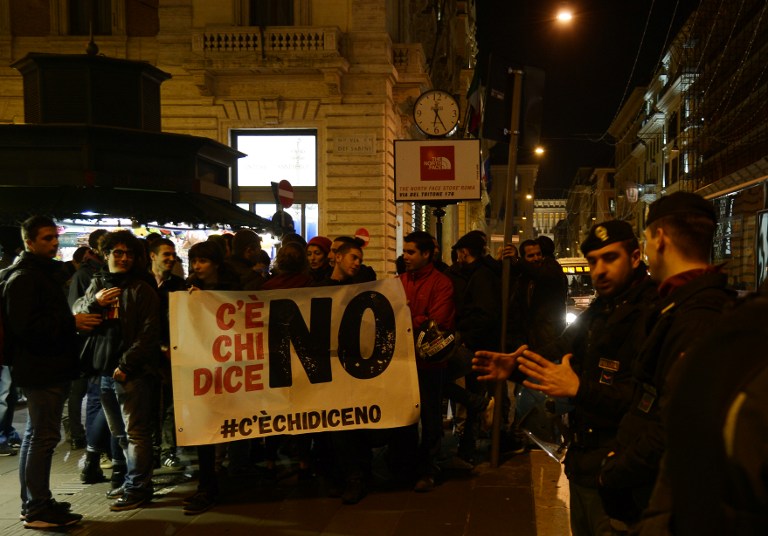
“Either we have immediate elections or we take to the streets,” Matteo Salvini, leader of the far-right Northern League, warned Wednesday.
“We cannot make a mockery of the 32 million people who voted on Sunday.”
Polls taken before the referendum suggested that the PD remains well-placed to emerge from an election with the largest share of the vote, despite the upward trend in backing for the populist Five Star Movement.
Recipe for paralysis
Led by comedian Beppe Grillo, Five Star is skilled at pitching an eclectic message to all shades of opinion — from libertarian leftists and ultra-environmentalists to anti-euro and anti-immigration eurosceptics.
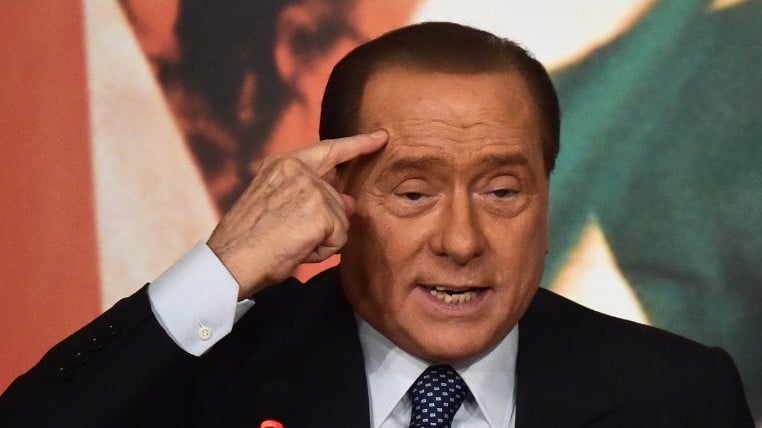
The last year has seen the movement emerge decisively as Italy’s biggest opposition force, largely at the expense of 80-year-old former PM Silvio Berlusconi’s Forza Italia, with around 30 percent of voters likely to back it.
Backing for the Northern League has been largely stable at around 15 percent of voter intentions, and Five Star’s hopes of power are seen as being restricted by its reluctance to countenance alliances with other parties.
The major obstacle to holding an election in two months’ time is that parliament must first revise the rules by which it will be held.
As things stand, two different electoral laws apply to the Chamber of Deputies and the Senate, which hold equal powers under the “perfect bicameral” principle upheld by the referendum.
A new system for the Chamber of Deputies, under which the party getting the most votes would be guaranteed a majority of the seats, was approved earlier this year. But all the parties had agreed to revise it before the referendum.
The Senate meanwhile is elected by a proportional system unlikely to give any one party or coalition a majority. Elections under two different systems would be a recipe for political paralysis, most observers agree.
Crucially, reports say Mattarella shares that view.










The Times of Israel Community.