

Jewish Columbia students say campus escalation was ‘inevitable,’ and it won’t end well
Member of the university’s Antisemitism Task Force: ‘A small minority of faculty and students has taken the university hostage’
 Add ToI as a Preferred Source on Google
Reporter at The Times of Israel
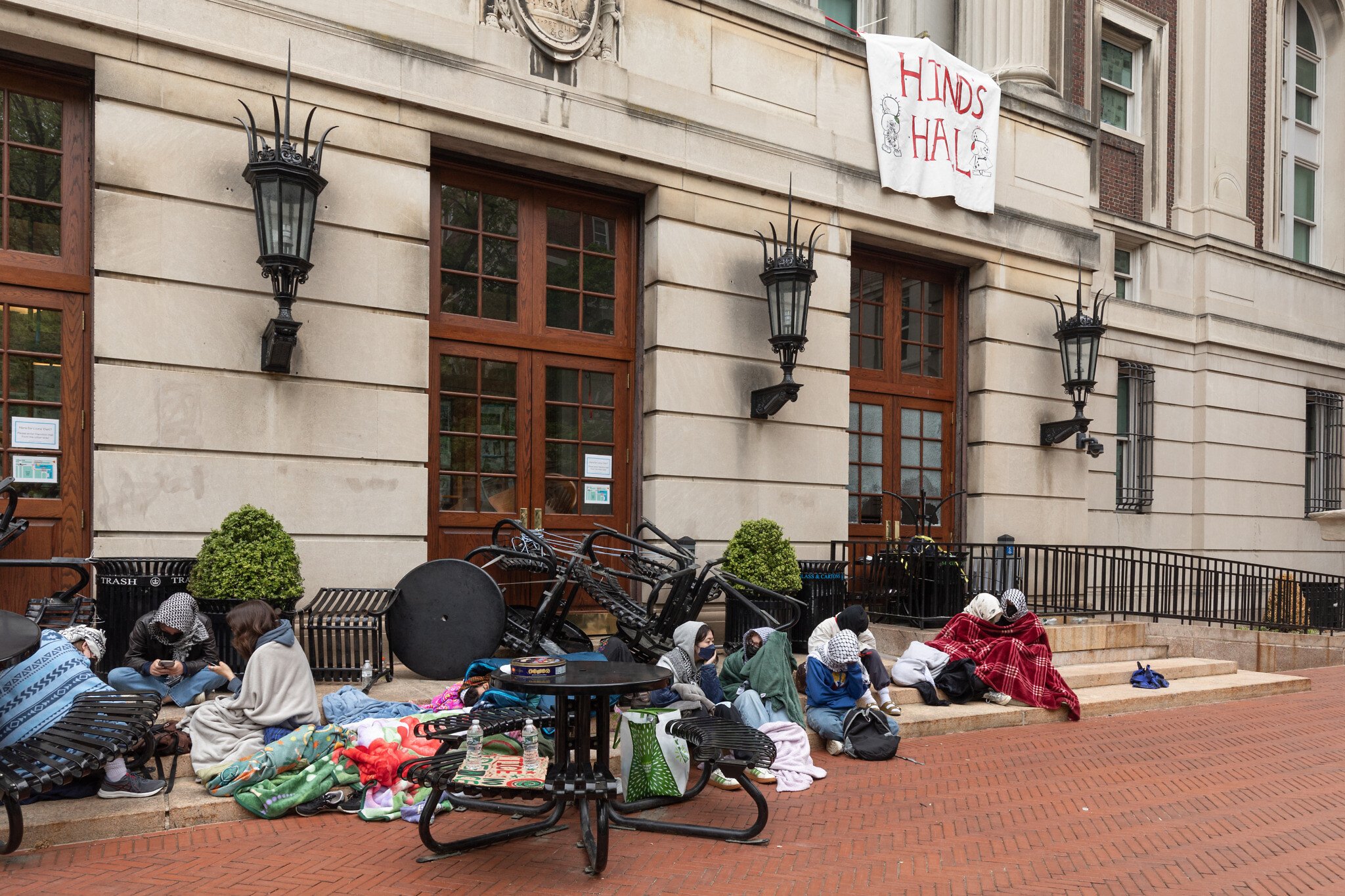
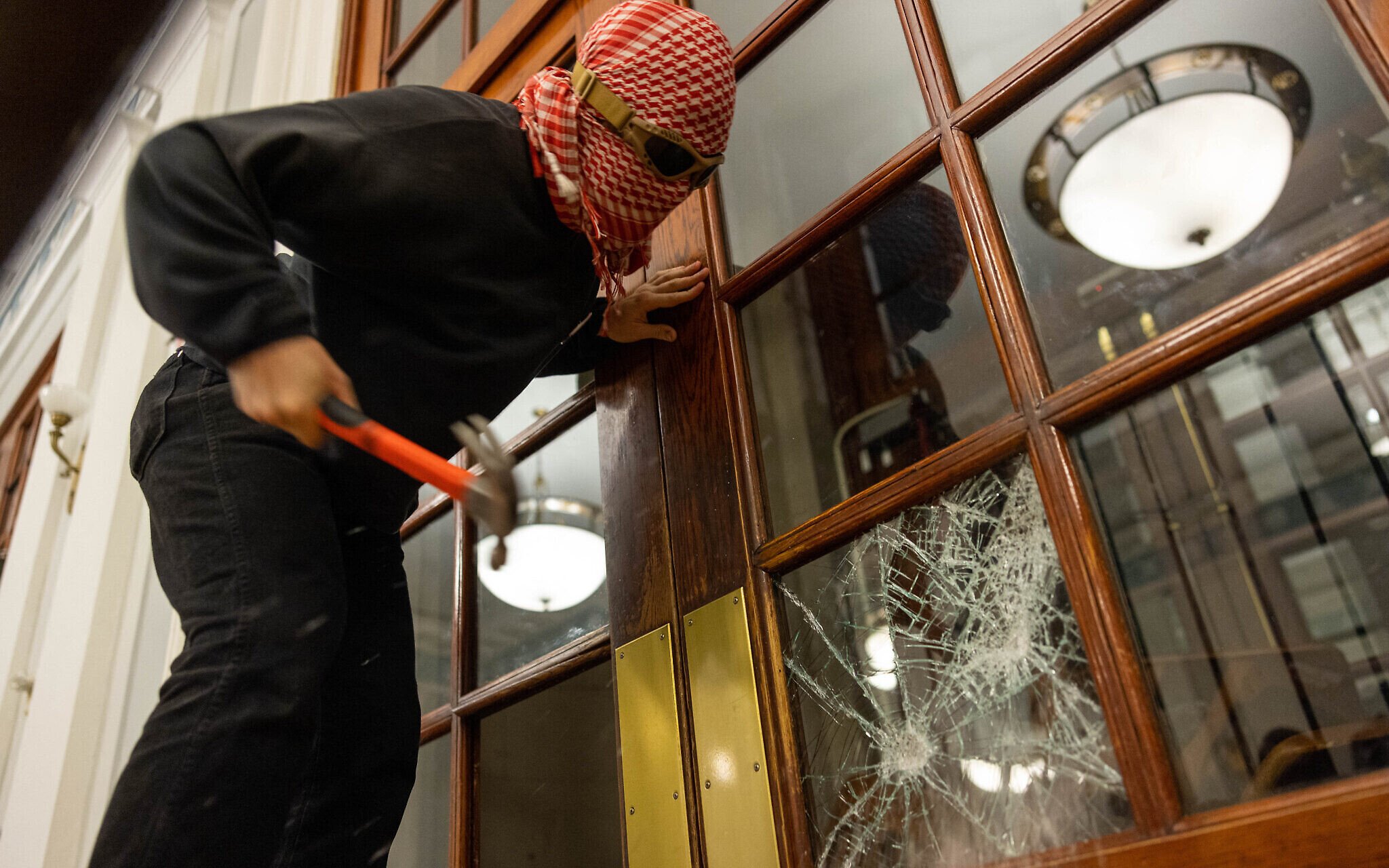
NEW YORK — Columbia University freshman Nick Baum awoke in his campus dorm room Tuesday morning to the news that anti-Israel protesters had smashed their way into Hamilton Hall and barricaded the doors with zip ties and wooden planks.
Scores of students wearing black balaclavas stormed the academic building in the early hours of April 30, echoing a student takeover in 1968 by anti-Vietnam War activists.
The building takeover occurred late Monday, about 12 hours after the university gave students in the encampment a 2 p.m. deadline to voluntarily leave or face disciplinary action. By early evening the university had begun suspending students.
On Tuesday, the university signaled it was willing to raise the stakes for protesting students: “Students occupying the building face expulsion,” Columbia’s Office of Communications and Public Affairs said in a statement, adding that the protesters were provided “the opportunity to leave peacefully,” but instead declined and escalated the situation.
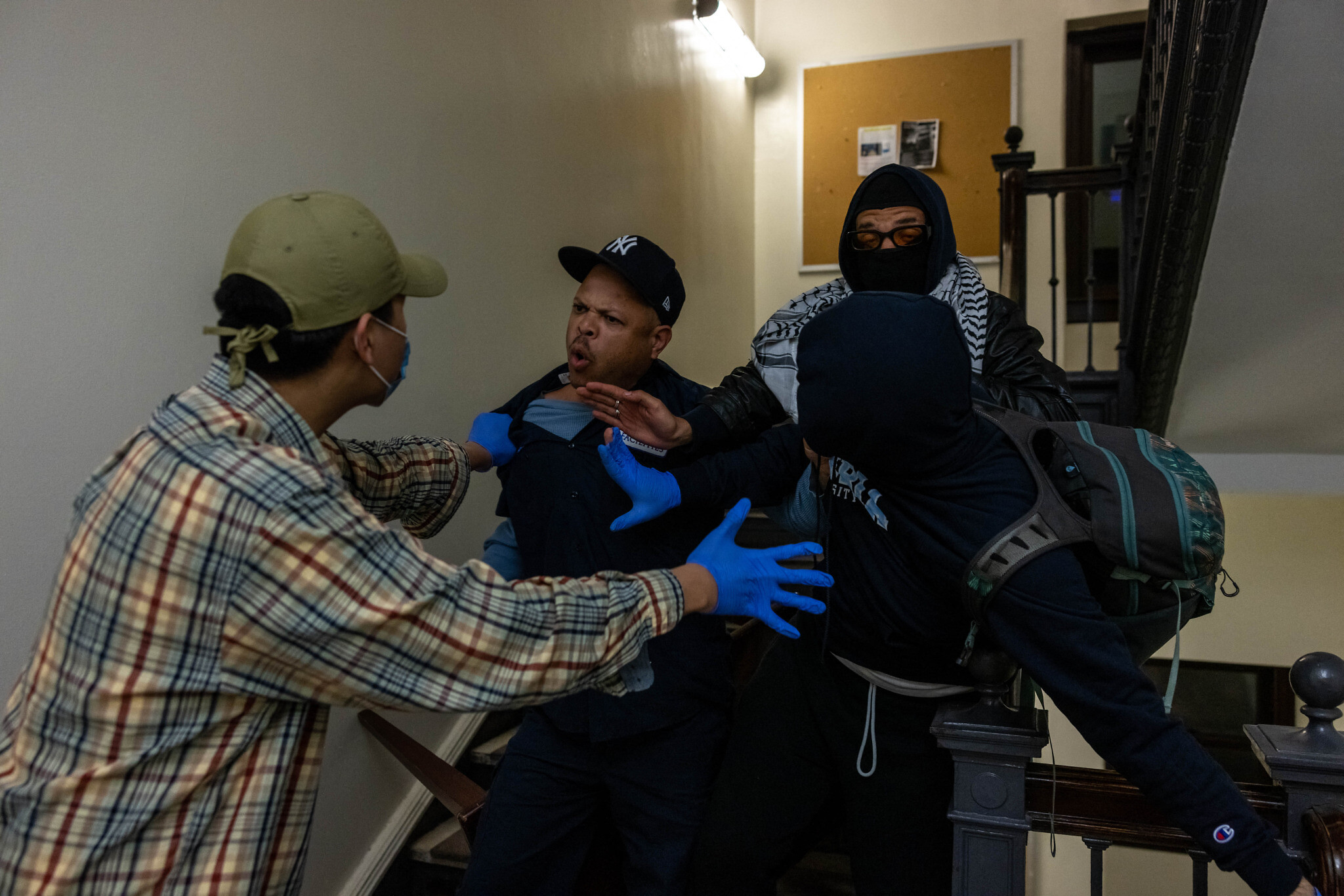
Columbia students who filmed the takeover provided The Times of Israel with video that appears to show faculty and individuals unaffiliated with the school aiding the occupiers. The protesters are seen carrying metal barricades into the building, fixing wooden planks across doors and surrounding a facility worker, whom they released around 12:40 a.m.
The student group occupying the building issued a statement saying they had “taken matters into [their] own hands” and that they would not leave Hamilton Hall until the university divests from Israel and severs ties with Tel Aviv University.
Also of concern is that Hamilton Hall abuts student housing.
“I was committed to staying on campus, but now I am taking it day-to-day after the events of this morning,” Baum told The Times of Israel.
Prof. Gil Zussman, who teaches electrical engineering, said the situation shows no signs of de-escalating.
“A small minority of faculty and students has taken the university hostage and is interfering with the main missions of teaching and research,” said Zussman, a member of the Columbia Antisemitism Task Force. “I am particularly disappointed in the small group of Columbia and Barnard faculty that are either encouraging students to break university rules or are standing by while the students are doing that.”
“Such actions by students may have lasting impacts on their lives, while the faculty would not be affected,” said Zussman, who emphasized that his opinions don’t express the task force’s views.
Most undergraduates regularly have lectures at Hamilton Hall, and while classes have been moved online due to the ongoing chaos caused by anti-Israel protesters, students had expected to write their final exams in the academic building from May 5-10. Commencement is slated to take place May 15.
Ben Chang, a university spokesperson, said the institution has asked members of the school community to avoid coming to the Morningside campus and that access to campus has been limited to students residing in residential buildings on-premises and employees who provide essential services to campus buildings, labs and residential student life.
No deal would be sweet enough
Amy Werman, a professor at Columbia’s School of Social Work, said the university administration bears responsibility for the current crisis.
“Consequences have not been enforced. If they had… sanction[ed] these students in meaningful ways, maybe the protests would have been curbed,” she said.
“I’m just beside myself. I’m wondering what is the end game here?” said Werman. “Clearly the university is not going to divest. The students were offered a sweet deal, including the university’s willingness to help out faculty in Gaza.”
In an April 29 statement, Columbia President Minouche Shafik said the university wouldn’t divest from Israel, but that it would develop an expedited timeline for review of new proposals from the students by the Advisory Committee for Socially Responsible Investing, the body that considers divestment matters.
It also offered to publish a process for students to access a list of Columbia’s direct investment holdings. Additionally, the university offered to form a faculty committee that would tackle academic freedom, as well as make investments in health and education in Gaza, including in early childhood development and support for displaced scholars.
Writing was on the Sidechat wall
Jacob Schmeltz, a Columbia senior and vice president of the Jewish on Campus Student Union, was planning on coming back to campus today to “enjoy the final two weeks of my college career with my friends, even if we’ve felt so rejected and isolated.”
“It’s definitely a shock. It’s insane that we got to this point,” he said.
But Eliott Sadoff, who is to graduate with a degree in political science and lives just a few blocks from Hamilton Hall, is unsurprised by the situation.
“Anyone who paid close attention to what these students have been saying online, on the anonymous Sidechat, knew this would happen. The rhetoric they’ve been using, the speeches they’ve been giving. They’ve been saying, ‘Let’s occupy a building,’” said Sadoff, who now plans to study for final exams in Butler Library.
Scenes from tonight @Columbia. pic.twitter.com/rSY3EwABsy
— Tal Zussman (@talzuss) April 30, 2024
The incident comes as Columbia was served with a class action suit in federal court for maintaining an unsafe campus.
Andrew Diamond, a student at the Graduate School of Architecture, said, “For six months, mobs of students have been calling to ‘Globalize the Intifada.’”
Diamond told The Times of Israel that he reported these calls to public safety numerous times, but that “they would either ignore me or give me a generic answer and make me feel like I was a nuisance. I know that I’m not the only Jewish student talking to public safety.”
“My thoughts are this could have been completely prevented,” said Diamond.
There was a certain inevitability to this morning’s events, said Michael Lippman, a junior in the Columbia-Jewish Theological Seminary joint program.
“I wasn’t shocked. They clearly have an idol worship issue. They want to be like those 1960s protesters, but those protesters were against war and it was a domestic issue. These protesters are war-mongering,” said Lippman.
Late Monday, the protesters lowered a banner that read “Hind’s Hall,” after Hind Rajab, a 6-year-old Palestinian girl killed during the war. (Her death was blamed on the Israel Defense Forces, which claims it was not operating in the area.)
On Tuesday afternoon, students inside the hall were using ropes to receive supplies, including cupcakes, from hundreds of protesters who were standing outside the hall, according to The New York Times.
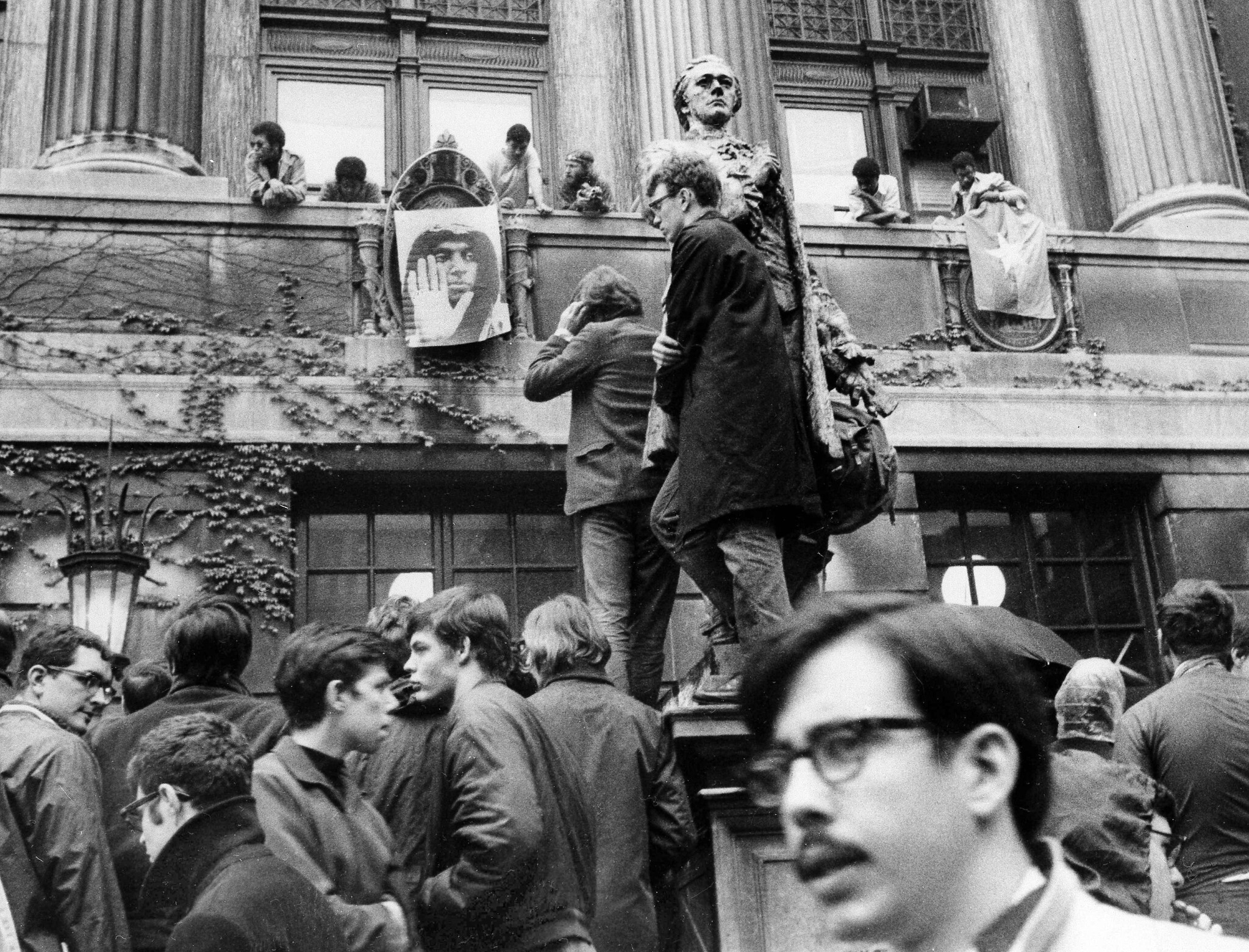
Hamilton Hall’s occupiers say they are “part of the next generation of student protesters,” referring to the six-week-long occupation of Hamilton Hall by the group Students for a Democratic Society along with 400 others that began in April of 1968. Ultimately, the NYPD entered the building; 700 students were arrested and 100 injured.
At the time, some of the students used the tunnels to evade the police, but since then they have largely been sealed up, said freshman Baum, who is also participating in the Columbia-Jewish Theological Seminary joint program and who has in the past taken classes in Hamilton Hall.
“I don’t know how this will end, but it won’t be pretty and will likely escalate the endangerment of Jewish students,” said Baum.






The Times of Israel Community.