

 From the Liveblog of
Tuesday, October 27, 2026
Exit polls show no clear victor, or path to government, as Arab parties get historic vote
 Add ToI as a Preferred Source on Google
Ben Sales is a news editor at The Times of Israel

The three main exit polls from today’s election show no clear winner, and no way for either supporters or opponents of Prime Minister Benjamin Netanyahu to form a government.
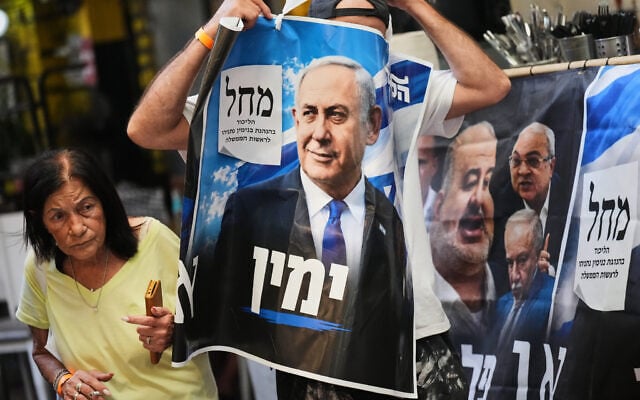
Netanyahu’s frantic campaign ahead of election day appears to have increased his Likud party’s vote total and has succeeded in once again making it the largest party in the Knesset.
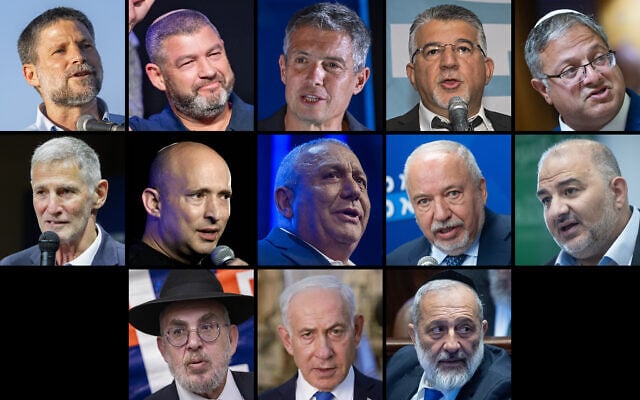
But those gains appear to be at the expense of his partners, as each of the three polls shows that the bloc of Jewish-led parties opposing Netanyahu outnumbers those that back him. Channels 11, 12 and 13 all projected that Netanyahu’s supporters would win 50 seats in the 120-seat Knesset, as opposed to 52 or 53 seats for his opponents.
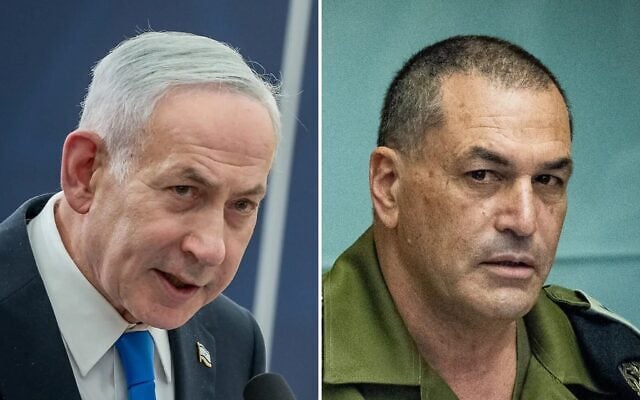
Netanyahu’s Likud party is projected to win 24 or 25 seats — down from its current 32, but ahead of the 21 to 23 projected for his chief rival, Gadi Eisenkot’s Yashar party.
Polls for months have largely shown neither side achieving a majority of 61 seats in the 120-seat Knesset. Perhaps the biggest surprise of the night is the record share of the vote won by Arab parties — projected to be worth 17 or 18 seats.
Arab parties, despite representing about a fifth of the electorate, have never won that many seats. They currently hold just 10 seats in the Knesset.
The Arab-led parties also oppose giving Netanyahu another term, meaning that there’s a clear majority of 70 seats in the Knesset opposed to the premier. But some Jewish-led opposition parties have ruled out joining in a coalition with Arab parties, so if they keep that promise, the path to a coalition may be foreclosed.
As it stands, neither side has a clear claim to victory or a clear way to form a coalition. Netanyahu may declare victory by virtue of having the biggest party, but it’s hard to see how he will convince 11 opposition lawmakers to join his side.
The opposition bloc, if it eschews any collaboration with Arab parties, would also not be able to form a government.
Both will almost certainly appeal to President Isaac Herzog for the first chance to form a government. It will be up to him to decide how to proceed.
But it also leaves open the possibility that neither Netanyahu nor his opponents will be able to assemble a coalition. In that case, Israel may hold a repeat election, with Netanyahu remaining as caretaker prime minister.
That would be a repeat of 2019 to 2022, when the country held five rounds of voting, with Netanyahu in office for the first two years of that period.
There were three other exit polls, two of them from pro-government channels, that showed a more favorable result for Netanyahu. The staunchly pro-Netanyahu Channel 14 showed his bloc winning 60 seats, just short of a majority, with the opposition bloc at just 43 and Arab parties with 17. And the pro-Netanyahu i24 News showed Netanyahu’s bloc with 55, the opposition with 49 and Arab parties with 16.
Channel 16, a new network, showed Netanyahu’s bloc with 53, the opposition with 51 and the Arab parties with 16.
The exit polls come as the Central Elections Committee has begun counting votes. The committee will provide official tallies throughout the night, and the actual results often differ from exit poll projections.
Once all votes are counted, the picture of the blocs will become clear. The election saw unusually high turnout, as the vast majority of Israel’s eligible voters cast ballots.
But as things stand, this election, following three years of war and a brutal campaign, has left those voters with only more uncertainty.





The Times of Israel Community.