

 From the Liveblog of
Tuesday, February 17, 2026
From the Liveblog of
Tuesday, February 17, 2026
Knesset committee advances bill expanding powers of rabbinical courts
 Add ToI as a Preferred Source on Google
Sam Sokol is a former political correspondent at The Times of Israel. He was previously a reporter for the Jerusalem Post, Jewish Telegraphic Agency and Haaretz. He is the author of "Putin’s Hybrid War and the Jews"
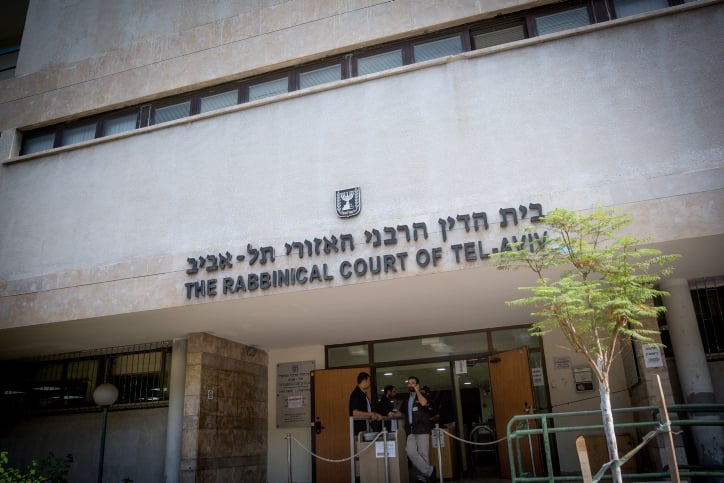
Lawmakers on the Knesset Constitution, Law and Justice Committee vote 5-3 to advance a bill granting rabbinic courts limited authority to adjudicate civil matters.
Prime Minister Benjamin Netanyahu’s coalition voted in favor of the first reading of the bill, which would give the courts power to arbitrate civil disputes, including relating to child custody, last November. According to the bill’s explanatory notes, it would apply to state sharia courts as well.
Rabbinical courts were allowed to act as arbitrators in financial disputes until 2006, when a court determined that they had no standing to do so.
While the legislation, sponsored by lawmakers from the ultra-Orthodox Shas and United Torah Judaism parties, stipulates that religious courts would only be allowed to rule on such issues with the consent of both parties, critics assert that the bill would create a power imbalance that’s harmful to weaker segments of society, with women’s rights likely impacted.
The bill’s advance to the final two readings needed for it to become law is welcomed by sponsor United Torah Judaism’s Moshe Gafni and harshly criticized by opposition lawmakers.
“This dangerous law is blatant political bribery for the ultra-Orthodox parties,” says Democrats MK Gilad Kariv, arguing that the bill would “intensify the isolationism of the Haredi public and lead to a situation where Haredi citizens will be unable to turn to the civil courts for fear of being labeled as ‘refusers’ of Torah law proceedings.”
In addition, the law would “harm women’s rights and their right to equality, stemming from the fact that only male judges serve in the Rabbinical Courts,” he asserts.
Yisrael Beytenu chairman Avigdor Liberman also slams the bill, calling it “another step toward turning Israel into a state governed by Jewish law and Haredi coercion and toward establishing a state within a state, with a separate legal system.”
Last year, the Knesset passed a similar law, expanding rabbinical courts’ powers to rule on child support.










The Times of Israel Community.