

Meretz head appeals to AG: Ban coalition talks involving PM’s legal troubles
Zandberg writes letter to attorney general, calling party deals that would benefit Netanyahu legally ‘a severe violation of the public interest’
 Add ToI as a Preferred Source on Google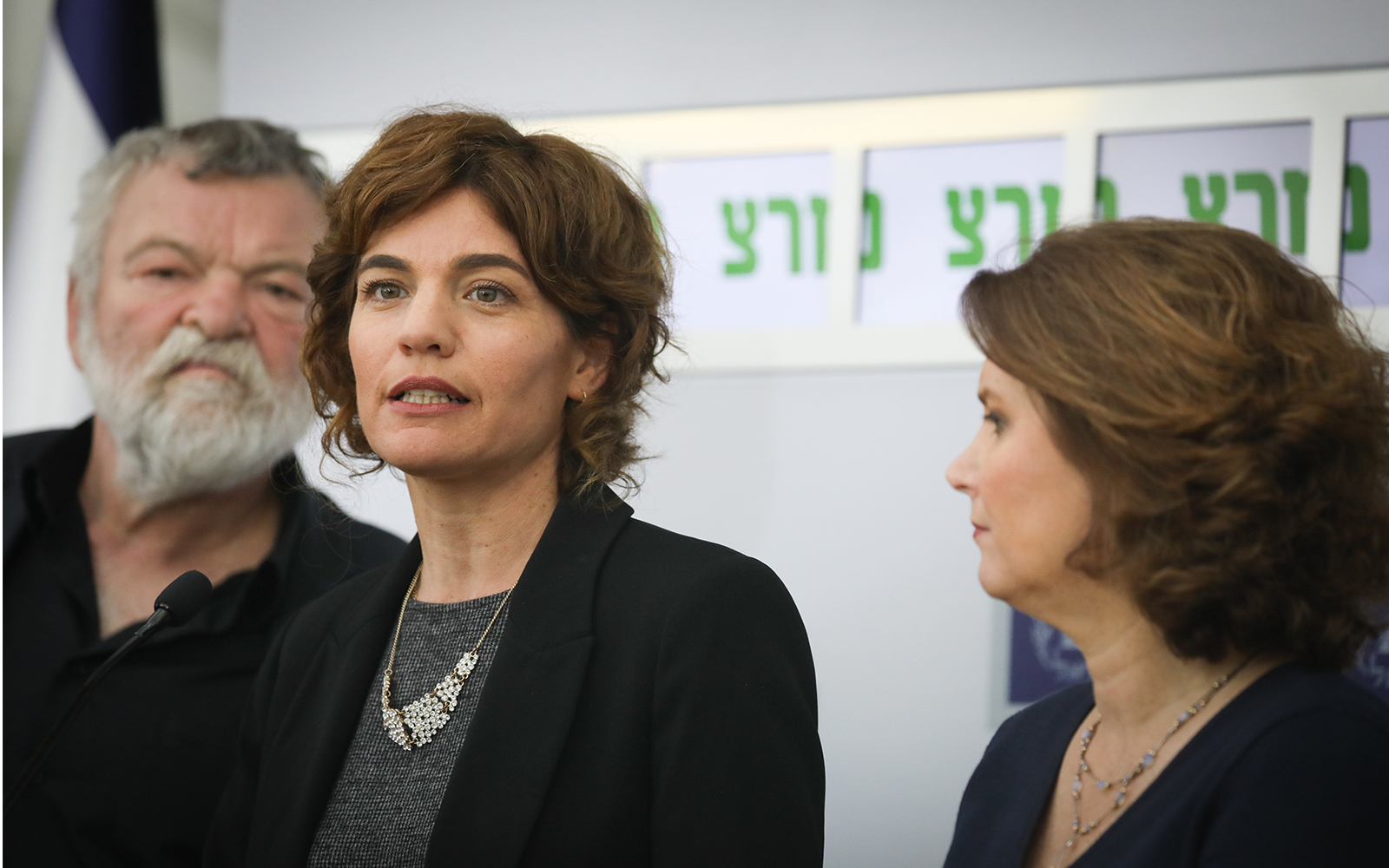
Tamar Zandberg, the leader of the left-wing Meretz party, appealed to the attorney general on Tuesday in a bid to prevent Prime Minister Benjamin Netanyahu from including his legal troubles in coalition negotiations.
In her letter to Attorney General Avichai Mandelblit, Zandberg wrote that making deals wherein coalition partners would support laws benefiting Netanyahu legally would amount to breach of trust and “a severe violation of the public interest.”
“You must intervene before official negotiations begin between the parties wanting to join the coalition headed by Netanyahu and the Likud party, and to make it absolutely and unequivocally clear that any deal that means granting relief, immunity or any other benefit to directly or indirectly affect Netanyahu’s legal status is prohibited and may lead to a criminal investigation against those involved,” Zandberg wrote.
Zandberg drew parallels with the so-called Bar-On Hebron affair, a 1997 scandal where Shas MK Aryeh Deri, who was embroiled in corruption allegations, allegedly tried to get an attorney general appointed who he thought would be more sympathetic to his case. Shas was a part of Netanyahu’s Likud coalition at the time, and Deri allegedly used his party’s position to push the appointment of Roni Bar-On for attorney general. Bar-On secured the position, but quickly resigned following fierce protests from legal experts.
President Reuven Rivlin is expected to task Netanyahu with assembling a governing coalition on Wednesday, and negotiations are likely to commence on Thursday.
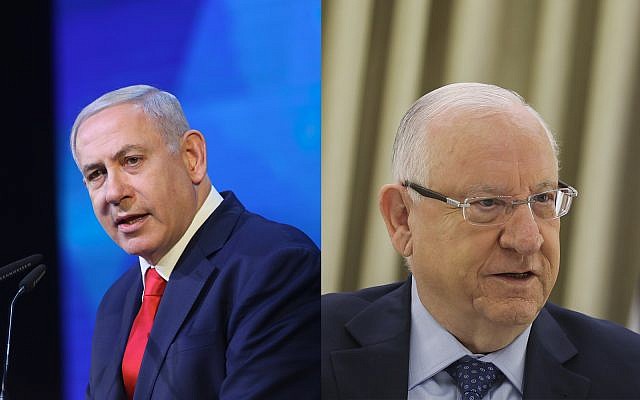
The president has little choice but to select the incumbent Netanyahu for prime minister, after enough parties recommended him in consultations with the president over the past two days.
The prime minister is likely to build a coalition of up to 65 seats comprising Likud (35 seats), the ultra-Orthodox Shas party (8), United Torah Judaism (8), Union of Right-Wing Parties (5), Yisrael Beytenu (5) and Kulanu (4).
After Rivlin makes the selection, Netanyahu will have 28 days to form a government, with the possibility of a two-week extension at the discretion of the president.
Netanyahu is a suspect in three criminal probes, known as cases 1000, 2000 and 4000, in which investigators have recommended graft indictments.
Attorney General Avichai Mandelblit announced in February that he intends to indict Netanyahu in all three cases, pending a hearing.

Speculation has swirled that Netanyahu may use his newfound political strength after last week’s election to advance legislation that would grant him immunity from prosecution as long as he remains prime minister. He has been reported to be considering conditioning entry to his new government on potential support for the so-called French Law, sheltering a sitting prime minister from prosecution. Netanyahu has publicly given mixed signals about whether he will seek such legislation.
According to an existing law, Knesset members already have the power to grant immunity to one of their number if a majority of lawmakers are convinced the defendant has been treated unfairly and the charges are discriminatory or were filed in bad faith.
“The Knesset can give him immunity if it is persuaded that he is the victim of a vendetta — as he believes is the case,” jurist Mordechai Kremnitzer told The Times of Israel late last year.
Netanyahu would have to win a simple majority first in the Knesset’s House Committee, where Likud could easily ensure it, and then in the Knesset itself. Such action would very likely lead to petitions to the Supreme Court, linking the premier’s legal fate to the greater battle between the political and the judicial echelons.
While a sitting prime minister has never been this close to indictment before, Netanyahu is not obligated by law to resign until he is convicted, and even then there would likely be a legal battle over whether he could stay on during an appeals process. During his hearing, Netanyahu can plead his case before formal charges are filed.
The prime minister has repeatedly denied any wrongdoing and claims the investigations are part of efforts by the media and Israeli left to remove him from power, with the support of a dishonest police investigating team overseen by a “weak” attorney general.

In Case 1000, involving accusations that Netanyahu received gifts and benefits from billionaire benefactors including Israeli-born Hollywood producer Arnon Milchan in exchange for favors, Mandelblit said he intends to charge Netanyahu with fraud and breach of trust.
In Case 2000, involving accusations Netanyahu agreed with Yedioth Ahronoth newspaper publisher Arnon Mozes to weaken a rival daily in return for more favorable coverage from Yedioth, Mandelblit will seek to also charge the premier with fraud and breach of trust, while Mozes will be charged with bribery.
In Case 4000, considered the most serious against the premier, Netanyahu is accused of having advanced regulatory decisions that benefited Shaul Elovitch, the controlling shareholder in the Bezeq telecom giant, to the tune of hundreds of millions of dollars, in exchange for positive coverage from Elovitch’s Walla news site. In that case, Mandelblit announced he intends to charge both Netanyahu and Elovitch with bribery, and to charge Netanyahu with fraud and breach of trust as well.
New suspicions have also arisen regarding a possible conflict of interest related to unreported business dealings possibly tied to a German shipbuilder from which Israel buys submarines. The purchases have been investigated as the so-called Case 3000, which snared several of Netanyahu’s close associates but in which Netanyahu is not currently a suspect.
Mandelblit has said the hearings will be held within three months of election day.







The Times of Israel Community.