

Netanyahu: German sub deal likely to go ahead after probe
PM confirms deal is now frozen, says he knows nothing about ongoing corruption investigation, had no idea Shimron, his lawyer, was involved in affair
 Add ToI as a Preferred Source on Google
Raphael Ahren is a former diplomatic correspondent at The Times of Israel.
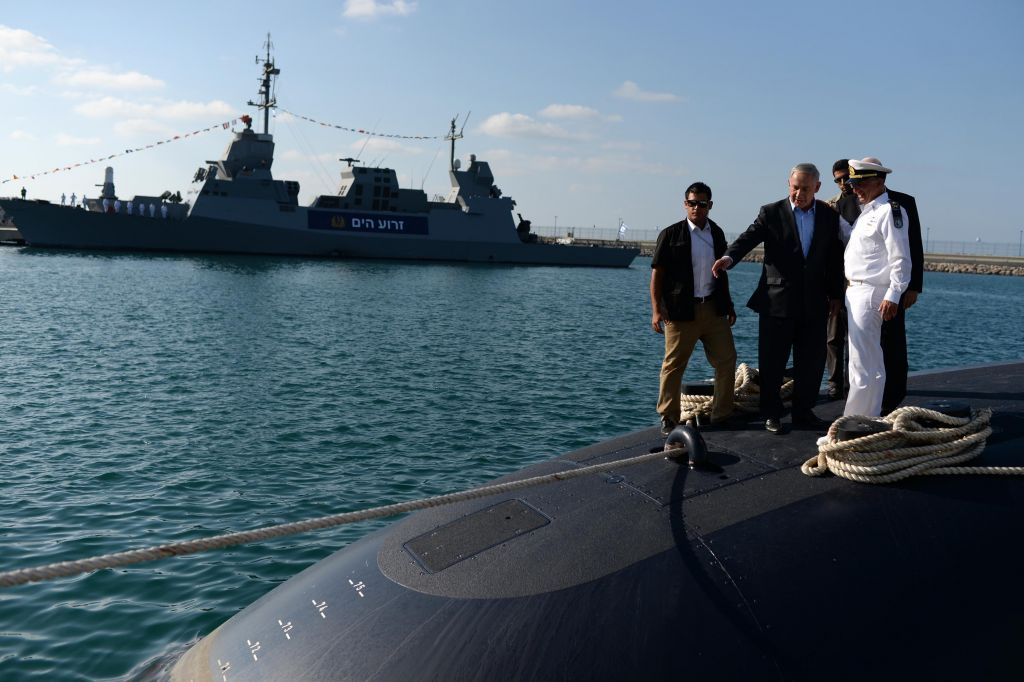
BUDAPEST, Hungary — Israel’s deal with Germany regarding the sale of additional submarines will likely proceed, even though it is currently frozen, Prime Minister Benjamin Netanyahu said Wednesday, providing the first confirmation from Israel that the hugely important deal was on hold.
“As soon as things clear up, I assume that the deal will go forward,” he told reporters during a briefing in his Budapest hotel. “I have no idea [how the current investigation into the matter will end] but believe it will go ahead.”
Germany has reportedly told Israel that it is delaying the signing of a deal for Israel to purchase three new submarines amid the rapidly expanding corruption scandal surrounding several multi-billion-dollar naval deals between the two countries.
Berlin and Jerusalem were said set to sign a memorandum of understanding next week, but this has been postponed indefinitely.
“There’s now an asterisk in the deal,” Netanyahu acknowledged, adding that the German side is waiting to see how the ongoing corruption investigation will play out. “There’s a probe, let the probe be concluded,” he said.
Netanyahu angrily dismissed all attempts to implicate him in the affair, saying much of the press is out to topple him. “All these efforts to bring me down have crossed all boundaries and are beginning to hurt Israel’s national security,” he said.
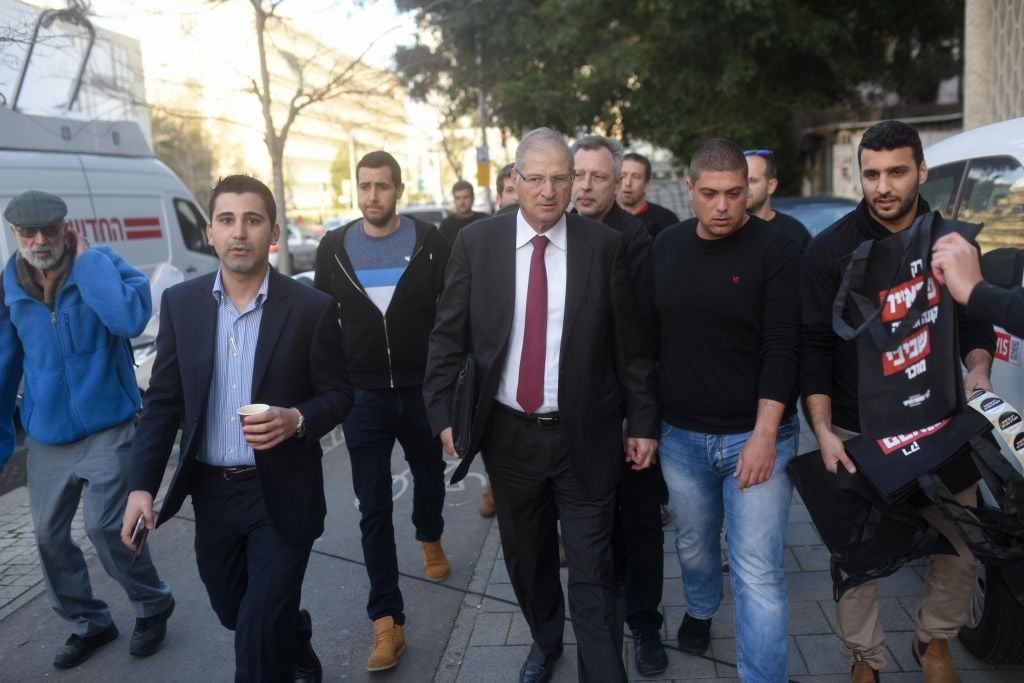
Netanyahu is not a suspect in the case but his personal lawyer, David Shimron, who was under house arrest for several days until his release on Saturday, had been questioned several times by the police investigation unit Lahav 433.
“I had no idea about Shimron’s involvement,” Netanyahu said Wednesday. “When this whole story is over I will say what I think about it.” The allegations against Shimron — who is also Netanyahu’s second cousin — will turn out to be “baseless nonsense,” the prime minister said.
Another suspect in the case, the former commander of the Israeli Navy Maj. Gen. (res) Eliezer Marom, was released from house arrest on Saturday evening.
“I don’t know what is corruption and what is not corruption in the submarines affair,” Netanyahu said. “The decisions the security establishment took were transparent and matter-of-fact. I don’t judge people; people have the presumption of innocence. I don’t know what will come of it or not come of it.”
Concerns that Germany might cancel the deal prompted Defense Ministry head Udi Adam to meet his counterpart recently in Germany, Yedioth Ahronoth reported on Tuesday.
Netanyahu spoke following Monday’s revelation that a key suspect in the case — Miki Ganor, a former agent for German shipbuilder ThyssenKrupp — is in talks to turn state’s witness.
Investigators suspect that Ganor, along with former National Security Council deputy head Avriel Bar-Yosef, paid out bribes in connection with a decision to buy three submarines from ThyssenKrupp, despite opposition from the Israeli Defense Ministry.
They also reportedly influenced decisions to buy naval corvettes to protect the gas fields and awarded ThyssenKrupp a contract to service other naval vessels.
Ganor is suspected of fraud, money laundering and conspiracy to commit a crime. He was arrested a week ago and remains behind bars, along with Bar-Yosef. Both men’s detention was extended Monday for a further four days.
Germany, which is supposed to finance a third of the deal, has the right to change its mind thanks to a clause in the agreement permitting it to do so unilaterally if suspicions of corruption and fraud prove to be true.
It appears that the reports about Ganor turning state’s witness gave the country sufficient jitters to activate that clause. Germany’s decision to freeze the deal has not been confirmed by government sources.
The three new submarines are intended as replacements for older models which will be retired in around 10 years.
Attorney General Avichai Mandelblit ordered the police to formally look into the submarine affair — dubbed Case 3000 — in November 2016, after accusations surfaced that Netanyahu may have been swayed to purchase the vessels by business ties that Shimron had with ThyssenKrupp. Late last year, Channel 10 News revealed that Shimron had also served as an adviser to Ganor.
Times of Israel staff contributed to this report.







The Times of Israel Community.