

Netanyahu seeks to wrest power to appoint PM from president
In another initiative, prime minister wants legislation that would allow all Israelis abroad to vote in general election
 Add ToI as a Preferred Source on Google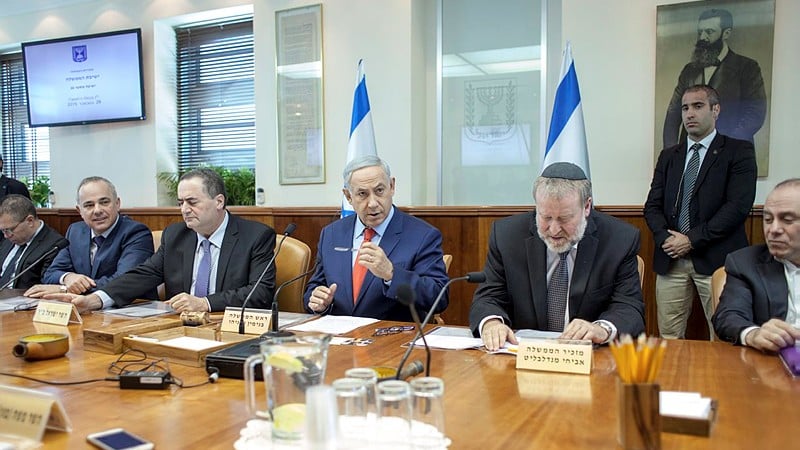
Prime Minister Benjamin Netanyahu has been promoting two legislative initiatives that could directly help him cement his hold on the premiership.
One initiative aims to give the leader of the party that won the most votes the power to decide who builds the coalition after elections, a power currently held by the president. Considering the ongoing enmity between Netanyahu and President Reuven Rivlin — Netanyahu tried to block Rivlin’s appointment — the bill could remove an obstacle Netanyahu may face in the future if he chooses to run for reelection.
The president traditionally entrusts the leader of the largest party with the task of establishing the government, but after the 2009 election for the 18th Knesset, then-president Shimon Peres assigned it to Netanyahu even though his Likud party won 27 Knesset seats and Kadima won 28. Peres made the decision after it emerged that Netanyahu would have a better chance of cobbling together a bloc of 60-plus Knesset members.
A second initiative would allow Israeli expatriates to vote in the general election. Currently, the only Israelis abroad who are allowed to vote are those who are there in the service of the state; they can vote in ballot boxes at embassies and consulates around the world.
According to polls, expatriates tend to support right-leaning parties. Allowing all Israelis abroad to vote, including tourists, business travelers and even those who left the country seeking residence elsewhere, would strengthen the right wing bloc in the country.
Netanyahu appointed Tourism Minister Yariv Levin to lead two teams to draft bills for the two initiatives. Levin is in charge of relations between the government and the Knesset.
The two initiatives are bundled as the Governance Law. Netanyahu, who pledged soon after he established his coalition earlier this year that he would work to change aspects of Israel’s government-building mechanisms, heads a narrow 2-MK majority, which struggles to pass legislation.
“I intend to work in order to enact changes that will ensure stable governance and increase the government’s capability to rule,” Levin said Sunday. He added that he would promote giving Israelis abroad the right to vote in order to “place Israel in a position like that of most of the world’s countries and strengthen the bond between holders of Israeli citizenship and the state.”








The Times of Israel Community.