

Netanyahu’s Likud loyalists must end silence, reduce risk of political violence
Sa’ar has raised the alarm as Netanyahu attacks law enforcement. So has Gantz. But they both want his job. This is the moment for good counsel from those PM can’t dismiss as rivals

 Add ToI as a Preferred Source on Google
David Horovitz is the founding editor of The Times of Israel. He is the author of "Still Life with Bombers" (2004) and "A Little Too Close to God" (2000), and co-author of "Shalom Friend: The Life and Legacy of Yitzhak Rabin" (1996). He previously edited The Jerusalem Post (2004-2011) and The Jerusalem Report (1998-2004).
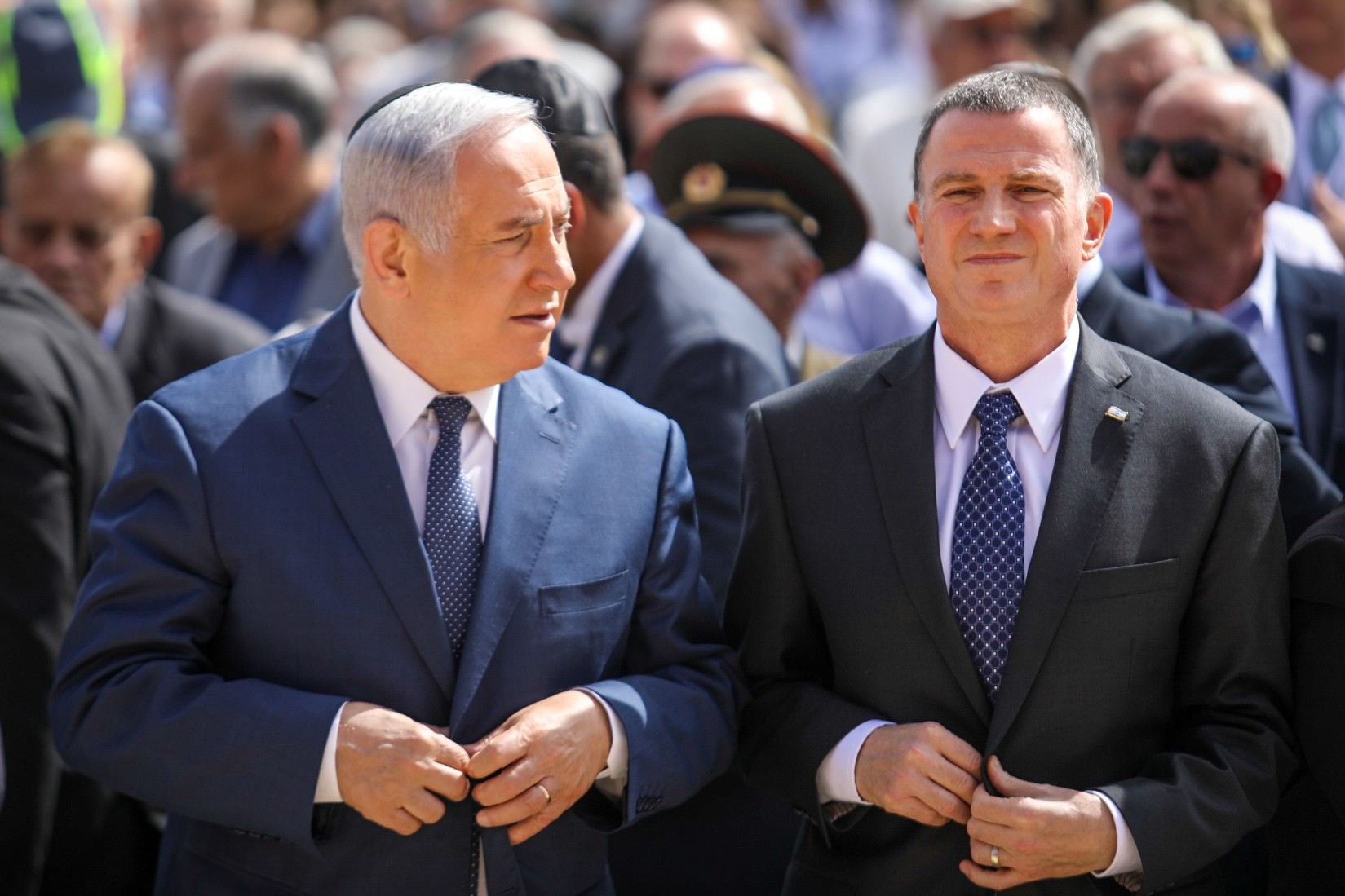
On Thursday in these pages, I wrote that I was hesitant even to delineate in writing where Prime Minister Benjamin Netanyahu’s bitter public declaration of no confidence in the rule of law here — charging that he was the victim of a frameup and an attempted coup — risked taking Israel.
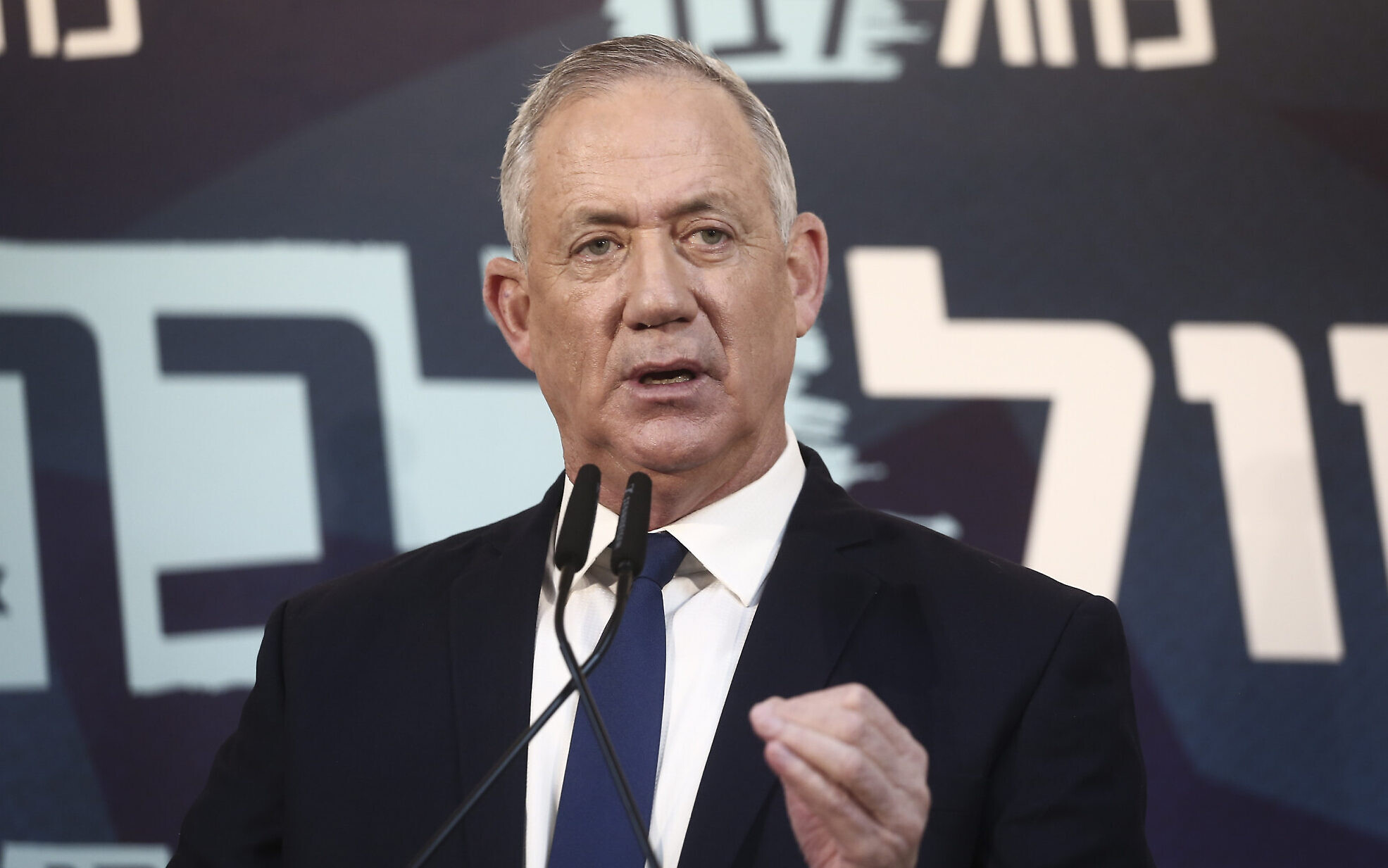
His opposition challenger for the prime ministership, Benny Gantz, had no such hesitation. In a speech on Saturday night, the Blue and White party leader warned that Netanyahu risked dragging Israel into something akin to civil war — literally, as he put it, a “war of brother against brother.” He castigated Netanyahu for his behavior as opposition leader in 1995 and specified, ominously, “The man who led a harsh and painful incitement campaign against prime minister Yitzhak Rabin, a campaign that ended in a terrible national disaster, should well know the dangerous price of words, which could heaven forbid turn into deadly bullets.”
Gantz is a relatively credible politician to many Israelis by virtue of his former military career, which took him all the way to IDF chief of staff. But he is an ambitious politician nonetheless, Netanyahu’s main opposition rival, and has been seeking to replace Netanyahu as prime minister.
A second leading politician also warned Netanyahu Saturday night that alleging a coup is false and telling the public that the rule of law has lost its credibility is dangerous. “This is not an attempted coup. That is not accurate,” said Gideon Sa’ar. “It is not responsible to make this claim… It aims not for reform but to destroy the law enforcement establishment.” By making incendiary accusations against the police and state prosecution, warned Sa’ar, the prime minister was “causing chaos in the country.”
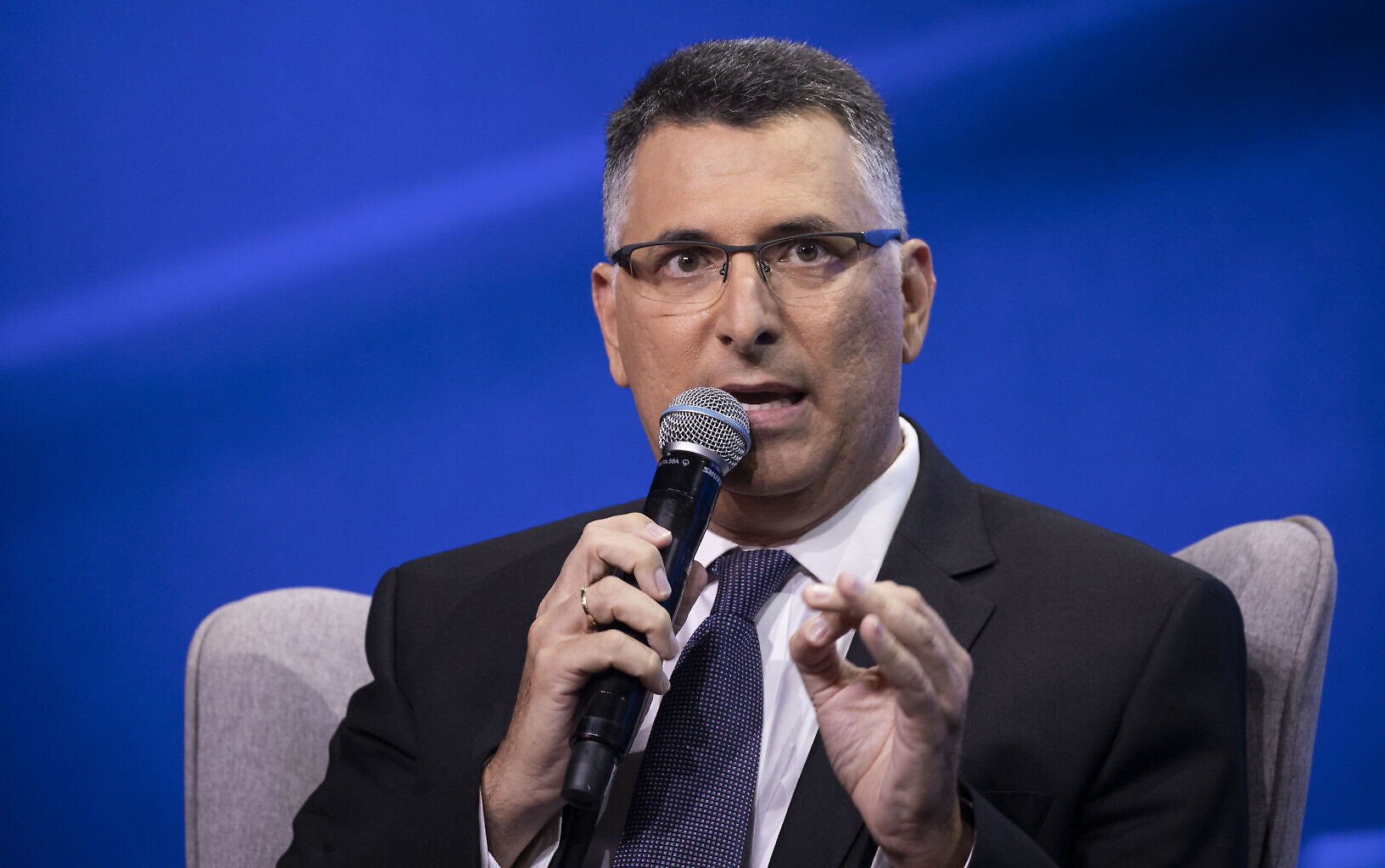
Sa’ar is another fairly well respected politician, a former education minister from Netanyahu’s own Likud party and Netanyahu’s own cabinet secretary in the 1990s. But he too is a longtime rival of the prime minister’s, with every personal interest in seeing Netanyahu’s departure.
What has been dismally, crucially missing from the increasingly heated public discourse in the days since Attorney General Avichai Mandelblit announced on Thursday that he would be charging Netanyahu with fraud and breach of trust in the three corruption cases against him, and bribery in one of them, are the warning voices of leaders who share Netanyahu’s political philosophy, who generally admire him, and who do not seek his job.
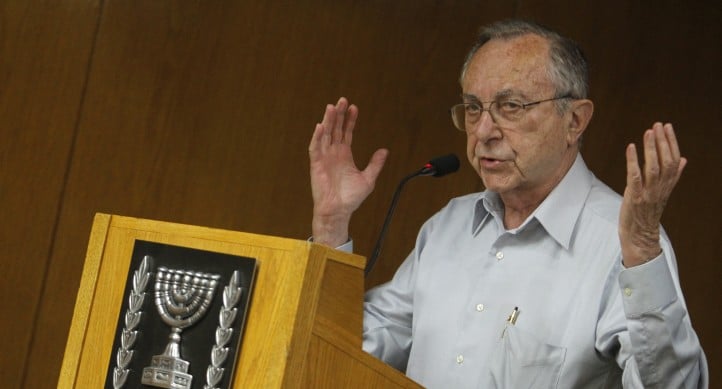
Some of those who might have spoken out, and urged Netanyahu to avoid stirring up a vicious domestic debate that could deteriorate into the unthinkable atmosphere of 24 years ago, simply aren’t around anymore. It is less than a year, for instance, since the passing of Moshe Arens, the former Likud defense minister who, more than anyone else, gave Netanyahu the early support and the first opportunities to showcase his talents in the field of public diplomacy. I’m not sure what happened between Thursday evening, when Netanyahu placed himself in direct opposition to Israel’s police and prosecutors, and invited the public to mistrust them too, and Friday afternoon, when a slightly more conciliatory Netanyahu declared that, “no question,” he’d accept the court’s decision in the cases. But if Arens had still been with us, I’d have bet that a phone call from his mentor was part of the shift.
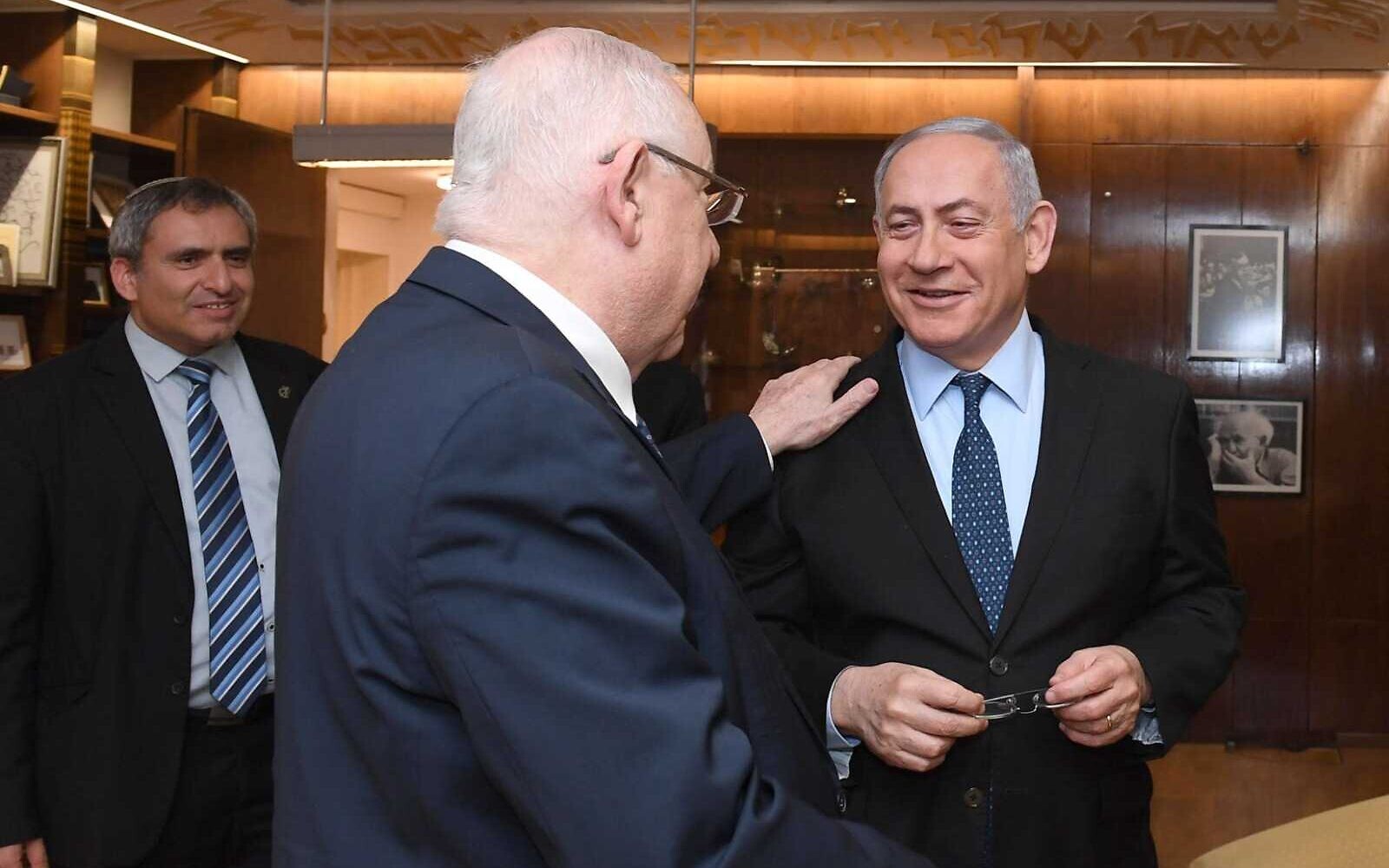
Another Likud veteran has long recognized where Israel could be heading with a prime minister clinging to power in a sea of legal troubles. Hence Reuven Rivlin’s formula for power-sharing between Netanyahu and Gantz, for a prime ministerial leave of absence, for a bolstered role of interim prime minister. His September initiative was spurned, and his agitated cautions about rising internal tension are failing to strike a chord where they most matter.
But many others are choosing to remain silent at this fateful hour, when a prime minister facing criminal allegations risks turning his legal battles into a domestic national conflict.
Nobody forces ambitious young men and women to go into politics. Those who do so are seeking public support on the basis of their ability to act in the interests of the electorate, to steer the nation, to set policy… to lead.
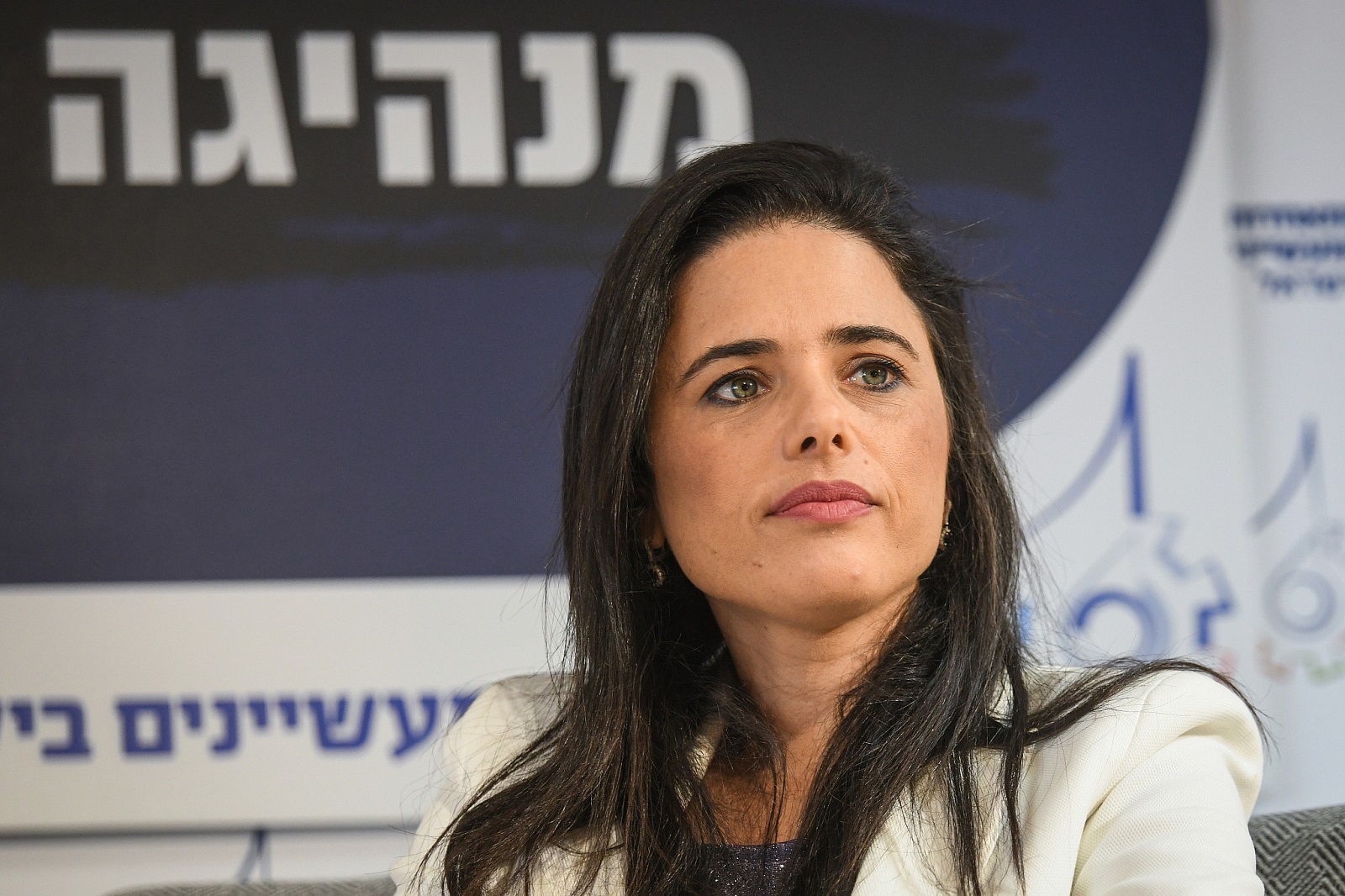
This is their moment — a moment, in particular, for the prominent members of Netanyahu’s vaunted 55-strong bloc of recently elected Knesset members, his prime ministerial recommenders, and especially for those in that bloc who are not seeking to usurp him and whose motives therefore cannot be questioned. I’m thinking of the likes of former justice minister Ayelet Shaked (who did speak out in support of Mandelblit, calling him “an honest man who takes his decisions independently, in accordance with the evidence and his professional assessment”), veteran Likud ministers like Tzachi Hanegbi, Israel Katz and Yuval Steinitz, ex-Shin Bet chief and Likud MK Avi Dichter and, most of all, Yuli Edelstein, our Knesset speaker and would-be president.
If it is too naive to look to politicians to provide moral leadership, is it really too much to expect them to help shape public discourse at this fraught moment, to offer good counsel publicly and privately, and work to deescalate a situation threatening to spiral out of control? Sa’ar was eloquent on Saturday night in balancing his support for overdue reforms in the legal and prosecution system with concern that, in undermining the entire law enforcement community, Netanyahu risks causing national chaos. But, again, Sa’ar’s motives can and were easily derided by the Likud party machine, dismissing him as a serial anti-Netanyahu plotter.
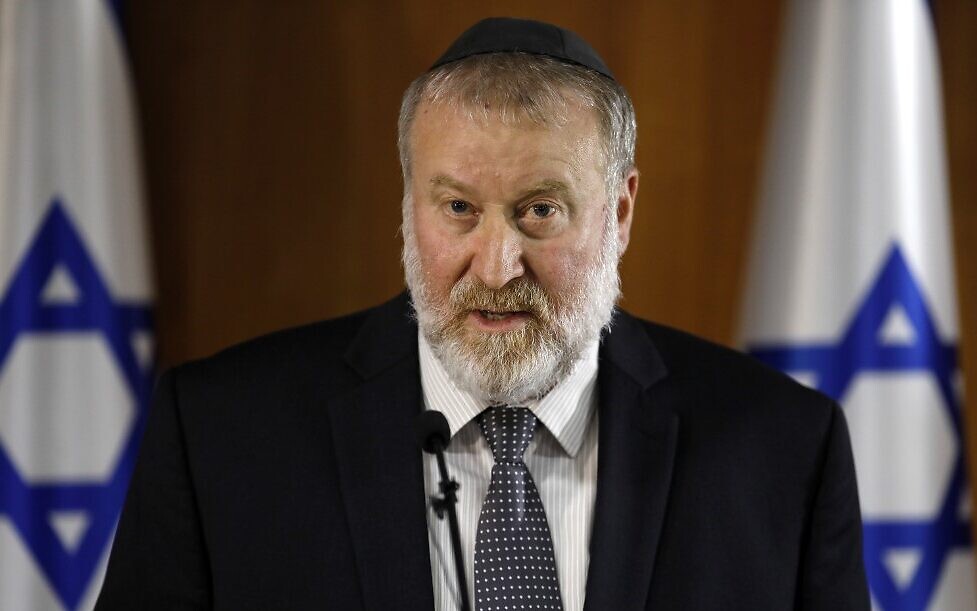
If it is any comfort, the fact that Mandelblit is not only a Netanyahu-appointee, but an immensely respected figure of integrity and an Orthodox Jew, has acted as something of a brake on the roiling domestic tensions. Were a perceived secular Tel Avivi filling the top role, the prime minister’s effort to discredit the entire establishment would likely be further advanced. Recognizing Mandelblit’s credibility, Netanyahu has chosen to depict him as a weak dupe, rather than the architect of the purported coup attempt.
Netanyahu is deciding right now how bitter a war to wage against his state accusers. His survival instincts, his wife and his son are doubtless encouraging him to fight tenaciously, while his patriotism is urging a less divisive course.
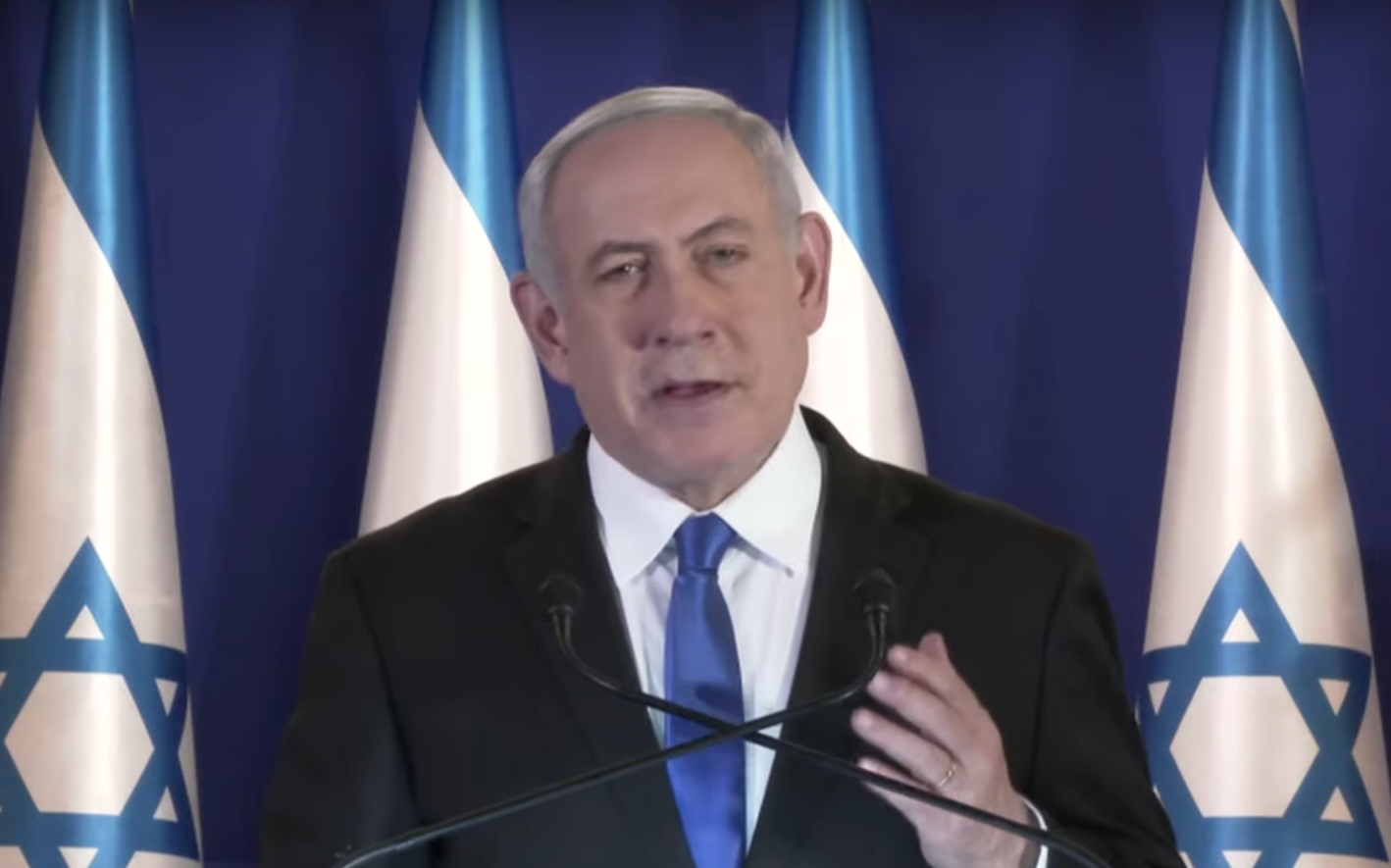
What exactly does he have in mind for his tentatively planned rally of supporters on Tuesday night? How inflammatory a speech does he intend to deliver? Will we see the incendiary Netanyahu of Thursday night, or the slightly more conciliatory Netanyahu of Friday afternoon? What effect and consequence does he seek to create?
As Netanyahu weighs his course, the voices of those around him have a vital role to play. Netanyahu must not drive Israel toward political violence. And it is those in his own political camp, especially those he cannot dismiss as hypocritical would-be rivals, who need to make that clear to him.
Author’s note: The headline of this article was amended to more accurately reflect its content.







The Times of Israel Community.