

New Lebanon parliament re-elects Hezbollah ally as speaker
Nabih Berri of the Amal Movement, allied with the Shiite terror group, has served in the position since 1992
 Add ToI as a Preferred Source on Google
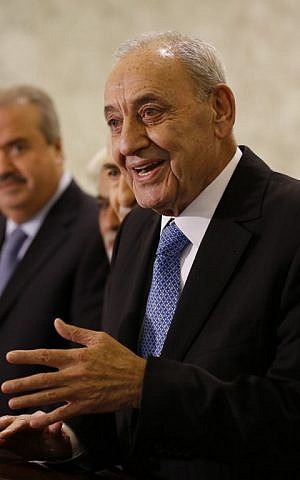
BEIRUT, Lebanon — Lebanon’s new parliament on Wednesday elected veteran speaker Nabih Berri to a sixth consecutive term, making him one of the longest-serving parliamentary heads in the world.
His election came after the country’s May 6 parliamentary poll, the first in nine years after the deeply divided legislature, elected in 2009, repeatedly extended its own term.
On Wednesday, the body met for the first time since the poll, to elect its speaker to a four-year term.
Few expected any surprises: the only candidate was incumbent Berri, a savvy politician from the country’s south who has held the position since 1992.
The vote by paper ballot saw 98 of the parliament’s 128 members pick Berri. One vote was disqualified and the rest were blank.
Berri, 80, heads the Amal Movement and is a close ally of the powerful Shiite terror group Hezbollah.
Together, the two parties hold all but one of the 26 Shiite-allocated seats in Lebanon’s parliament.
Lebanon’s confessional political system divides seats in parliament equally among Muslims and Christians, then further splits them among the various sects.
The position of speaker is reserved for a Shiite Muslim, while the other two top positions of prime minister and president go to a Sunni Muslim and a Maronite Christian, respectively.
Born in 1938, Berri is a veteran of Lebanon’s complex political scene.
He rose to power as a militia boss in the civil war (1957-1990) before transitioning to politics when it ended.
He was simultaneously elected member and speaker of parliament in 1992. In his official role he calls and runs Lebanon’s parliamentary sessions.
The long delay preceding this month’s parliamentary elections was blamed on political divisions, the war in neighboring Syria and an unsatisfactory voting law.
Lebanese President Michel Aoun is now set to consult the newly elected body to name the country’s next prime minister.
The Future Movement’s Saad Hariri is expected to return for another term in that role, his third time as premier.






The Times of Israel Community.